
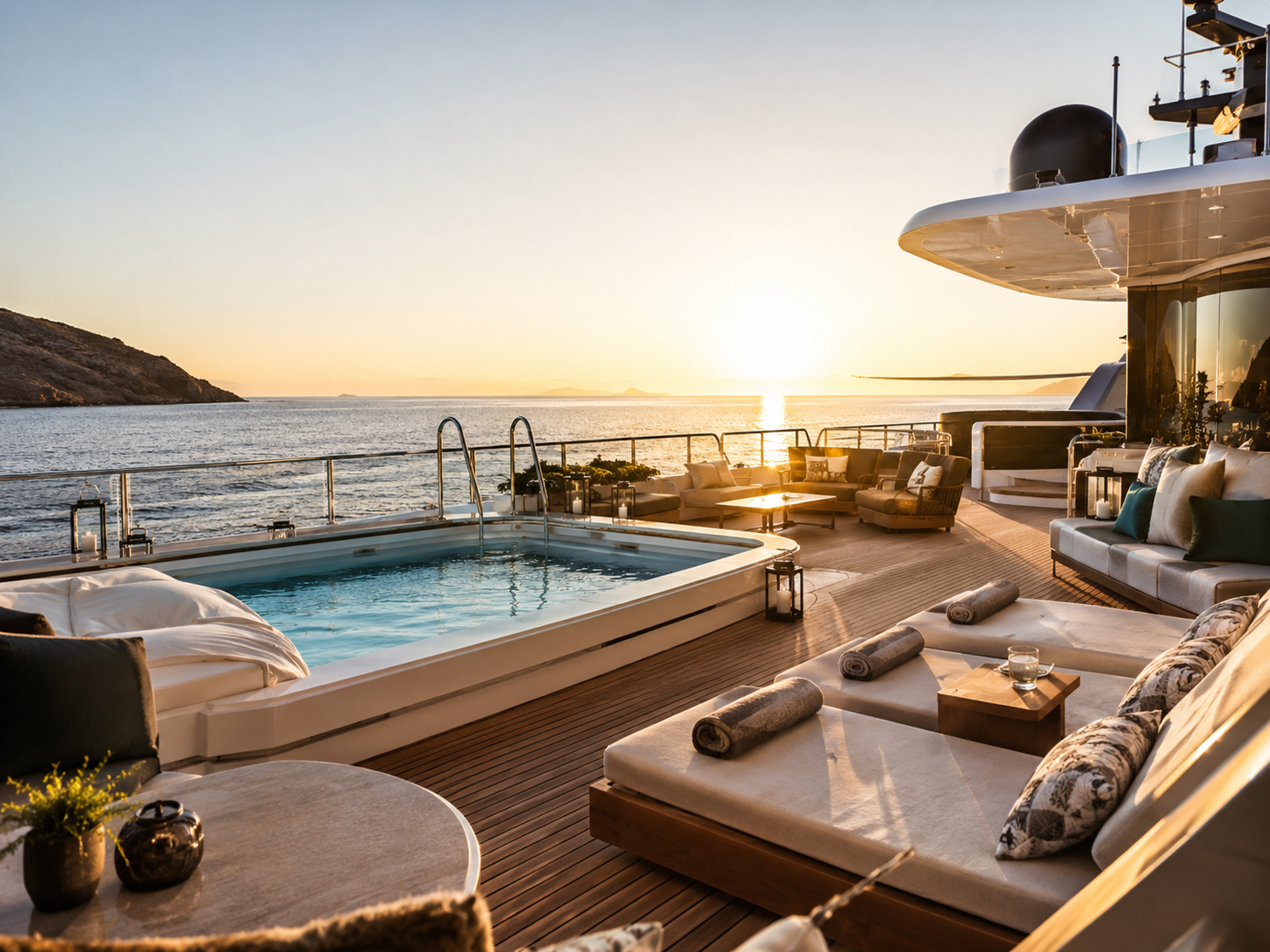
Why the future of luxury at sea will be judged by the whole guest journey
There is a particular kind of promise attached to luxury travel at sea. The world softens around you. The suitcase is unpacked once. The landscape moves instead.
Breakfast appears with the horizon. Dinner becomes part of the voyage. The spa, the suite, the deck, the tender, the shore experience and the quiet spaces in between all become part of one continuous journey.
It is easy to understand why cruise travel is growing. It offers something rare in modern travel: movement without constant disruption.
For guests who experience the world differently, that matters more than most people realise.
Because the question is not simply whether a cruise has an accessible cabin. The question is whether the journey works.
And at the highest end of the market, that question becomes impossible to ignore.
Luxury at sea is changing
Ultra-luxury cruise travel is no longer a quiet corner of the travel industry. Some of the world’s most recognisable hospitality names are moving their promise onto water:
Four Seasons Yachts, The Ritz-Carlton Yacht Collection, Aman at Sea, Orient Express Sailing Yachts, Explora Journeys and Belmond river journeys.
This is not the old image of cruising. It is suites. Wellness. Private terraces. Destination access. Cultural immersion. Personal service. Slower itineraries. Marina decks. Yacht-style living. Multi-generational celebration. Time.
At this end of the market, guests are not buying transport. They are buying confidence.
They are buying the belief that every detail has been thought through before they arrive.
The new luxury cruise guest is not one guest
That is where the conversation becomes interesting.
For guests with access needs, disability, health conditions, fluctuating energy, sensory requirements, age-related needs, injury, recovery, pain or care responsibilities, confidence is not a decorative extra.
It is the thing that decides whether they book at all.

The cruise market is already here
The cruise market is not tentative. It is growing, loyal and increasingly varied.
Cruise Lines International Association reported that global cruise passenger volume reached a record 37.2 million passengers in 2025, with nearly 90% of cruisers saying they intend to sail again.
That repeat intention matters. When cruise works for a guest, they often return. They return to the format, the brand, the rhythm and the ease of unpacking once while the world moves around them.
Cruise is also no longer only an older traveller market. Around one third of cruisers are now under 40, and around one third of cruise trips are multigenerational.
That reflects what many of us already know from real life. People do not travel in neat categories.
They travel as couples. Families. Friends. Grandparents. Adult children. Children. Assistants. Carers. Celebration groups. Anniversary trips. Recovery trips. Once-in-a-lifetime trips.
And within those travel parties, access needs are often already present. Sometimes visibly. Often quietly.
Disabled travellers are already cruising
The accessible travel market is not waiting outside the cruise industry. It is already part of it.
The Open Doors Organization 2024 travel market study found that 13% of adults with disabilities had taken a cruise in the previous five years. That represented 5.1 million travellers taking 10.3 million cruise trips.
The estimated spend was $18.5 billion on cruise fares and $3.1 billion on excursions.
Those figures matter because cruise brands do not only sell the cabin. They sell the whole ecosystem around the journey.
Transfers. Pre-cruise hotels. Dining. Spa. Excursions. Private experiences. Shore access. Repeat itineraries. Loyalty. Travel advisor confidence. Family decisions.
A guest with an access need is rarely just one guest. They may be travelling with a partner, children, friends, parents, grandparents, carers, assistants or a wider multi-generational group.
The question is not how many wheelchair users might book. It is how many high-value travel parties are hesitating because the journey is not clear enough before they commit.
That is the gap luxury cruise has not yet fully measured.
Access needs are broader than most brands realise
That distinction matters enormously.
The access conversation is still too often reduced to wheelchair cabins. They matter, of course, but they are not the whole market.
Guests travel with visible disability, hidden disability, mobility impairment, pain, fatigue, respiratory conditions, sensory needs, neurodivergence, anxiety, hearing loss, sight loss, fluctuating health, injury, ageing, recovery and care responsibilities.
Access might mean step-free routes, rest built into the day, clear information before arrival, or staff who know how to ask without assuming.
It might mean a quieter route, a different table, a shorter excursion, a private transfer, a bathroom that works, a spa treatment adapted without fuss, or simply enough detail to know whether the experience is realistic.
VisitBritain accessible tourism data shows that trips taken by people with impairments and their travelling companions accounted for 23% of domestic overnight trips in England in 2024, and 21% of domestic overnight trip spending.
This is not a marginal guest group. It is part of the market luxury already serves.
The issue is whether luxury recognises it early enough.

The cabin is only the beginning
Accessible cabins are important. But they are only one part of the story.
A beautiful suite does not solve an uncertain embarkation.
A roll-in shower does not solve an inaccessible dining route.
A spacious bedroom does not solve a tender process nobody has explained clearly.
A compliant bathroom does not make the spa usable.
A lift does not answer whether the guest can access the deck, the marina, the lounge, the excursion, the table, the quiet space, the pool or the view.
This is why luxury accessible cruise travel needs to move beyond the cabin.
The full guest journey matters, from booking and boarding to movement through the vessel, shore experiences and disembarkation.

Where the guest journey is won or lost
The guest journey is shaped long before anyone steps on board.
It begins in the booking process, in the information available before arrival, and in the confidence a guest feels before they commit. It continues through the transfer, embarkation, movement through the vessel, dining, wellness, shore experiences, tenders, emergency planning and disembarkation.
And it does not end when the journey does.
It continues in the way the guest remembers the experience afterwards.
Luxury is cumulative.
So is friction.
Why cruise can be extraordinary when it works
This is the part that matters to me.
When cruise travel works, it can offer something genuinely powerful. Not in a sentimental way, but in a practical, beautiful, body-aware way.
You do not have to repack every day, navigate a new hotel every night, or keep starting again. The room stays yours. The service is close. The pace can be shaped, and the world arrives gradually.
For some guests, that rhythm can be deeply freeing. It can reduce the pressure on families moving everyone from place to place, make complex destinations feel more possible for disabled travellers, and allow adventure and recovery to sit together for people managing pain, fatigue or fluctuating health.
Older travellers may find independence with support nearby. Multi-generational groups can share the same journey without everyone needing the same pace.
That is why I believe luxury cruise travel belongs firmly within the future of accessible luxury.
Not because it is easy.
Because it has the potential to be exceptional.
The luxury standard at sea
At the highest end of travel, access cannot feel like a workaround. It has to feel like part of the promise.
The best luxury brands already understand anticipation. They remember the guest’s preferred drink, the room temperature, the table, the pillow, and the quiet art of knowing when to appear and when to disappear.
The next question is whether that same intelligence extends to how a guest moves, rests, boards, dines, receives support and experiences place.
That is not a separate conversation. It is the luxury conversation.
Because if a brand is built on knowing what a guest needs before they ask, then guests with access needs cannot be left to explain every detail from the beginning.
They should not have to become investigators before booking, email repeatedly to understand whether a journey is possible, or discover the reality only once they arrive.
At this level, uncertainty is not part of the product.
Confidence is.
What the industry needs to ask next
The future of luxury cruise travel will not be judged only by suite size, private terraces, dining rooms or destination lists.
It will be judged by whether the experience works beautifully for the guests luxury has not yet fully understood.
Can guests understand the journey before they commit? Can they board with dignity? Does the suite work in reality, not only in photography?
Can they move through the ship or yacht as guests, not exceptions? Can they access dining without losing atmosphere? Does wellness work for different bodies?
Are tenders and shore experiences explained honestly? Does the crew know how to offer help without assumption? Is emergency planning calm, discreet and real? Does disembarkation feel as considered as arrival?
These are not niche questions. They are luxury questions.

The opportunity for brands ready to lead
The brands that lead this conversation will not be responding to a trend. They will be defining a standard.
That is the opportunity: not to create a separate accessible cruise product, not to reduce the conversation to one cabin category, and not to add a line to an FAQ page and call the work done.
The real opportunity is to show what happens when ultra-luxury travel at sea understands the full guest journey from the beginning.
That kind of clarity changes more than the booking process. It gives guests confidence before they enquire, offers families and multigenerational groups a clearer way to plan, and gives travel advisors something credible to share.
For disabled travellers and guests with access needs, it creates recognition without reducing the experience to access alone.
For the brand, it creates proof.
And proof matters, because in luxury travel, reputation is not built only by what a brand says about itself. It is built by what guests trust before they arrive, what they feel while they are there, and what they remember afterwards.
The future of luxury accessible cruise travel
I do not believe the future of accessible cruise travel should sit separately from luxury cruise travel.
That is too small a vision.
The finest journeys in the world should not require guests to leave part of themselves behind.
They should not require people to choose between beauty and practicality, between adventure and dignity, between being included and being truly considered.
Luxury accessible cruise travel is not about making the experience less refined.
It is about making the refinement real across the whole journey: the transfer, the suite, the table, the spa, the tender and the shore.
It lives in the moments nobody photographs, but everybody remembers.
That is where the future sits.
Not in whether a brand can say access exists.
In whether the experience feels as though the guest was expected all along.
That is the standard.
And at sea, that standard has never mattered more.

Leave a Reply