
Returning to somewhere I used to know… 22 years on
There is something strange about returning to a place that once knew you differently.
Whittlebury Park was part of my life long before The Inclusive Edit existed. Before the wheelchair, before the access questions, and before I understood how much of luxury lives in the detail no one thinks to mention.
Twenty two years ago, I attended a business awards ceremony there. I was eighteen, and it was the first time I had stayed somewhere that felt quite like that.
I remember the scale of it. The grand hotel, the grounds, the spa, the service, and the quiet theatre that comes with being next door to Silverstone.
It stayed with me.
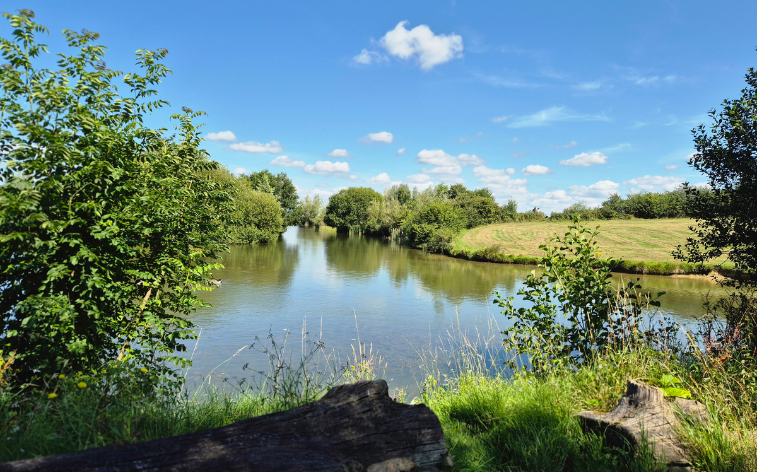
At the time, it was still Whittlebury Hall to me, and for years afterwards it became my go-to escape. Once a year, I would go. Once a year, I would check out feeling exactly as I had hoped to feel.
Rested. Relaxed. Recharged. And, perhaps most importantly, as though my guest experience had mattered.
Then life moved on. I moved further north in 2016, and Northampton became less easy to fold into ordinary life. By the time we found ourselves travelling back from London a couple of weeks ago, with an unexpected extra night and day to play with, Whittlebury came back to me almost without thinking.
“We could stop at Whittlebury.”
It sounded simple enough.
Except this would be the first time I had returned as a wheelchair user.
Returning Differently
The last time I stayed there, I was using crutches.
At the time, I didn’t really see myself as disabled. I thought I was in a recovery process. A long one, perhaps, but still a temporary one. I didn’t imagine what would follow, or that one day I would return to the same place in a wheelchair, looking at the same spaces through an entirely different lens.
Back then, I wasn’t thinking about turning space, transfer heights, spa routes, fire evacuation plans, or whether the promise of a relaxing stay would still feel relaxing once my body had to move through it differently.
I simply arrived.
That is a privilege I understand differently now.
And that is the thing about returning somewhere familiar.
You are not only asking whether the place has changed.
You are asking whether the place can still hold you now that you have.
Before Arrival
As always, I did my research before we arrived.
Whittlebury has a full accessibility document available on its website. It sits within the more practical part of the site rather than being woven beautifully into the main guest journey, but it is detailed, and I appreciated that.
It explains the disabled parking, the level side entrance, the accessible toilets, the lifts, the PEEP system, the spa routes, the treatment room access and the assistive equipment available on request.
That level of information matters.
Not because every guest will read every line. Most won’t. But because the presence of detail tells you something about whether a property has thought beyond the phrase “accessible rooms available.”
Whittlebury has.
The document also says clearly where access has limitations. That matters too. In fact, I often value that more than vague reassurance.
If a spa doesn’t have a hoist, say that. Or a hydrotherapy pool has steps, say that. If some treatment rooms are step-free and others aren’t, say that.
Clarity gives people choice.
It allows guests to ask better questions before they arrive. It allows them to understand what may work, what may need support, and what may not be right for them at all.
Very few spas give that level of information. I visited one recently that did have a hoist, which is still rare. Most don’t. What matters is not pretending every space will work for every person. What matters is giving guests enough information to make their own decision with dignity.
Choosing the Room
We chose a Club Double room rather than an adapted room.
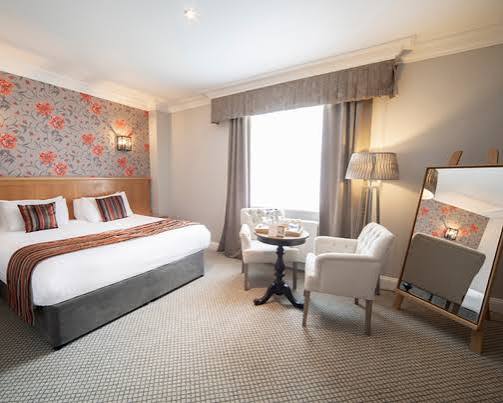
It had a large bathroom with a walk-in shower, double sink and a bath, and for this stay that made sense for me. The bath was a good transfer height if I needed to get in directly from my chair, and because I was travelling with Martin, I had the support I needed if anything became awkward.
This is one of those details that rarely fits neatly into a hotel booking system.
If I travel solo, I usually prioritise an adapted room because it gives me safety, independence and peace of mind. If I travel with Martin, I often choose a standard room or suite because it may offer something my body needs just as much: a bath.
For me, that is not a decorative luxury. It helps with spasms, pain and recovery, especially after long journeys or physical effort. It is one of the reasons I often look closely at whether an adapted room has a bath, because so many are designed only around a wet room or roll-in shower.
That works beautifully for many people.
It doesn’t work for everyone.
It is also why, when I have support with me, I’m conscious of how few adapted rooms many hotels have. If I can make another room work comfortably and safely, I sometimes choose to leave the adapted room for someone who may not have that choice.
There is a much bigger conversation in that.
Probably not for today.
But it is there.
The Memories
As we drove up the motorway, I found myself talking about Whittlebury in the way you talk about somewhere that lives in your memory with a soft focus.
The long spa days.
The dinners and drinks in Silverstone Bar.
The business events.
The Grand Prix energy.
The Formula One faces I apparently should have recognised, beyond Lewis Hamilton, but needed a friend to quietly identify for me.
I kept saying, “You’ll really like it here.”
Then, somewhere between London and Northamptonshire, the thought arrived.
What if I didn’t?
What if it had changed?
Or if the standard had shifted?
What if I had?
Arrival
Pulling into the long driveway through the grounds, I felt my shoulders drop.
I wasn’t expecting that. Less than 24 hours earlier, I had completed the London Landmarks Half Marathon in my wheelchair, so my shoulders had every right to be holding a meeting of their own.
But there was that familiar sense of arrival.
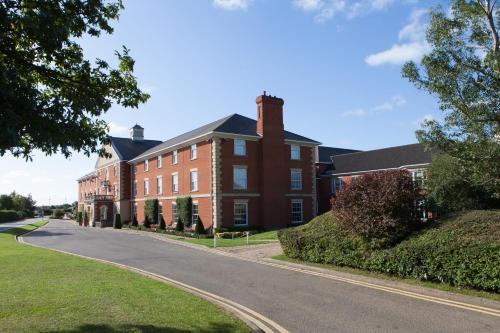
Open space. Countryside. The hall sitting within the landscape with that modern but classic feel. The golf course. The paddocks. The sense of leaving the city behind and entering somewhere designed for rest.
And that is exactly what I needed it to be.
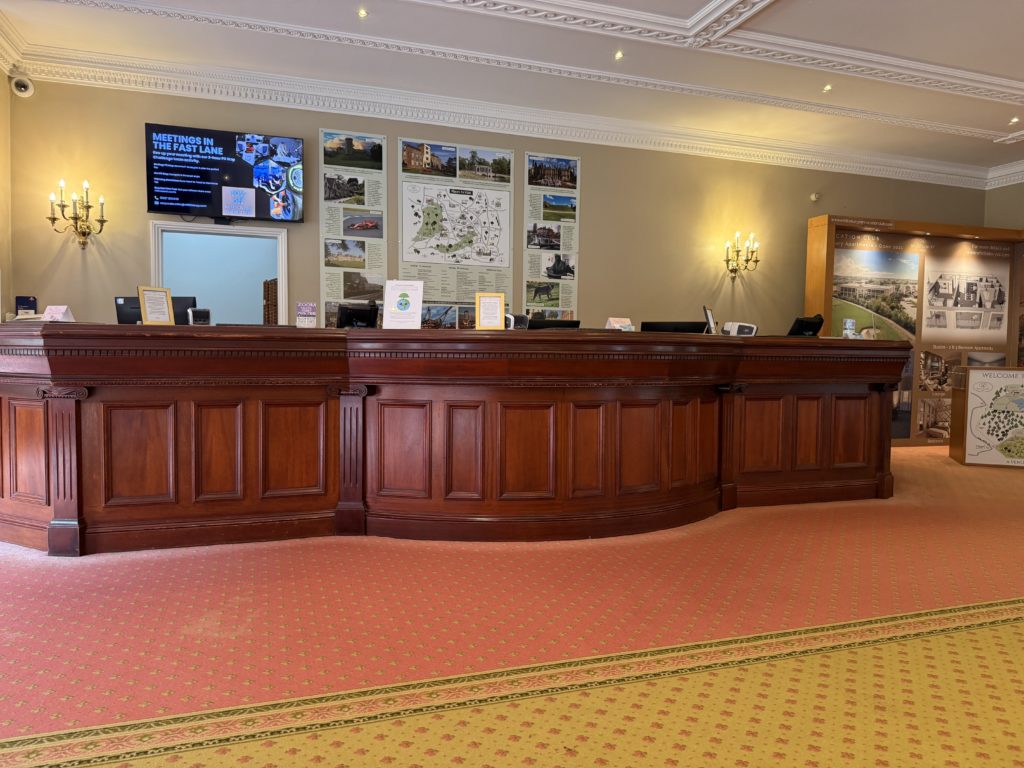
Reception is a large, open space, with nods to the history of the land and the people who have shaped it. There are generous sofas, low tables and plenty of room to pause. It works as a place to arrive, to meet, to wait, or to gently end the day with a drink.
We made our way to the check-in desk and, I say this with a smile, I recognised it.
It was the same desk.
But it wasn’t the same desk to me.
Check-In and the Details That Shape Ease
The reception desk is high, as many reception desks are. A clipboard and pen came over with a smile, and I completed the check-in paperwork on my knee.
That included the PEEP form.
I was glad it happened. Personal Emergency Evacuation Plans matter, and too often they are missed entirely. Whittlebury had the process in place, and that is important.
But the way a process happens also shapes the experience.
Around me were comfortable places where registration could easily have been completed seated, which the access document says is possible. Clipboards are available. Large print registration cards are available. Assistance is available.
All of that is good.
The next standard is making sure the offer comes naturally, before the guest has to ask.
“Would you prefer to complete this over there?”
It is such a small sentence.
But it changes the tone of arrival. It tells the guest the hotel has noticed the practical reality of the moment, not just completed the process around it.
The receptionist was lovely. She asked thoughtful questions. There was no discomfort, no awkwardness, no sense that I was a problem to solve. And honestly, I didn’t want to interrupt the ease of arrival. I had a massage booked. And I knew how good Whittlebury’s treatments had been in the past. I was already mentally in a robe.
So I stayed quiet.
That happens more than people realise.
Not because something is terrible.
Or because a guest is unhappy.
But because raising a small access point can interrupt the very ease you came for.
The Spa
The leisure club is included as part of an overnight stay, but if you are going to Whittlebury and can add the Heat and Ice Experience, I would.
With two bodies full of tired muscles from our London race weekend, it was exactly what we needed. We moved through the caldarium, steam rooms and salt rooms, with bucket showers and crushed ice in between. It sounds like torture to some people. To me, it was glorious.
The access information for the spa is detailed, and I genuinely value that.
The Day Spa sits adjacent to the hotel, with level access from the ground floor and lift access between floors. Some treatment rooms are step-free, while others involve steps, and the hotel explains that room allocation can be adjusted according to access needs. The hydrotherapy pool has stepped access with a handrail, and the spa doesn’t have a hoist.
That kind of information gives guests something very important.
Choice.
For one person, step-free treatment room access may be the deciding factor. But for another, knowing the hydrotherapy pool has steps may help them understand whether they can use it safely, whether they will need support, or whether they would rather shape the spa day differently. For someone living with pain, fatigue, balance changes, anxiety, sensory sensitivities, or an invisible condition, detail can change the whole tone of arrival.
It means fewer surprises.
Fewer awkward conversations.
Less need to explain yourself in a robe, which is rarely anyone’s finest hour.
For me, on this stay, with Martin there and with the mobility I have, the experience worked. I could access what I needed, pace myself, transfer where I felt comfortable and make decisions in the moment.
For someone else, the same information might lead to a different choice.
That is not failure.
That is informed choice.
And informed choice is one of the most overlooked parts of luxury.
We lazed in the hydro pool, drank coffee on the terrace, and ate possibly the best pecan swirl I’ve had in a very long time before heading up in the lift for our treatments.
The Treatment
I always love following the smell to a spa.
It is like a canapé before dinner is served. Lavender, lemon and clary sage drifting through the relaxation area while you wait to be collected. That quiet promise that your body is about to be looked after.
My therapist came to meet me and took me to one of the step-free treatment rooms. She had the sort of confidence that immediately relaxes you. Not overfamiliar. Not hesitant. Just quietly capable.
She talked me through the treatment and asked about my body’s needs. I was made to feel comfortable enough to explain areas to avoid, pressure, pain and what might help. She introduced me to a choice of massage oils and watched as I smelled each one.
As an aromatherapist, I knew exactly what she was looking for.
That small reaction in my face.
The one that says, this is what my body wants.
And with that, I slipped into a 60-minute full body massage.
When it ended, there was no rush to move me along for the next guest. It was, “Take your time.” “Can I bring you a drink?” The small things that allow you to stay inside the experience instead of being abruptly returned to yourself.
That is luxury.
Not because it is extravagant.
Because it is considered.
Martin had his treatment after mine, and by the time we returned to the room together, we had only been there for four or five hours. Still, we already felt like different humans from the exhausted pair who had arrived earlier that day.
Dinner at Aston’s
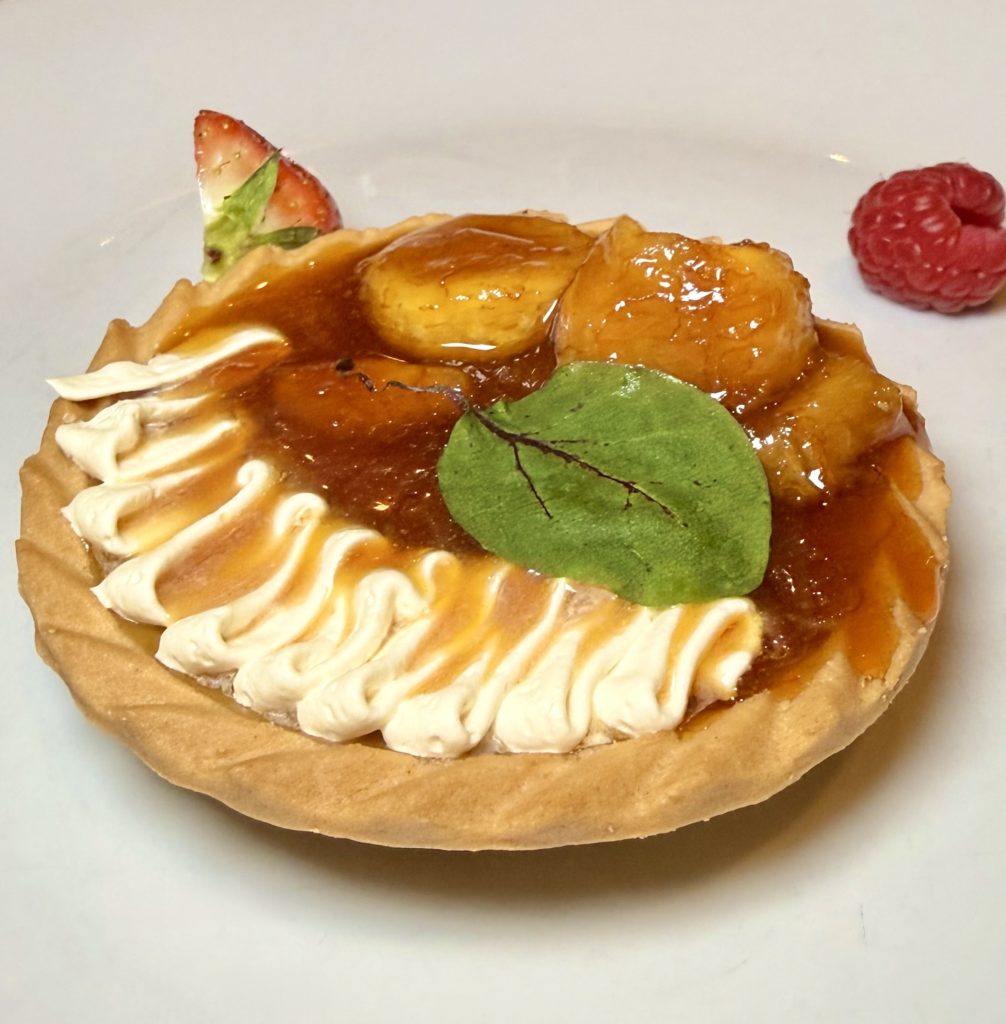
Later, we had drinks in Silverstone Bar before heading through to Aston’s for dinner, served in the conservatory with low spring sunshine falling across the room.
It was quieter than I remembered from previous visits, and that gave the evening an intimacy I hadn’t expected.
The food was lovely, but what stayed with me more was the ease of the evening.
The route worked.
The space felt calm.
The service was warm.
Nothing felt like effort.
We talked until the sun went down over dessert and coffee, and eventually found ourselves chatting with the two couples at the next table. Comparing desserts. Sharing memories. Talking about previous occasions spent there.
It was clear Whittlebury is not somewhere people only visit once.
There are hotels you book because they look good online, and there are hotels that become part of your own personal archive.
Whittlebury has clearly been that for more people than just me.
The Morning
Breakfast arrived in the room the next morning, which is exactly how I like it.
Quiet. Unhurried. No need to make myself presentable before coffee.
We sat there reflecting on what had always been planned as a busy and tiring week, and somehow had gained one of the most restorative 24 hours attached to it.
That is not easy for a hotel to do.
Especially when the guest arrives tired.
Or when the guest arrives with history.
Especially when the guest quietly measures the present against a version of the place they have carried for years.
Checking out, I was so pleased I had suggested the stop.
The Standard
Whittlebury still gave me what I remembered.
Rest. Comfort. Warmth. A sense that the guest experience mattered.
But I noticed different things this time.
I noticed the high reception desk, and the clipboard on my knee. It was noticed the PEEP form being completed, and the opportunity to make that process feel less administrative and more integrated into the welcome. I noticed how useful the accessibility document was, and how rare it still is for a spa hotel to be that clear about what is and is not available. I noticed how the spa worked for me, while also understanding that another guest may need something different.
That is the difference ten years of wheelchair travel gives you.
It doesn’t take away the joy.
It sharpens the truth.
Whittlebury Park remains a place I would return to. Happily. There is a warmth there that cannot be manufactured, and a sense of familiarity that held up even after a decade away. The treatment was excellent. The stay was deeply restorative. The team were kind, capable and human.
And that is why the operational details matter.
Because when a hotel already has the feeling right, the next standard is making sure the experience works with the same ease for guests who have to think about more before they arrive.
Luxury is not only the spa scent in the corridor.
It is not only the room, the grounds, the dinner, or the view through the conservatory at sunset.
It is the quiet confidence of knowing the experience has thought about you before you have to explain yourself.
Whittlebury reminded me why I loved it.
And this time, it also reminded me why The Inclusive Edit exists.

Leave a Reply