
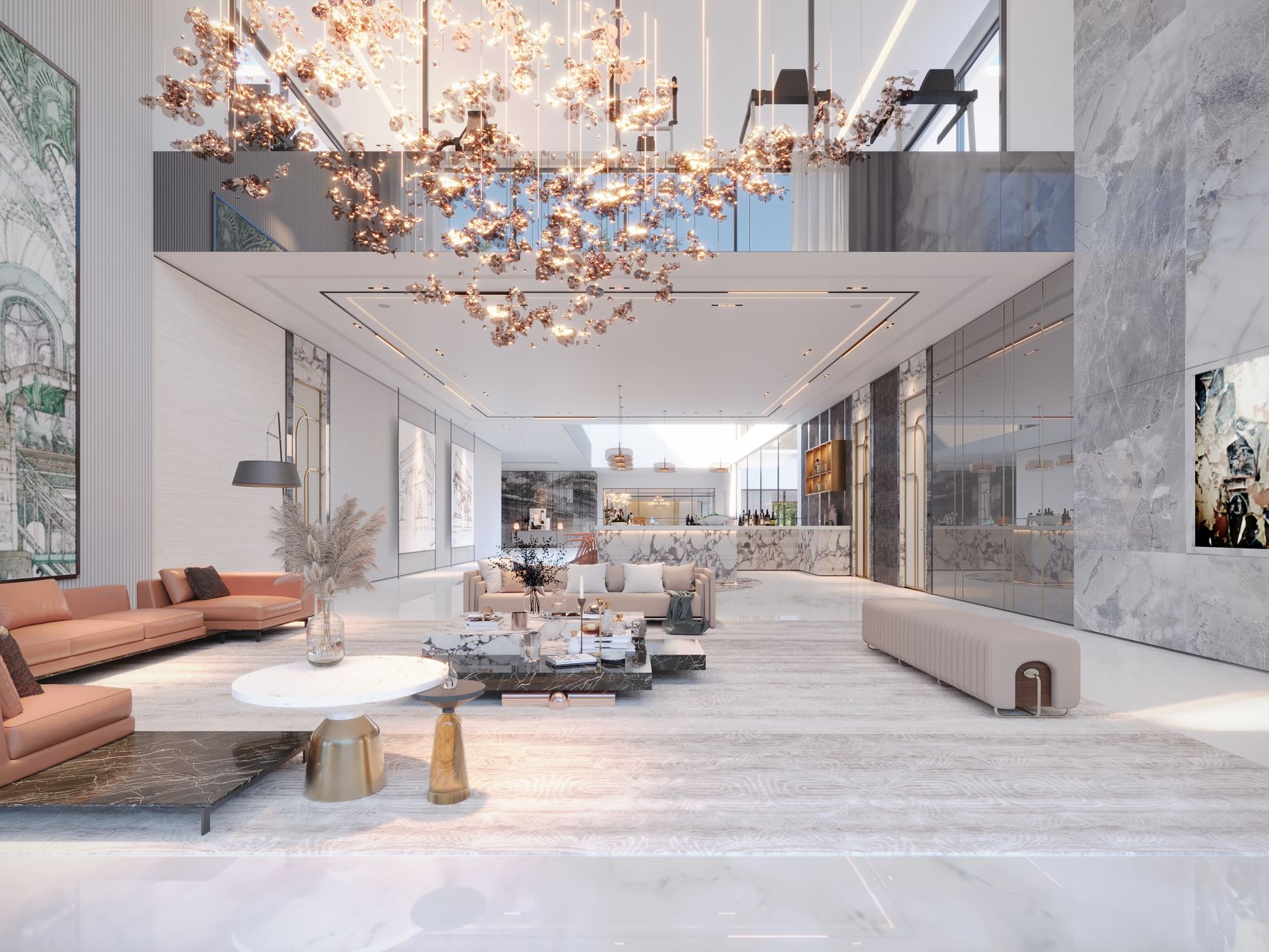
Branded residences, premium later living and wellness real estate are growing quickly. But there is still one question luxury rarely asks: will this beautiful home continue to work when the life inside it changes?
One of the strange things about luxury is how often it begins with a fixed version of us.

The plans assume we will arrive walking. That we will see and hear every instruction. That we will sleep well, move easily and remain much the same as we were when they were drawn.
Real life is less tidy.
We age. We have surgery. Our sight, hearing, energy or mobility changes. Disability enters a family. Parents and adult children travel together. Grandparents buy homes intended to hold several generations. Sometimes we need somewhere private to recover. Sometimes we simply want the reassurance that our home won’t become the reason we lose our independence.
None of that is unusual.
Yet luxury property still treats it as a specialist conversation.
As a wheelchair user reviewing luxury hospitality, I notice the gap quickly. A villa can be architecturally beautiful and still leave me unable to reach the terrace. A residence can have an extraordinary spa, yet the treatments mean very little if I can’t enter the space or use the facilities with dignity.
The marble matters. The view matters. The service matters.
But they only become luxury when the person who paid for them can use them.
In a hotel, a poor decision may compromise a few nights. In a residence, it can shape every day.
That is why I believe the next serious conversation in luxury living isn’t simply about accessible residences.
It is about exceptional residences designed around the whole of a life.
A New Category Is Beginning to Form
There isn’t one established market with that name.
What we can see instead is the meeting point between four already valuable sectors: branded residences, premium later living, wellness and longevity real estate, and private villas or serviced homes designed for longer and multi-generational stays.
Each is growing for a slightly different reason.
Branded residences sell service, trust and certainty.
Wellness real estate sells a healthier future.
Later living sells independence and reassurance.
Private villas sell space, privacy and the freedom to live more on your own terms.
The person inside the residence may want all four.
The Money Is Already Moving
It is important not to inflate the opportunity by adding these market values together. They overlap, and there is no reliable published valuation for a separate “luxury accessible residence” market.
I don’t think we need to invent one.
The convergence is compelling enough.
Savills published its latest global branded-residences report in February 2026. It estimated that the sector had grown to around 910 schemes by the end of 2025. That is a historic estimate, not a current 2026 forecast.
The more useful forward-looking evidence is the pipeline. Savills identified a further 837 contracted projects scheduled to come to market by 2032. If delivered, that would take the global total to 1,747 schemes. The same report placed the average global brand premium at 33 per cent.
Those buyers aren’t only paying for a name above the door.
They are paying for confidence.
In RCLCO’s 2025 survey of qualified vacation and investment-home buyers, around 80 per cent expressed interest in branded residences. A large share said they would pay a premium of between 20 and 30 per cent for the service and investment reassurance attached to a recognised luxury brand.
Wellness real estate is moving even faster. In May 2026, the Global Wellness Institute valued the market at $876 billion in 2025 and forecast it to reach $1.8 trillion by 2030. The UK was its third-largest national market, at $51 billion.
The Lives Behind the Market
At the same time, the lives these homes need to support are changing.
The Office for National Statistics’ latest population projections, released in April 2026, estimate that the number of people aged 85 and over in the UK will double from 1.75 million in 2024 to 3.6 million by 2049.
Meanwhile, the latest English Housing Survey found that 37 per cent of households included someone living with a long-term illness or disability in 2024–25. Among households led by someone aged 65 or over, that rose to 49 per cent.
Changing health and access aren’t edge cases.
They are part of ordinary family life.
Who Is Actually Buying?
The mistake would be to define this audience only by age or disability.
An affluent later-life buyer may be completely independent today. They aren’t necessarily looking for “retirement living”, and they may actively resist the label. They want a beautiful home, a desirable location, less responsibility, thoughtful service and the confidence that another move won’t become necessary later.
A disabled or chronically ill buyer may want exactly the same thing, at any age.
Their requirements might include step-free circulation, space to transfer, quieter interiors, intuitive controls, support for fatigue or a bathroom that can change with them. They may also want excellent design, privacy, a pool, a chef and a view worth waking up for.
One shouldn’t cancel out the other.
Family, Recovery and Longer Stays
Multi-generational families bring another set of needs.
A family may buy or rent a larger villa so grandparents, adult children and younger family members can spend meaningful time together. Yet “multi-generational” too often means enough bedrooms and a good dining table.
It doesn’t always mean that everyone can reach the pool, use a bathroom comfortably or join the family on the terrace.
Then there are people looking for a private residence during recovery.
Some may be leaving hospital after orthopaedic surgery, cancer treatment or a serious illness. A hotel may not offer the space, equipment or support they need. By contrast, a clinical setting may provide care but very little sense of home.
The valuable space between them is calm, domestic and beautifully serviced, with clinical expertise brought in by the right regulated partners where needed.
These are different buyers and different moments in life.
What connects them is the purchase of certainty.
This Is a Luxury Question, Not a Claim to Solve the Housing Crisis
There is an important distinction to make here.
The shortage of suitable housing for disabled and older people is a much wider and more serious issue than luxury. The most recent confirmed public delivery figure from Knight Frank recorded 6,380 new homes in the UK seniors-housing sector in 2024.
The government’s Older People’s Housing Taskforce also found that planning consents in England for later-living housing had fallen from around 180 in 2015 to 80 in 2023.
This article isn’t using that shortage to make expensive homes sound virtuous.
It is identifying a separate failure inside a market that already promises to anticipate every detail.
If a residence can personalise the scent in its lobby, arrange a private chef and build an entire longevity floor, it can also think carefully about thresholds, transfer space, pool access, sensory comfort and how support is received in someone’s home.
That isn’t charity.
It is the product doing its job properly.
The Market Is Moving, But in Separate Directions
There are already residences beginning to speak parts of this language.
I haven’t reviewed the following properties in person, so I’m not presenting them as proof of how the full experience works in practice. Their published propositions are still useful because they show where the market is moving.
Three Signals From the Market
Riverstone combines private later-living apartments with concierge, driver and wellbeing services. More significantly, it says residents can remain in their own apartment if their care needs change, with a health concierge and specialist partners helping to coordinate support.⁸
Auriens Chelsea has taken recovery out of the purely clinical setting through a dedicated post-operative recovery suite, bringing expert care into discreet five-star surroundings.⁹
Six Senses Residences Dubai Marina places wellness at the centre of its residential promise. The development pairs its 250 homes with 61,250 square feet of wellness space across four levels, including hydrotherapy, cryotherapy and hyperbaric oxygen facilities within a dedicated longevity offering.¹⁰
Each answers a different part of the question.
Riverstone considers remaining at home as needs change. Auriens recognises the space between hospital and home. Six Senses shows how seriously the luxury market is investing in longevity.
What is still less visible is one joined-up standard connecting the private home, shared amenities, service, wellness, family life, access and long-term adaptability.
That isn’t a criticism of the examples above. I haven’t tested them.
It is where the opportunity begins.
Wellness Is Not the Same as Working Well
The growth of wellness real estate is exciting, but it also reveals one of the clearest gaps.
Much of the market centres on optimisation.
Better sleep. Cleaner air. Stronger bodies. Longer lives. Private diagnostics. Cold therapy. Movement, nutrition and recovery.
There is real value in that.
However, a home can promote health and still fail the person whose health is already complicated.
Chronic pain doesn’t always respond to a beautiful gym.
Fatigue changes how far a person can move through a building.
Reduced dexterity determines whether a smart-home interface is genuinely smart.
Sensory difference changes how someone experiences lighting, acoustics and scent.
An infinity pool isn’t a wellness amenity for the resident who cannot enter it.
This doesn’t diminish the innovation. It asks it to work harder.
The next step for wellness-led living isn’t simply adding more treatments. It is making wellbeing useful across a wider range of bodies, senses, energy levels and stages of life.
That is longevity of experience.
What Should an Exceptional Residence Be Able to Do?
This goes far beyond an accessible bathroom.
The visible adaptation is often the least interesting part. The real standard is whether design, information and service work together so the resident can live well without having to negotiate every part of their own home.
I would begin with eight questions.
Trust, Arrival and Ordinary Life
- Can the buyer trust the information? Plans, measurements, photographs and sales conversations should provide enough detail for an informed decision, without relying on vague reassurance that the team will “do their best”.
- Does arrival protect the promise? Parking, transfers, luggage, entrances, gradients, reception and assistance should feel like part of the same considered experience.
- Does the private home work in ordinary use? Circulation, kitchens, bedrooms, bathrooms, balconies, storage and controls matter. So does space for mobility equipment, medication or the things a resident may not want on display.
- Can the resident share in the life around the home? Pools, spas, restaurants, gardens, beaches, gyms and social spaces aren’t extras if they helped sell the residence.
Service, Wellbeing and Change
- Can service enter without taking over? Teams should deliver housekeeping, maintenance, dining, nursing, physiotherapy or personal assistance with discretion and respect for the fact that this is someone’s home.
- Does wellness include imperfect health? The experience should consider pain, fatigue, hearing, sight, sensory comfort, fluctuating capacity and recovery, not only fitness and performance.
- Can family and support fit naturally? Multi-generational living, visiting relatives, personal assistants and live-in support all need privacy, workable room allocation and dignity.
- Can the residence change? The strongest homes anticipate future fittings, different layouts, equipment charging, changing support and emergency planning before any of it becomes urgent.
Not every residence will meet every possible need.
That isn’t a realistic promise.
What it can do is understand who it works for, communicate that honestly and build in enough intelligence for the home to respond when life changes.
The Commercial Value of Thinking Early
The best time to ask these questions is before the plans are fixed.
A reinforced bathroom wall costs very little before it is clad in marble.
A flush threshold is easier to design than to correct.
Likewise, teams can resolve the size of a lift, the route to a pool, the position of a control panel and the possibility of adjoining accommodation for family or support far more easily before construction.
Good design doesn’t need to announce access.
Often, the most elegant decision is the one almost nobody notices.
For developers and operators, this isn’t only about avoiding expensive retrofit. It protects the confidence buyers believe they are purchasing. Thus, giving sales teams something more useful than goodwill. It allows more residents to use the amenities carrying the property’s value.
More importantly, it strengthens the relationship between a luxury brand and the people trusting it with their home.
Buyers are already paying premiums for reassurance, service and quality.
The question is whether that reassurance survives real life.
A Residence Held to Its Own Standard
Through The Inclusive Edit, I’m beginning to take the guest-journey thinking used across luxury travel and apply it to private and branded residences.
The setting changes, but the principles don’t.
Can someone understand the experience before committing to it?
Will they arrive with confidence?
Can they use what has been promised?
Will the team offer support without reducing dignity?
Does the service remain thoughtful when the resident’s circumstances are no longer straightforward?
This work will need collaboration. Architects and inclusive-design specialists understand the technical fabric. Regulated partners must lead on clinical care and rehabilitation. Developers, operators and service teams understand what they can deliver at scale.
My role is to connect those decisions to the person living through them.
I don’t want to turn beautiful homes into care settings.
Quite the opposite.
I want the home to remain beautiful, private and fully the resident’s, even when care, recovery or a different way of moving through the world becomes part of life.
A truly exceptional residence shouldn’t only reflect how someone lives today.
It should protect who they are allowed to remain as life changes.
Independent.
Connected.
Able to host the people they love.
Free to receive support without losing privacy.
Still able to use the beautiful things they have paid for.
That isn’t a specialist extra.
It is the standard.
And it is where I believe luxury living has to go next.

Leave a Reply