
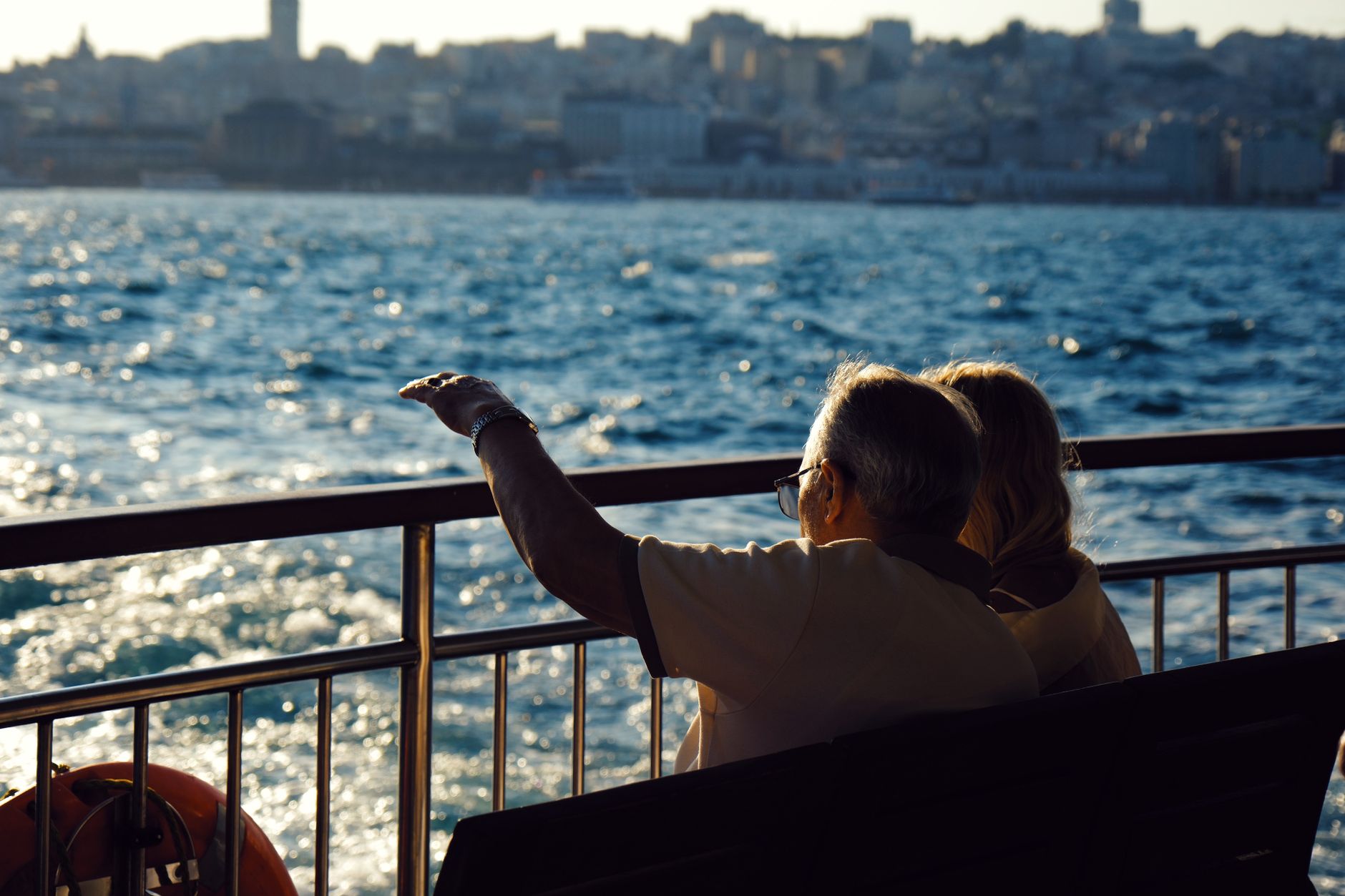
Older luxury travellers are travelling often, spending more and placing a premium on service. Many hold substantial household wealth. Disability is also far more common in later life. Yet luxury travel still treats age, wealth and access as separate conversations, missing the valuable guest where they meet.
Luxury travel has a remarkably fixed picture of its best customer.
They are affluent, certainly. Time is valuable, along with privacy and service. They choose the better suite, the longer itinerary and the seat that makes the journey feel part of the holiday.
They are also, in most of the imagery, young enough never to think about a handrail. Moving through an airport without assistance. Stepping into a tender without hesitation and cross a safari camp as though every path was designed around them.
The real luxury traveller is more interesting than that.
They may be 68 and travelling five times a year. Maybe they use a walking stick, manage fatigue or need more time between the lounge and the gate. They could be a wheelchair user booking a lie-flat seat because arriving well matters more than being seen at the front of the aircraft. They may take their children and grandchildren on a cruise, then choose a private safari because they still want the world to surprise them.
Wealth, age and disability are not contradictory identities.
Quite often, they belong to the same person.
Yet the industry still separates them. The affluent traveller appears in the luxury strategy. The older traveller appears in a demographic report. The disabled traveller appears on an assistance page.
The whole guest disappears between them.
Wealth and Later Life Already Overlap
The Office for National Statistics found that 22 per cent of people aged 65 and over in Great Britain lived in a household with total wealth of £1 million or more between April 2020 and March 2022.
That figure includes property, private pensions, financial assets and physical wealth. It isn’t the same as having £1 million available to spend. But it does show that later life and considerable accumulated wealth overlap far more often than luxury travel tends to acknowledge.
The same ONS household wealth data placed median household wealth at £502,500 where the household head was aged 65 to 74, higher than for any other age group.
Age isn’t a proxy for affluence. Millions of older people aren’t wealthy, and a rising property value doesn’t automatically create a generous travel budget.
The commercial mistake is the reverse one: behaving as though later life and high spending rarely meet.
They already do.
Older Luxury Travellers Are Spending More
Barclays’ latest travel analysis found that consumers aged 65 and over increased their travel spending by 6.8 per cent in 2025. That was twice the 3.4 per cent growth recorded among 50 to 64-year-olds.⁴
YouGov’s research into affluent senior travellers gives us a closer view of that audience. It looked at Britons over 60 with incomes above 200 per cent of the median. Seventeen per cent travelled for leisure five or more times a year, compared with 10 per cent of similarly affluent people under 60. Fifteen per cent had spent more than £2,500 on their last holiday, against 6 per cent of their younger financial peers.⁵
The more revealing difference is what they value.
More than a quarter, 27 per cent, said service quality was their primary motivation when choosing holiday transport, compared with 20 per cent of affluent younger travellers. Only 16 per cent were led primarily by cheap prices, against 29 per cent of the younger group.⁵
This is not simply an audience with more time.
It is an audience willing to pay when quality gives them something worthwhile in return.
That might be a beautiful suite. It might be a direct route, a private transfer, a quieter pace, a trusted adviser or a team that understands what has already been agreed.
Sometimes the thing being purchased as luxury is also making the journey possible.
Age and Disability Already Overlap
The Department for Work and Pensions’ latest Family Resources Survey estimates that around 45 per cent of people of State Pension age are disabled. Among disabled pensioners, 68 per cent report a mobility impairment. Forty-five per cent experience an impairment involving stamina, breathing or fatigue, and 34 per cent report dexterity impairment.⁶
Those categories overlap. They also describe very different ways of travelling.
A mobility impairment may affect the distance between check-in and the gate, the height of a bed or whether a shore excursion can be joined. Fatigue may make a connection that looks comfortable on paper completely unrealistic. Reduced dexterity can change whether a heavy cabin door, touchscreen control or buffet service works independently.
None of these tells us what somebody wants from a holiday.
They tell us what the journey may need to do.
The spending is already visible beyond the luxury category. VisitEngland estimates that trips taken by people with a health impairment and their companions generate £14.6 billion in annual travel expenditure in England. In 2024, they accounted for 23 per cent of domestic overnight trip spending.⁷
That is not a measure of luxury demand, and it should not be presented as one. It does show why disabled travel cannot sensibly be treated as a small service issue at the edge of the market.
The future makes the overlap more important. ONS population projections show that the UK’s population of State Pension age is expected to grow from 12.4 million in 2024 to 14.2 million by 2034. The number aged 85 and over is projected to double to 3.6 million by 2049.⁸
Luxury travel does not need to turn ageing into a problem.
It needs to stop designing as though it will not happen to its customers.
Cruise Is the Clearest Commercial Proof
Cruise brings this market into focus because the age profile is already published.
CLIA’s Europe Market Report 2025 records that 2.538 million people from the UK and Ireland took an ocean cruise, an increase of 5.7 per cent in a year. Their average voyage lasted 9.6 days, the longest of any European source market.⁹
More importantly, 52 per cent of those guests were aged 60 or over. Thirty per cent were between 60 and 69, while 22 per cent were 70 or older. CLIA does not publish an exact 65-plus split, so it would be wrong to invent one. What the available bands show is already compelling.
More than half of this large and growing cruise market is over 60.
YouGov’s affluent-traveller data points in the same direction. Twenty-four per cent of wealthy over-60s favour cruises, compared with 8 per cent of equally affluent younger travellers.⁵
It makes sense.
A cruise can remove many of the exhausting transitions that make other forms of travel difficult. The suitcase is unpacked once. The accommodation, restaurants, entertainment and changing view move together. Service is close at hand. Families can share a journey without needing every person to move at the same speed.
For some disabled and older travellers, that controlled environment can create confidence that a multi-stop land itinerary cannot.
But confidence on board is not the same as access to the whole experience.
As I explored in Luxury Accessible Cruise Travel Is Bigger Than Cabins, the real journey includes the transfer, terminal, suite, dining room, spa, pool deck, tender and shore. A ship can provide an excellent accessible cabin and still leave the guest watching part of the holiday from the wrong side of a threshold.
Our practical guide to accessible luxury cruise travel goes further into the questions travellers need to ask before booking. That level of research should not be necessary simply to discover whether the experience being sold is the experience someone can use.
Cruise lines already understand loyalty, cabin value, itinerary preference and onboard spend.
The opportunity is to understand how age, access, companions and the full guest journey affect that value too.
Premium Air Travel Shows What the Data Misses
Premium aviation is growing. IATA recorded 109.7 million international business and first-class passengers in 2025, up 4.5 per cent in a year. Europe was the largest regional premium market, with 39.7 million passengers.¹⁰
Demand for airport assistance is growing faster still. The UK Civil Aviation Authority reported that 5.5 million passengers requested assistance at UK airports in 2024. That was 1.9 per cent of all passengers, more than double the 0.94 per cent recorded in 2010.¹¹
What the published figures do not tell us is how often the person in the premium-cabin data is also the person in the assistance data.
They do not tell us how many are over 65. They do not show whether a passenger chose business class for status, privacy, pain management, reduced fatigue or the ability to arrive with enough capacity to begin the trip.
The airline may know the cabin. The airport may know the assistance code. The loyalty programme may know the value of the customer.
Too often, the experience does not join those facts together.
There is another useful caution here. YouGov’s 2025 profile of first-class travellers in Great Britain found that only 5 per cent of those who had booked first class in the previous year were baby boomers.¹² That is first class, not business class or premium economy, and baby boomer is not an exact substitute for 65-plus. It does stop us making a lazy claim that affluent older travellers must dominate the front of the aircraft.
In fact, YouGov found that only 8 per cent of affluent over-60s named high-end services such as first class as their primary reason for choosing transport. Service quality and travelling at the time they wanted mattered much more.⁵
That distinction is where the opportunity sits.
The older high-value traveller may not be looking for the performance of first class. They may be looking for space, certainty, a better schedule, fewer physical consequences and support that does not unravel between the lounge and the aircraft door.
I have written before about why business class can become access for some disabled travellers. A lie-flat seat can provide pressure relief. More room can make repositioning possible. A quieter cabin and a more considered ground journey can protect energy that would otherwise be spent before the holiday begins.

That does not mean disabled people should have to buy their way into dignity. Every cabin needs to work better for a wider range of bodies and needs.
It does mean premium airlines should understand that some of the features they sell as comfort are doing practical work for the customer who buys them.
If the industry never measures that, it will continue to misunderstand both the sale and the guest.
Travel Ambition Does Not Narrow With Age
There is another assumption worth removing.
Older affluent travellers do not only want slow, familiar or undemanding holidays.
YouGov found that 24 per cent favoured visiting several countries in one trip, slightly ahead of affluent under-60s at 20 per cent. Eight per cent named safari as their favourite holiday type, compared with 6 per cent of the younger group.⁵
Those differences are modest, but the point is important.
Later life does not extinguish curiosity.
Nor does disability.
In Luxury Safari as a Wheelchair User, I wrote about why safari can work so well when the camp, vehicle, transfer and guide are chosen with care. The private vehicle, experienced team and highly personal planning that luxury sells as exclusivity can also create access.
That is true across travel types.
A private guide can adapt the pace without reducing the experience. A villa can give several generations space to stay together. A longer cruise can offer scale without repeated packing. A premium seat can preserve the body for what comes after landing.
The product does not need to become less ambitious.
It needs to become more intelligent about who is buying it.

Why Luxury Keeps Missing the Same Guest
Luxury travel is fluent in personalisation.
It remembers a preferred wine, pillow, table and departure time. It can recognise a returning guest across continents.
Yet it still struggles when the information describes how that guest moves, rests, hears, sees or manages energy.
Part of the problem is organisational.
Age sits in audience segmentation. Wealth sits in customer value. Disability sits in special assistance or compliance. Cruise shore operations, airline ground handling, hotel sales and loyalty teams may each hold one piece of the journey.
Nobody sees the same person whole.
Representation follows the same pattern.
The older traveller is too often shown as a generic retirement customer. The disabled traveller is shown receiving help. The luxury traveller remains polished, young and physically effortless.
That imagery does more than look dated.
It tells high-value customers that aspiration has an age limit and disability belongs somewhere outside it.
The answer is not a separate beige version of luxury for the over-65s. Nor is it a campaign that turns disabled guests into an uplifting story.
It is the same beautiful world, represented with a more truthful understanding of who is already in it.
How Luxury Travel Brands Can Serve Older Travellers Better
The absence of one perfect market figure is not a reason to wait.
It is a reason to connect what brands already know.
Age, loyalty, booking value, cabin or room type, assistance, companions and post-travel feedback are often held separately. Used carefully, and with proper privacy protections, those details can reveal where a valuable guest loses confidence or stops spending.
The purchase itself deserves closer attention too.
A customer may choose the suite, private transfer, longer connection or premium seat for celebration or indulgence. They may also be buying space for equipment, relief from pain, a quieter environment, greater privacy, reduced fatigue or the chance to arrive well.
Both are commercially relevant.
Then there is the question of whether the guest can use what carries the price.
On a cruise, that means more than the cabin. In a resort, it means more than the room. In the air, it means more than the seat. If the spa, pool, shore experience, lounge, chauffeur service or dining offer helped justify the premium, access to it is part of the product.
Confident decisions also depend on information.
Luxury customers should not need a forensic investigation before they spend. Clear measurements, recent photographs, accurate boarding information and a named person who understands the journey are not unglamorous details.
They are confidence.
This whole-journey view is also the principle behind The Inclusive Edit’s approach to accessible hotel accreditation. One room or facility cannot tell us whether an experience works. The information before booking, arrival, service, movement through the property and what happens when something changes all belong to the same standard.
Representation matters for the same reason.
An older person should be able to see aspiration without being sold retirement. A disabled person should be able to see luxury without being turned into a medical subject. A family should be able to see several generations sharing the same exceptional experience.
If none of them can, the brand may be excluding the customer before any physical barrier is reached.
A Market That Does Not Need to Be Invented
There is no responsible way to take the wealth figure, the disability figure, the cruise figure and the premium-air figure, stack them together and announce the size of a new luxury market.
The datasets overlap, but they do not identify exactly the same people.
That restraint does not weaken the case.
It reveals the case.
Older people hold a significant share of household wealth. Their travel spending is growing. Affluent over-60s travel frequently, spend more and place greater value on service than price. Disability becomes much more common in later life. Cruise already depends heavily on travellers over 60. Premium aviation and airport assistance are both growing, while the relationship between them remains largely unmeasured.
The customer is visible in every dataset.
Only the whole customer is missing.
This same question now reaches beyond the holiday itself. In The Future of Luxury Living, I explored what happens when private and branded residences are expected to work across the whole of a life. The principle is the same.

People do not stop valuing beauty, privacy, adventure or excellent service because their body changes.
The high-spending older traveller with access needs is not an emerging curiosity.
They are booking the cruise, choosing the better room, paying for the seat that lets them arrive well, planning the safari and taking children and grandchildren with them.
This market does not need to be created.
It needs to be recognised, represented and served to the standard it is already paying for.
Sources
- UBS, Global Wealth Report 2025 and UBS, Global Wealth Report 2026.
- Office for National Statistics, Pensioner Households With Assets Over a Million, released 12 May 2026.
- Office for National Statistics, Household Total Wealth in Great Britain: April 2020 to March 2022, released January 2025.
- Barclays, Travel in 2026: A Resilient Industry With Rewritten Assumptions, published 22 April 2026.
- YouGov, Golden Years, Golden Opportunities: The Rise of Affluent Senior Travellers, published 11 July 2025.
- Department for Work and Pensions, Family Resources Survey: Financial Year 2024 to 2025, published 26 March 2026.
- VisitBritain and VisitEngland, Accessible and Inclusive Tourism, using 2023 inbound and 2024 domestic data.
- Office for National Statistics, National Population Projections: 2024-based, published April 2026.
- Cruise Lines International Association, Europe Market Report 2025, published May 2026.
- International Air Transport Association, 2025 World Air Transport Statistics, released 16 July 2026.
- UK Civil Aviation Authority, Airport Accessibility Assistance Report, covering 2024 passenger demand.
- YouGov, Who’s in the Front of the Plane?, published 10 March 2025.

Leave a Reply