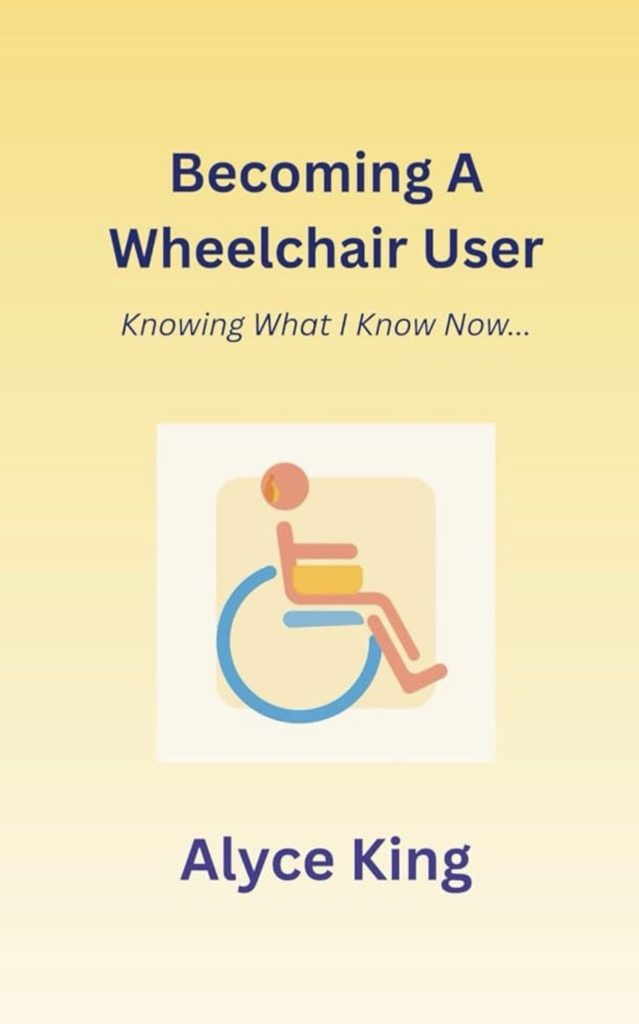
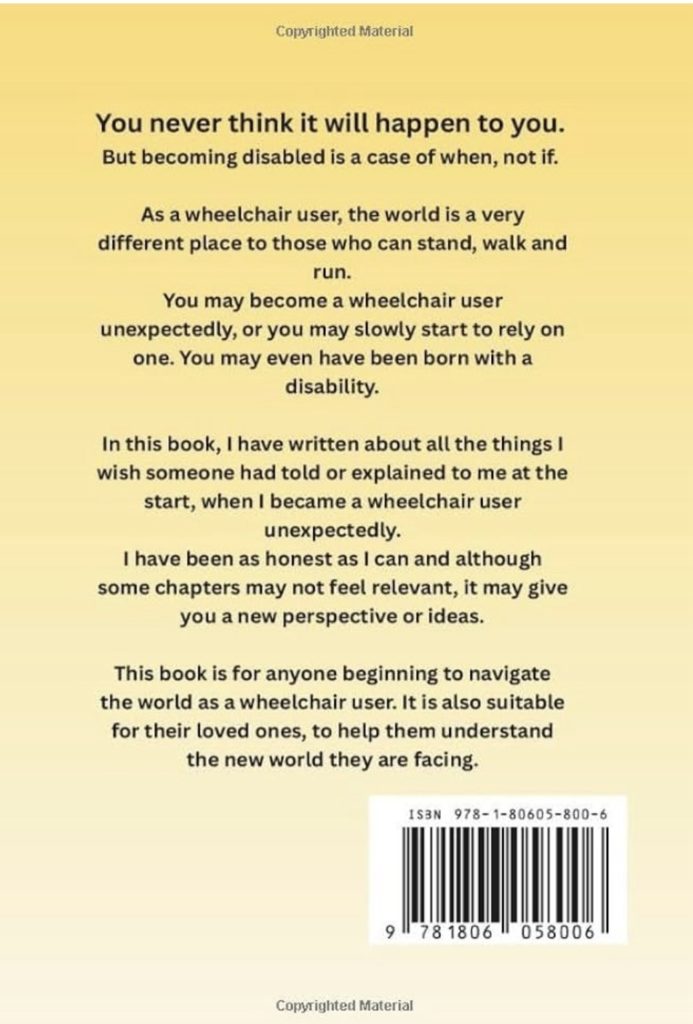
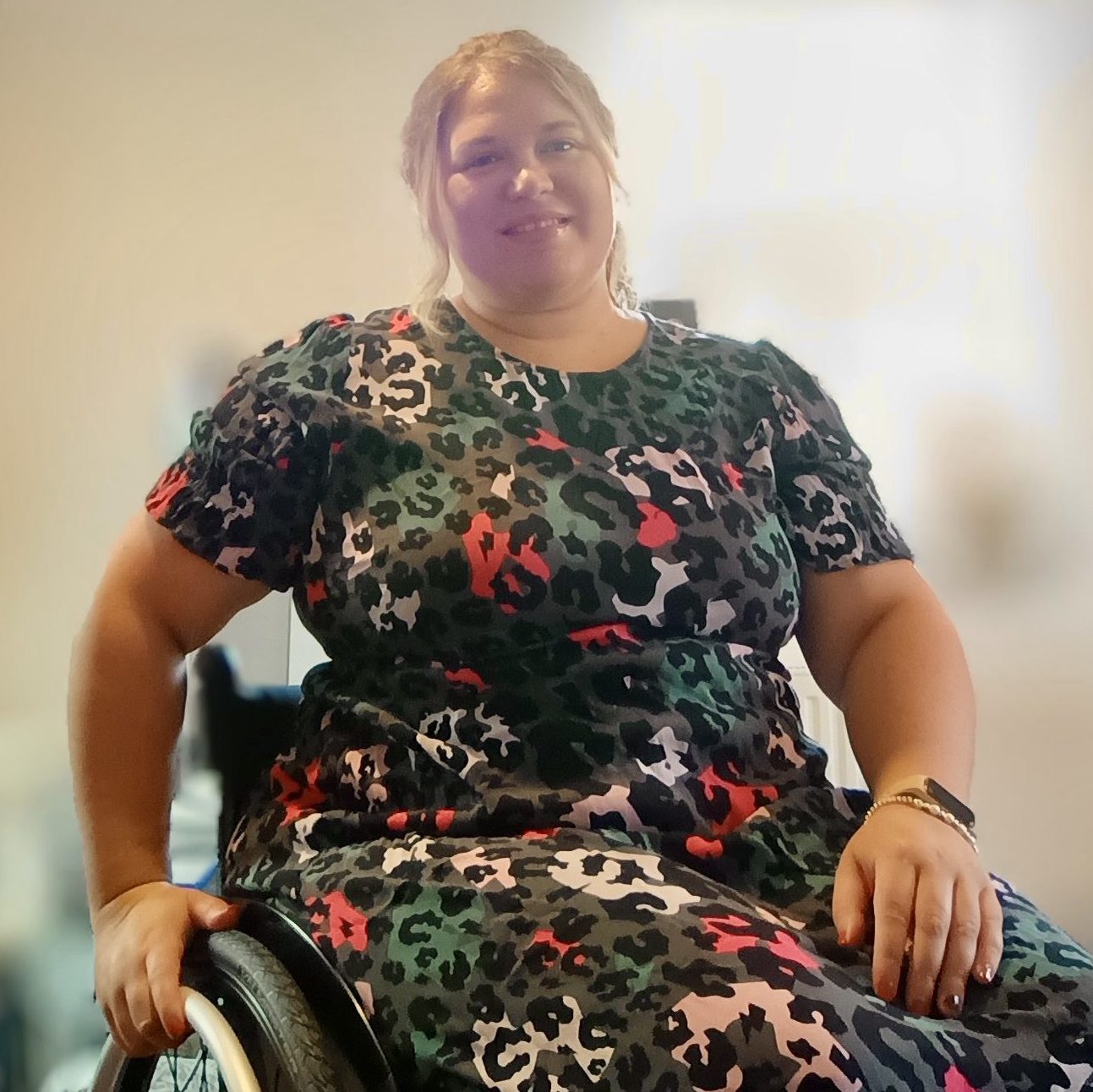
When Alyce King became a full-time wheelchair user almost overnight, the guidance around her stopped where real life began. Through Becoming A Wheelchair User: Knowing What I Know Now, she has turned the practical knowledge, emotional truth and realistic hope she needed into something the next person can hold onto.
When Alyce King returned home from hospital, home wasn’t ready for her.
Steps ran through the house. A hospital bed had to be placed in the living room, with a commode beside it. The life she had known, shaped by horses, self-employment, early starts and long working days, narrowed rapidly to a room she could barely move beyond.
The change had been sudden. One day, Alyce could stand and shuffle. The next, she couldn’t stand at all, and she hasn’t since.
She says she waited eight days for spinal surgery while the hospital continued trying to mobilise her with different strengths of pain relief. After returning home, she was housebound for around nine months. The diagnosis and recovery plan she had been given didn’t feel right, and although she repeatedly raised those concerns, she felt nobody listened.
“My world felt and became very small, very dark, very quickly. I had no idea what my future was, if there was one, other than the four walls I was looking at while others had to do everything for me.”
What Alyce needed at that point wasn’t a bright promise that everything would return to normal. She needed someone to acknowledge the scale of what had happened, help her understand the life in front of her and offer a form of hope that could survive contact with reality.
She couldn’t find that book.
So, eventually, she wrote it.
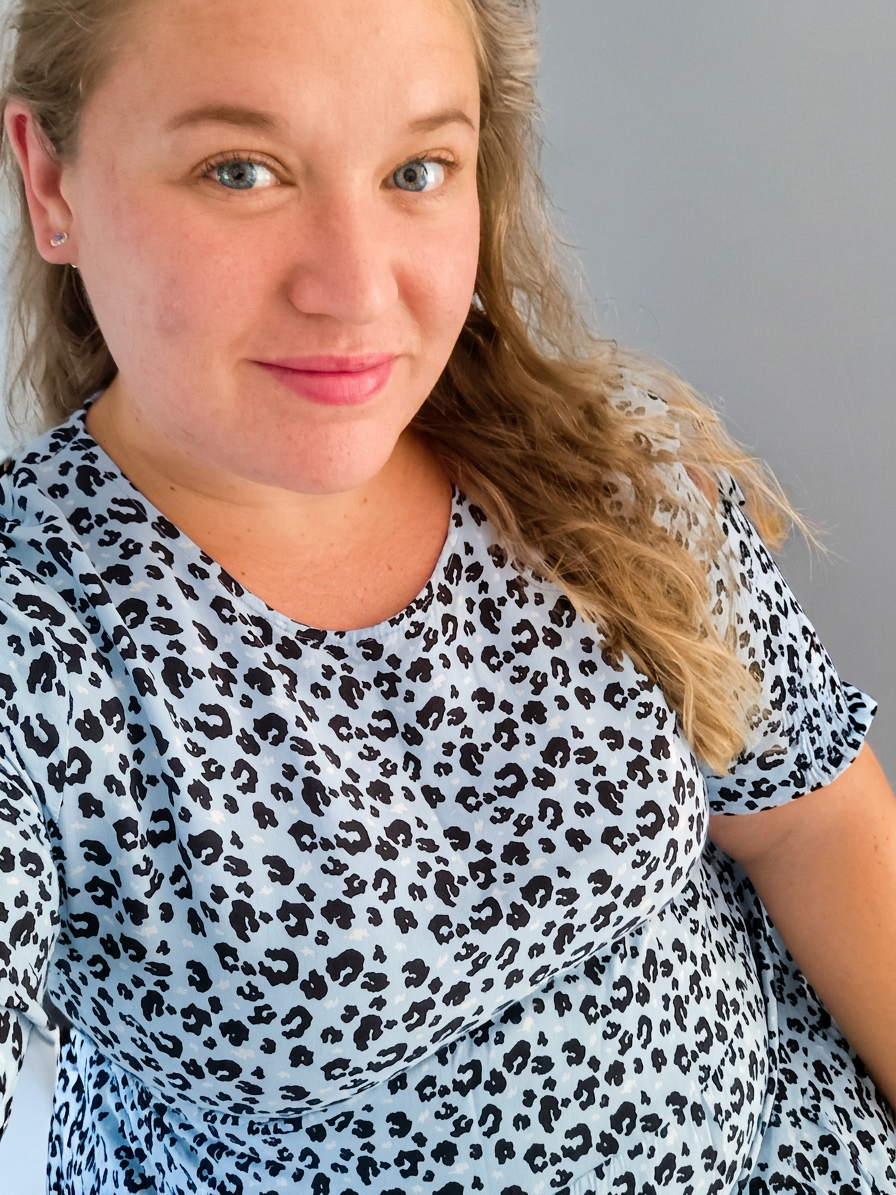
“I needed a purpose and I needed realistic hope”
Before becoming a wheelchair user, Alyce had always worked. Whether employed or running her own business, she was used to being busy, independent and needed. Her mornings started early because she had horses, and her days often finished late.
Losing that rhythm affected far more than her diary.
“I needed a reason to get dressed each morning,” she says. “And realistic hope that life would get better, whatever better may look like.”
The distinction matters. Hope can be comforting, but it can also become empty when it is offered without information, support or an honest understanding of the barriers ahead.
Alyce remembers being told that she would walk again if she tried and kept hoping. The reassurance placed the good outcome somewhere in the future, attached to standing and walking, while leaving her with very little help to live in the body and circumstances she had now.
“The realistic bit is the important bit,” she explains. “Not the hope that feels like something nice to say. The hope when someone says, ‘Yes, trying to do that is hard, but if you try this instead, it becomes possible.’”
That idea became the emotional centre of Becoming A Wheelchair User: Knowing What I Know Now. The book doesn’t pretend that a life-changing loss of mobility is simple, nor does it reduce wheelchair use to tragedy. Instead, it sits honestly between the two.
There are painful changes, practical barriers and moments when the future is difficult to imagine. There is also movement, community, self-expression, work, joy and a life that can become yours again, even when it doesn’t look like the one you expected.
The book Alyce had been looking for
Writing had been part of Alyce’s life long before she called herself an author.
At school, she was the girl who turned an assignment to write an opening chapter into a complete story. She always wanted to write but didn’t know how someone was supposed to become a writer, and the ambition drifted into the background during early adulthood.
Words returned when she needed somewhere to put everything that had happened.
Reading and writing helped Alyce process the changes in her body, identity and daily life. Putting an experience on the page made it feel real without requiring her to explain it aloud before she was ready.
“It validates feelings, thoughts and experiences because they are in words,” she says. “It’s set on a page, inked. It can’t be erased unless you choose to.”
Her poetry and non-fiction are different forms of the same instinct. Both come from moments she was trying to understand; feelings she couldn’t yet organise and the slow work of finding herself after a major life change.
The book didn’t begin with a formal plan. Alyce was working on what would later become its opening chapter, although it was one of the last sections she wrote, when the purpose of the project became clear.
“I suddenly realised this is the book I wish I could have had. It’s got hints, tips, learned and lived experience, as well as advice, resources and hope.”
That combination is what gives the book its weight. Practical information appears alongside the emotional reality of needing it. Mobility aids, equipment, sport, relationships, charities and acceptance are not treated as separate categories in a new wheelchair user’s life. They overlap, often on the same day.
A chair may make movement possible, while the outside world still makes going out exhausting. Equipment can restore privacy, yet asking for it may require conversations a person has never expected to have. Support from family can be essential, while the change from loved one to carer alters a relationship in ways neither person has been prepared for.
Alyce wanted the book to tell the truth about those intersections.
“Life is hard as a wheelchair user, as it is with any disability. I don’t shy away from that, but there is hope, there is joy to be had, and there is a life for them. It just takes a hell of a lot to get there.”
When discharge is treated as the end of the story
Alyce’s experience is personal, but the gap she describes belongs to a much wider conversation about what happens after somebody is medically ready to leave hospital.
England’s hospital discharge guidance says planning should begin on admission. Patients and unpaid carers should be involved, immediate support needs should be understood, and conversations should include equipment, home adaptations, recovery support and the practical conditions a person is returning to.
NICE guidance on rehabilitation after traumatic injury similarly calls for a personalised, holistic assessment that considers physical, psychological and cognitive needs, followed by coordinated support across hospital and community services.
On paper, which recognises something vital: leaving hospital isn’t the same as being ready for life at home.
The difficulty is what happens in practice. The Care Quality Commission’s 2024 Adult Inpatient Survey gathered responses from more than 62,000 people who had stayed in NHS hospitals in England. Although most had discussed their health or social care needs before leaving, 23.1 per cent said they didn’t receive enough support from health or social care services to recover or manage their condition after discharge.
Not everyone within that survey was adapting to a life-changing injury or becoming a wheelchair user, but the finding gives wider context to the space Alyce is writing into. A discharge process can be clinically complete while the person going home is still facing an inaccessible house, missing equipment, uncertain follow-up and a family suddenly expected to provide care they haven’t been shown how to give.
Home is only the right place when home works.
That principle connects directly with a question I explored in An Accessible Bathroom for Whom?. A room can carry an accessible label and remain unusable for the person in front of it. The stakes are different in somebody’s own home after injury, but the test is the same: can they reach the toilet, transfer, wash, move between rooms and retain some privacy without being placed at avoidable risk?
For Alyce, a hospital bed in the living room and a commode beside it were not minor domestic details. They shaped her dignity, dependence and understanding of what her future might contain.
A genuinely person-centred pathway cannot stop at the hospital door. Recovery also lives in the bathroom, the bedroom, the front step, the relationship with the person providing care and the first attempt to leave the house.
The parts of wheelchair use people don’t see
People often understand becoming a wheelchair user as a physical change. Alyce describes something much wider.
There was grief for the person she had been and the life she had expected to continue. Loved ones became carers. Places she once entered without thought were no longer available to her. Pavements without dropped kerbs changed routes, and every trip outside the house carried a new layer of planning.
Behind closed doors, the loss of privacy was even harder. Personal care, bladder and bowel management and the practical reality of needing help affected Alyce’s confidence, yet these were not subjects she felt able to bring into ordinary conversation.
“The silent hours in the night when the world crumbles in and you have no answers, only questions. What now, what next, how?”
Those experiences are rarely visible when someone sees a wheelchair in public. They may see a mobility aid, but not the months of adjustment behind it, the access research completed before leaving home or the emotional work required to be seen again.
By writing about what is usually hidden, Alyce gives new wheelchair users language for experiences they may have assumed belonged only to them. Families and friends are also given a clearer view of what support can mean beyond pushing a chair or helping with a physical task.
The book is intended for that wider circle. Alyce wrote for full-time, ambulatory and temporary wheelchair users, but also for relatives, friends, carers, healthcare professionals and members of the public who may never have considered how quickly their own mobility could change.
Her aim isn’t to make every reader imagine disability as a threat. It is to replace distance with understanding before somebody they love is left trying to explain everything from the middle of it.
Lived experience is part of the evidence
Clinical expertise remains essential, and Alyce is clear that one wheelchair user cannot speak for everybody, diagnosis or route through recovery.
Yet professional knowledge has boundaries too.
Appointments show healthcare staff a particular moment. They don’t necessarily reveal how equipment works within a person’s home, how confidence changes after an inaccessible journey or what it feels like to encounter the same basic misunderstanding again and again.
Alyce recalls consultants referring to “special wheels”, expressing surprise at how well she could drive her chair and asking whether she could stand to be weighed. None of those comments defined her care, but together they revealed how easily a professional can understand an injury without understanding the life surrounding it.
“Even the specialists don’t know your own body like you do. They don’t see you 24 hours a day, and they don’t know what life is like outside their remit.”
Lived experience belongs alongside clinical guidance because it fills in those missing hours. It explains what the person will actually need to research, buy, practise, ask for and work around. Knowledge discovered by one person can shorten the search for the next.
“The things the person before didn’t have but found will be important to the next person.”
This is where her book becomes more than memoir. It is a public resource built from private experience.
Publishers and booksellers should recognise the value in that. A book like Alyce’s can connect someone to charities, equipment, sport and practical support, but it can also restore a sense of worth at a point when the reader’s world has become frighteningly small.
Hospitals, rehabilitation services and healthcare professionals should be able to see such work not as an alternative to formal advice, but as part of the information landscape people need to navigate life after discharge.
Alyce is modest about her own authority.
“I’m not an expert in any way. But if I can provide someone with something I wish I’d had, I’ve gained.”
Perhaps the more useful distinction is that she isn’t claiming universal expertise. What she offers is specific, tested knowledge of her own experience, written with enough honesty to be useful beyond it.
The reader who went to the garden centre
The effect of that knowledge is not always measured in sales, reviews or public recognition.
At a writing festival in April, Alyce met a powerchair user who was only beginning to explore more of the world. They were staying at the same hotel and spoke about their respective writing projects. As soon as Alyce mentioned Becoming A Wheelchair User, the woman bought it.
A few weeks later, she visited a garden centre, filmed the outing and shared it online.
The destination was ordinary. Her decision to go wasn’t.
Before reading the book, she had felt that using a powerchair meant she should hide, as though public life belonged more naturally to everybody else. Alyce’s words helped her see that she was entitled to be there. Reaching a high shelf might require assistance, but that didn’t make the garden centre, or the wider world, any less hers.
“I’m so proud that my words have given her something tangible to hold onto.”
That story captures the book’s real ambition. Its purpose isn’t to turn ordinary life into an achievement. It is to help ordinary life feel available again.
Rebuilding confidence in public
Alyce understands the urge to disappear because that is exactly what she did.
During the first months after becoming a wheelchair user, she withdrew from friends, family, former clients and social media. Apart from her mum, her then-partner and visiting health professionals, she saw very few people.
“I didn’t know who I was”.
Asking for help felt almost impossible. Other people were already supporting her alongside their own responsibilities, and she couldn’t bear the thought of requesting more.
Over time, Alyce began to understand that refusing help didn’t protect anyone. It could make a situation harder, less safe and more time-consuming for everybody involved.
What she had needed was permission to see early support as part of finding independence, rather than proof that independence had disappeared.
Writing the book helped her recognise how much she had learned and how far she had travelled from the person who couldn’t imagine being visible in a wheelchair. Confidence returned through time and experience, but it also returned through action.
“When I first became a wheelchair user, I hid myself away. I told no one. I disappeared. Now, I will happily be seen, go to events and take up my space, because I can, I should and I will.”
There is no false neatness in her account. That change took four years, and confidence still isn’t identical every day.
Alyce isn’t offering a formula or suggesting that visibility is the right goal for everybody. She is showing what became possible for her once shame loosened its hold.
The room that changed her understanding of movement
One experience shifted Alyce’s sense of the future more decisively than most.
In February 2025, less than 12 weeks after a second spinal surgery, she attended her first WheelPower Sports Festival. The goal had been set while she was still in hospital. Once there, she tried several adaptive sports and rediscovered movement in forms that worked with her body.
The sport mattered, but the room mattered just as much.
For the first time, Alyce was surrounded socially by other wheelchair users. She wasn’t the exception in a non-disabled space or a patient being observed through a clinical lens. Everyone was participating, adapting and moving without needing to justify why their version looked different.
“To be around others, experiencing movement suitable for all our needs, was so powerful, I knew from that point that I needed movement back in my life somehow. I also knew life would be possible.”
Community made possibility visible.
No professional reassurance had been able to offer that in quite the same way, because this wasn’t advice about what might happen. Alyce could see people living it.
“The page doesn’t give its opinion”.
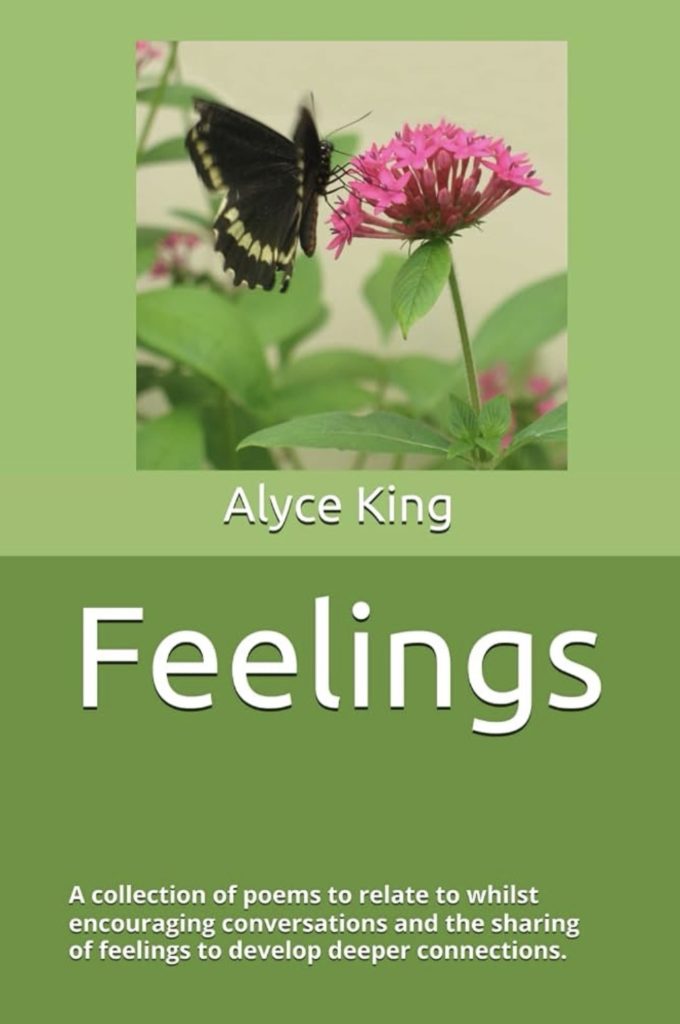
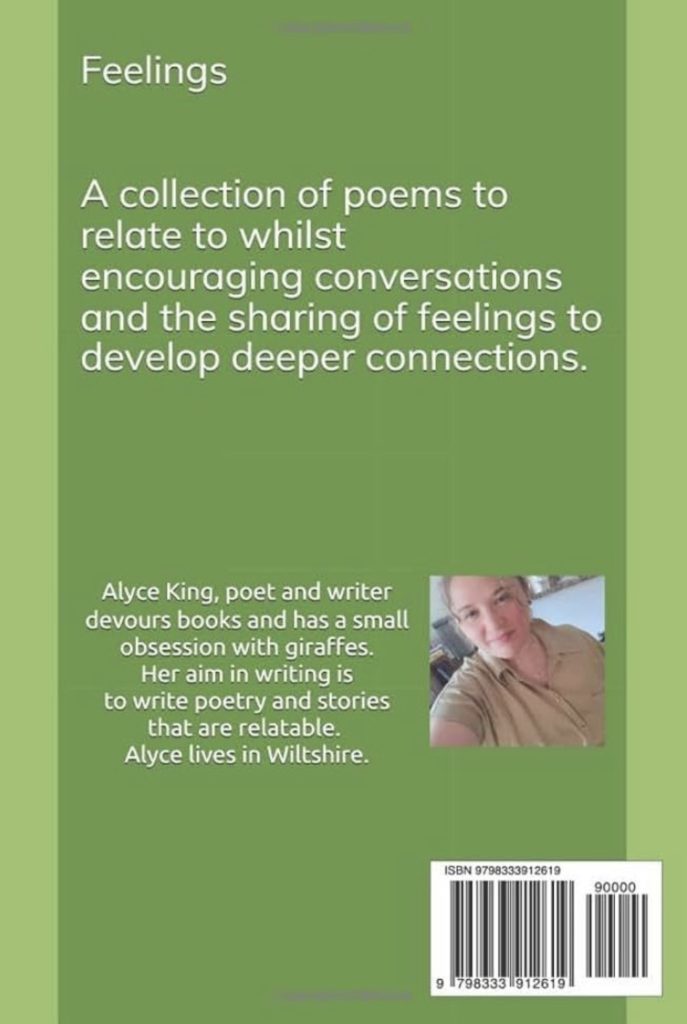
Alongside her non-fiction, Alyce writes poetry. Her first collection, Feelings, explores emotion, memory, connection and the conversations that can be difficult to begin.
Poetry gives her another way to process change. The form may be different, but its source is the same: thoughts that need somewhere to go, memories that still carry weight and moments of joy or conflict that make more sense once they have been written down.
“The page doesn’t give its opinion,” she says. “You can write and smile, or you can write and cry.”
There are no raised voices, impatient replies or visible reactions to manage. A person can write privately until the language feels safe enough to share or keep it entirely for themselves.
For Alyce, those words have also helped other people understand parts of her life they couldn’t see. Writing reduced the need to explain everything repeatedly in conversation and allowed family and friends to meet her experience with more context.
A simple gratitude diary became part of that practice. Each evening, she wrote down something she was grateful for: seeing sparrows bathe, her mum taking her somewhere, or having written a poem.
This wasn’t an attempt to cover difficulty with positivity. It gave Alyce a way to notice that a hard day could still contain something worth keeping.
Life Without Limits
When I ask Alyce what Life Without Limits means to her, she doesn’t describe an extraordinary feat. She imagines ordinary life without the constant administration of access.
“It means I can do anything, easily, just as someone who doesn’t use a wheelchair would. I would love a world where there are no barriers, no checks needed before going somewhere and no judgement.”
Her answer isn’t really about everybody doing things in the same way. It is about disabled people no longer having to spend so much time proving that a place, service or opportunity should include them.
Easy doesn’t mean effortless in every physical sense. It means the environment has done its share of the work.
Alyce also recognises that access extends beyond the person who first asks for it.
“If everywhere is accessible, it will only help everyone,” she says.
That belief runs through her work. Becoming A Wheelchair User is written from one life, but it reaches towards a better system around the next person. One where useful information is easier to find, lived experience is valued and hope arrives with something practical beneath it.
Writing what was missing
Alyce didn’t write this book because she had discovered a perfect way to become a wheelchair user.
She wrote it because the route was poorly marked.
The knowledge came from searching, getting things wrong, finding equipment, asking difficult questions, discovering adaptive sport and slowly learning that needing support didn’t make her less worthy of a full life.
Turning those lessons into a book meant the next reader wouldn’t have to begin with the same empty page.
Her own writing is continuing to grow. A second poetry collection is currently being curated for self-publication, while a fiction project waits for her attention once the poems are complete.
Alyce also wants to develop her work as a writing tutor, helping more people find confidence in their own creativity, and to build a stronger role as an advocate for wheelchair users.
“We offer so much to the world,” she says. “But not enough of the world truly sees us.”
The work of being seen is often described as representation. Alyce’s writing does something more practical. It helps a reader understand what comes next.
Sometimes that means finding a charity or choosing a piece of equipment. On another day, it may mean asking for help without apologising, entering a room full of other wheelchair users or visiting a garden centre with the camera switched on.
None of it erases what happened before.
What it offers is a way forward that doesn’t depend on pretending the difficult parts aren’t real.
Alyce calls that realistic hope.
It may be exactly what the person reading in a newly unfamiliar room needs most.
Read Alyce King’s work
Becoming A Wheelchair User: Knowing What I Know Now is available as an eBook and in paperback. You can learn more about Alyce and her writing through her website and follow her ongoing work on Substack.

Leave a Reply