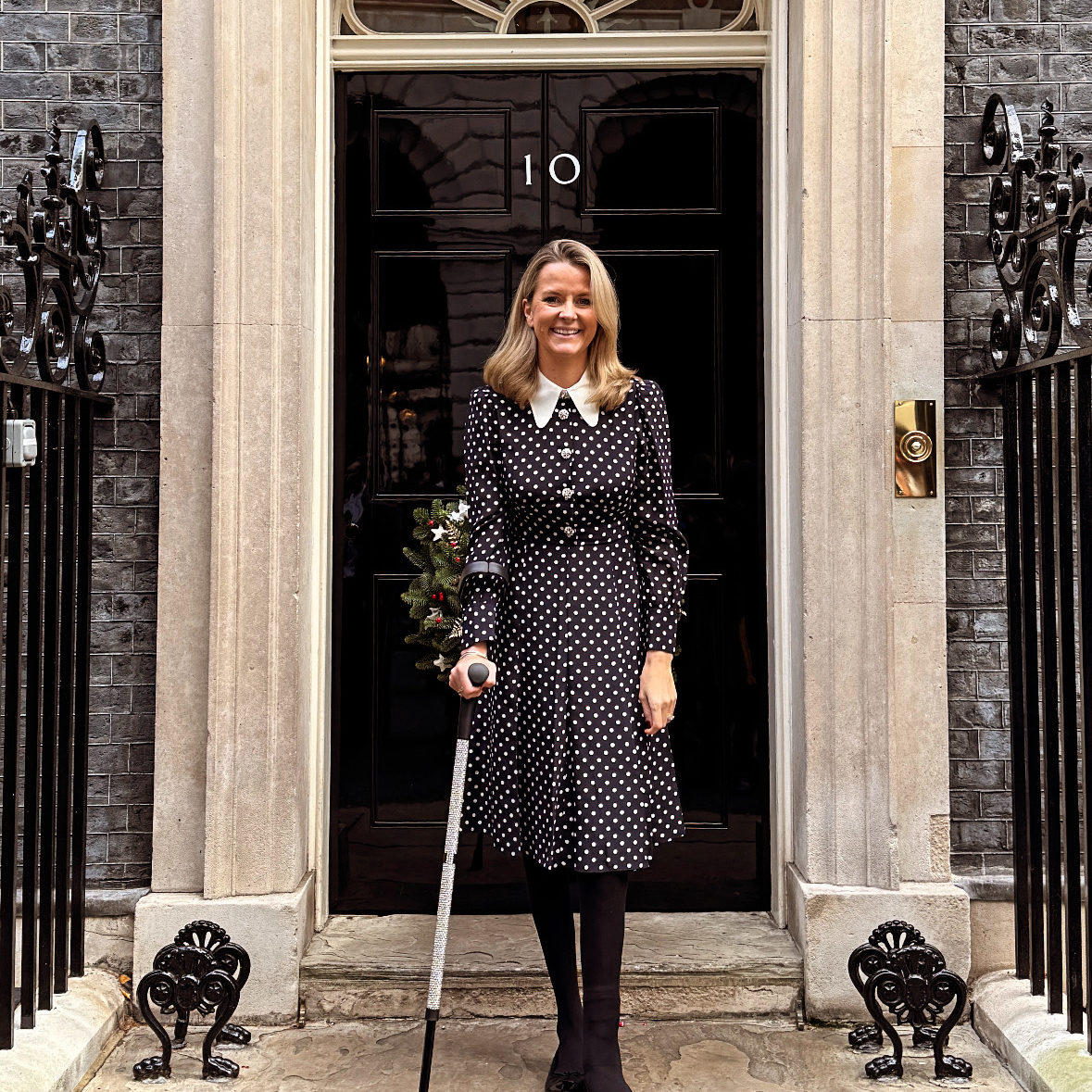
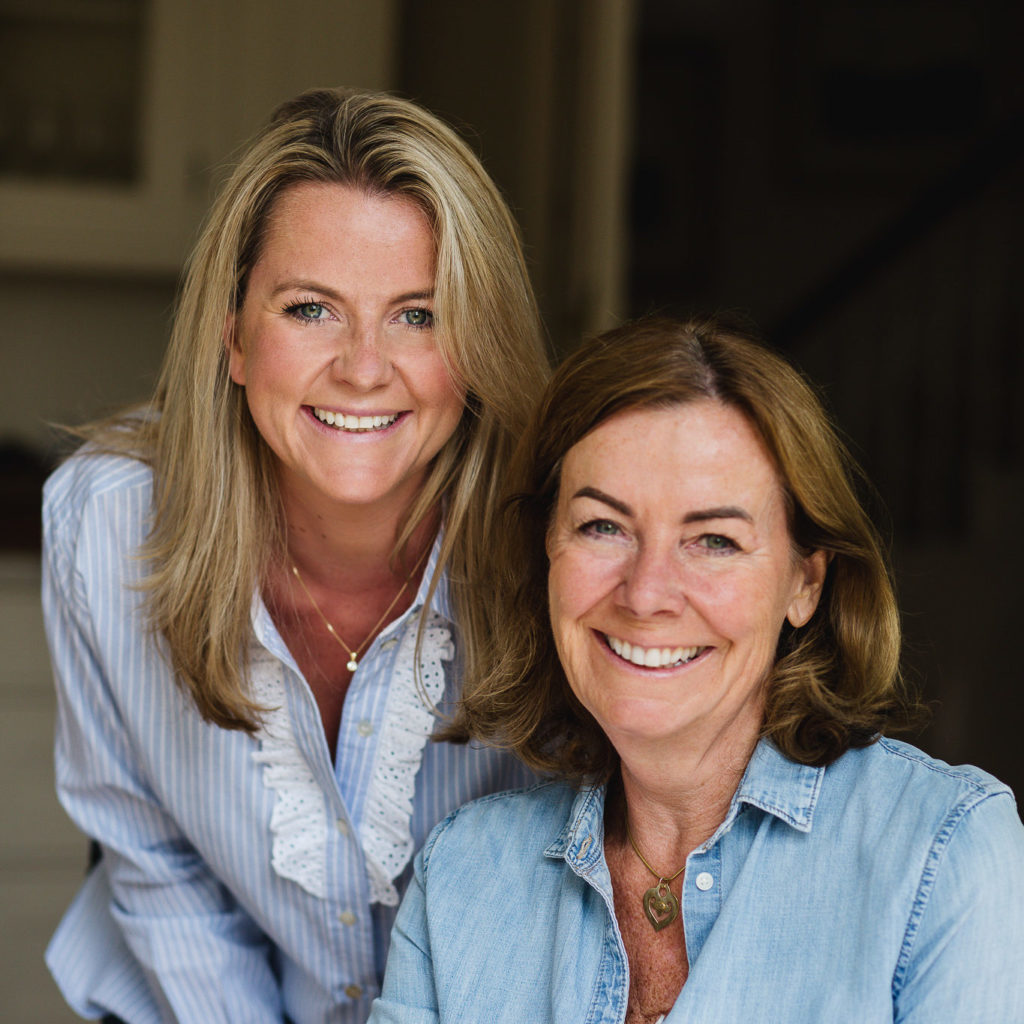
After a spinal injury at 19, Amelia Peckham was given crutches that hurt, clicked and made her feel smaller, at the very moment she needed support. Together with her mother Clare, she built Cool Crutches: a mobility aid brand changing how support, confidence and self-expression can feel.
There are some products that quietly reveal what an industry has been willing to accept.
Not because they are complicated.
Because they are ordinary.
A crutch.
A walking stick.
A piece of support someone may use every day, for years, in public, in private, in photographs, in airports, at work, at weddings, on stages and, occasionally, on one of the most watched catwalks in the world.
For too long, mobility aids have been treated as basic function.
Can it hold weight?
Will it help someone move?
Can it do the job?
Those questions matter.
But Amelia Peckham understood there was a bigger question.
What does that object ask someone to feel about themselves while they are using it?
Cool Crutches raised the standard by proving that dignity, choice, comfort, confidence, safety, silence and self-expression all belong in the same conversation.
After sustaining a spinal injury at 19, Amelia was given standard hospital crutches. They did the basic job. They helped her move. But they also caused pain, noise, discomfort and something harder to measure: a loss of confidence at the exact moment she needed to feel supported.
“I remember feeling very visible. Suddenly, people saw the crutches before they saw me.”
That sentence explains why Cool Crutches matters.
Because Amelia did not accept that visibility had to feel clinical, uncomfortable or diminishing.
With her mother Clare, she built a brand that asked better questions of the mobility aid industry.
If comfort shapes whether someone can use a product every day, why should it be treated as secondary? If long-term users rely on mobility aids for years, why are so many still designed as if support is temporary? Choice, personality and style were not extras to be added afterwards. They were part of whether the product allowed someone to move through the world feeling more like themselves.
Cool Crutches didn’t just improve a product.
It raised the standard.
The standard Amelia raised
Cool Crutches began with lived experience, but it grew into something much bigger than one personal solution.
Amelia had assumed, at first, that the discomfort and frustration were simply part of adjusting.
“I kept assuming that the discomfort, the pain and the frustration were just things I had to put up with,” she says. “But the longer I used crutches, the more obvious it became that the equipment itself was poorly designed.”
That distinction matters.
Because so often, people are asked to adapt to poor design rather than poor design being challenged.
They are told, directly or indirectly, that discomfort is part of the deal.
That embarrassment is personal.
That stigma is inevitable.
That basic function is enough.
Amelia saw something different.
“I realised the problem wasn’t me. The product simply wasn’t meeting people’s needs.”
That is the leadership in this story. Not the injury, not the hardship, and not even the resilience, although all of those things matter. The leadership is in the moment Amelia recognised that the standard itself was wrong.
Comfort was not a bonus. Safety was not an upgrade. Quietness was not a luxury. Personality was not vanity. Choice was not indulgence. They were all part of the user experience.
For a product used every day, often for years, that experience is everything.
As Amelia puts it, “Small frustrations become big frustrations when you live with them constantly.”
What the industry had been missing
The mobility aid industry has often treated disabled people, injured people and long-term users as practical problems to be solved. But people are not practical problems. They are customers, travellers, professionals, parents, partners, teenagers, friends, guests at weddings, people on stages, people in photographs and people trying to move through life without feeling reduced by the objects they rely on.
This is what Cool Crutches understood before much of the industry did.
“A lot of people still think mobility aids are purely practical. People don’t stop being themselves when they start using a mobility aid. They still have personalities, preferences and a sense of style.”
That should not feel radical. And yet, in many corners of the mobility aid market, it still does.
The wider industry has often solved for movement without solving for dignity. It has solved for support without solving for identity. It has solved for the body without considering the person.
Amelia and Clare built Cool Crutches in that gap.
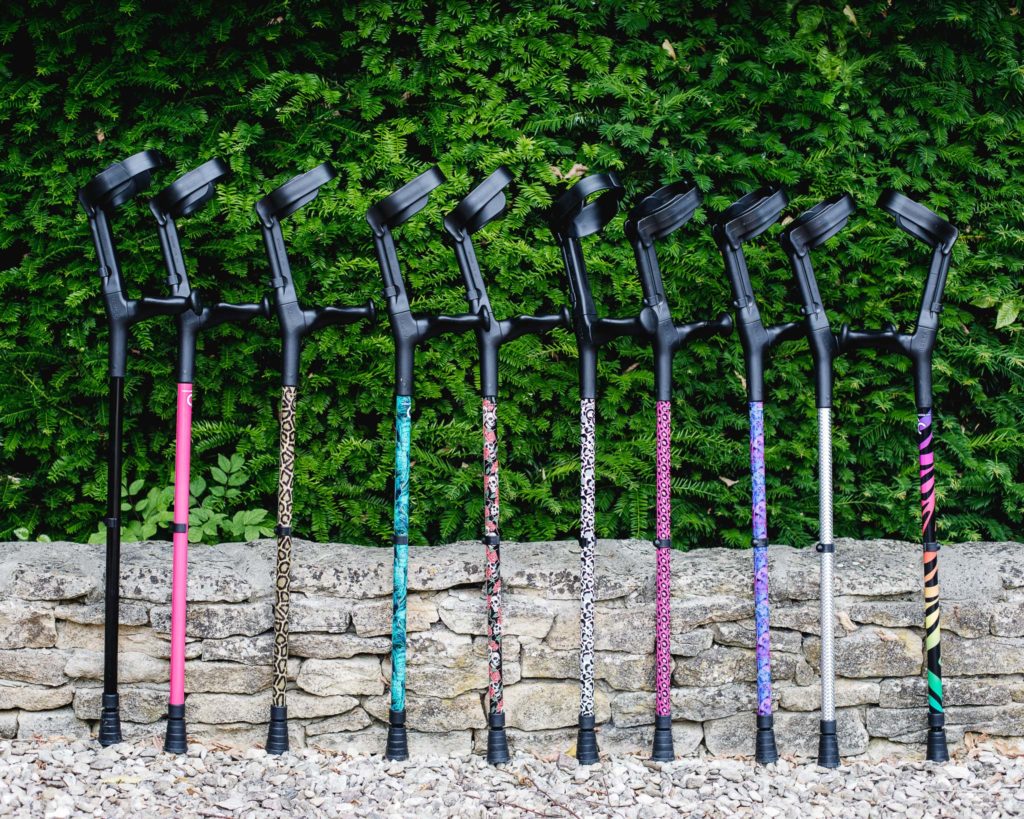
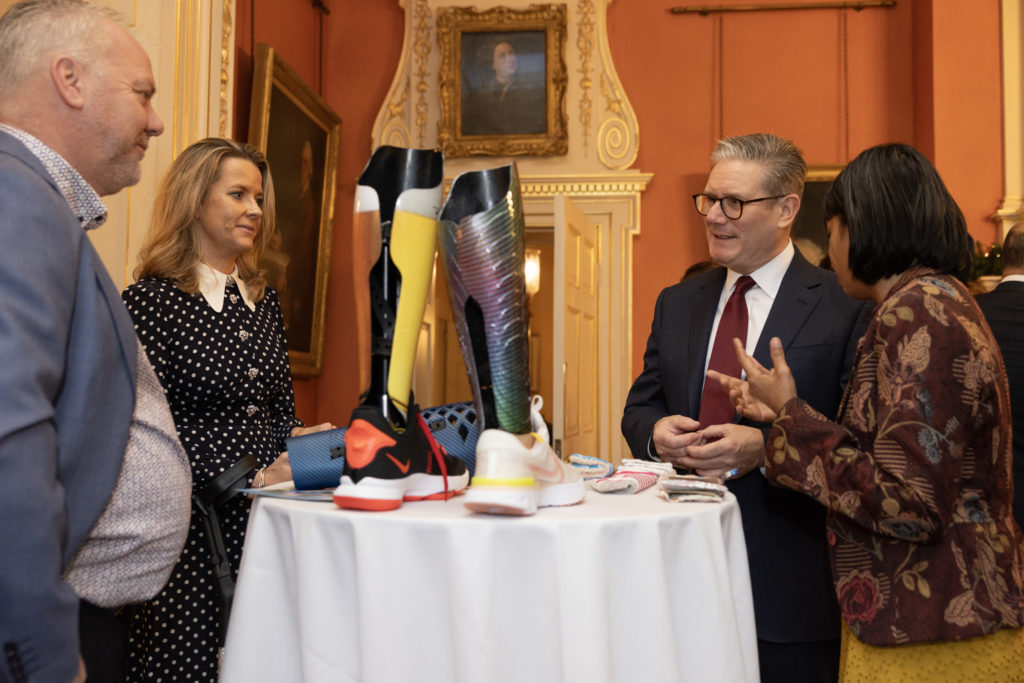
They created crutches and walking sticks designed to be comfortable, quiet, safe and personal. Not because mobility aids needed decoration, but because people deserve to recognise themselves in the things they use every day.
“Choice gives people a sense of ownership. Instead of feeling stuck with something clinical and impersonal, they can choose something that feels positive, uplifting or simply more like them.“
That is not a small thing.
It is a shift in power.
From being handed something.
To choosing something.
From accepting the minimum.
To expecting better.
When fashion had to look
There are moments when a product crosses into public consciousness because the right person uses it in the right place.
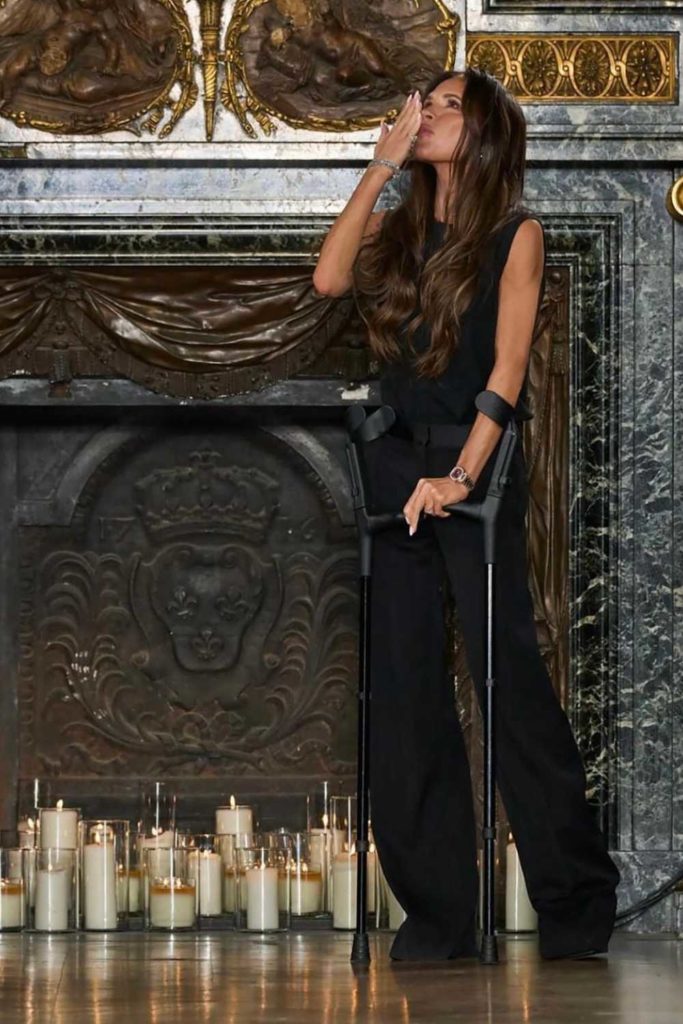
For Cool Crutches, one of those moments came when Victoria Beckham stepped onto the Paris Fashion Week catwalk using sleek black Cool Crutches.
That mattered.
Not because celebrity approval creates value. Amelia and Clare had already built that.
It mattered because fashion is an industry built on image, control and detail. Nothing on a catwalk is accidental. Every line, accessory, silhouette and object communicates something.
For one of the most recognisable women in fashion to use Cool Crutches in that setting was significant because it challenged an old assumption: that mobility aids sit outside style.
They do not.
They are often among the most visible things a person owns.
Fashion has always understood the power of visible objects. Shoes. Bags. Sunglasses. Jewellery. A walking stick. A crutch.
The difference is that the industry has not always been willing to see mobility aids through the same lens of design, identity and expression.
Cool Crutches forced that conversation into view.
The same is true in performance.
When JLS singer Aston Merrygold performed using Cool Crutches after a foot injury, it showed something many mobility aid users already know: support does not sit outside movement, presence or performance. It can be part of it.
These moments are not only publicity.
They are proof of concept.
They show that when a mobility aid is designed with care, personality and confidence, it can sit inside culture rather than outside it.
That is where Cool Crutches has raised the standard.
Not by asking people to hide their support.
By making visible support worthy of being seen.
Disabled entrepreneurship and the bigger question
Amelia’s work also sits within a wider and urgent conversation around disabled entrepreneurship.
Through her participation in The Lilac Review, her story becomes part of something broader than product design.
It asks what happens when disabled founders are properly supported to build businesses from lived experience, not in spite of it.
This matters because disabled entrepreneurs are often discussed through a lens of barriers. Finance that is harder to secure, networks that are harder to enter, business support that is not always built with disabled founders in mind, and spaces still shaped around a narrow idea of who a founder is.
Those barriers are real.
But they are only half the story.
The other half is the commercial and cultural value that disabled entrepreneurs bring when they are able to build from what they know.
Amelia’s experience did not make her less suited to business.
It gave her insight the existing industry lacked.
That is the part too many sectors still misunderstand. Lived experience is not a soft add-on to a business conversation. It is often where the clearest market intelligence sits, because it reveals what customers need, what design has missed, and what an industry has quietly normalised.
Cool Crutches is what happens when lived experience is treated as intelligence, not limitation.
That is why this story belongs in Life Without Limits.
Because the future of access, design and dignity will not be built by intention alone.
It will be built by people who know exactly what has been missing.
The customer proof
The strongest evidence of Cool Crutches’ impact is not only in awards, press coverage or public figures using the products.
It is in the messages from customers.
“The messages that stay with me are the ones where people tell us they’ve started going out again after years of avoiding it. Or that they feel proud rather than embarrassed to use their mobility aid.”
That is the work. Not simply the crutch sold, the walking stick shipped or the pattern chosen, but the person who leaves the house again, attends the event, feels proud, stops hiding and feels more like themselves.
That is what better design makes possible.
Sometimes the measure of a product is not the specification. It is what someone gets to do because of it.
The question every industry should ask
When I ask Amelia what the wider mobility aid industry still misunderstands, she answers with the clarity of someone who has lived both the problem and the solution.
“There’s still too much focus on basic functionality and not enough on lived experience,” she says. “People want products that work well, but they also want dignity, comfort, choice and independence. Those things shouldn’t be seen as optional extras.”
That line could sit at the heart of The Inclusive Edit.
Dignity should not be optional.
Comfort should not be an upgrade.
Choice shouldn’t be treated as a luxury.
Independence should not depend on whether someone happened to design with the whole person in mind.
The same question applies across travel, hospitality, fashion, product design and public life.
Has the industry solved the basic function?
Or has it understood the experience?
There is a difference.
Cool Crutches understands the difference.
That is what makes Amelia a game changer in this space. Not because she has a moving personal story, although she does. Or because she has built an award-winning brand, although she has. Not because public figures have used her products, although they have.
But because she changed what people were allowed to expect from a mobility aid.
Building from what the industry missed
When Amelia looks back at what she and Clare have built, her pride sits in the impact.
“Awards are wonderful, but hearing directly from customers who tell us we’ve helped them feel more confident or independent means far more to me.”
Founding Cool Crutches has taught her that challenges can create opportunities that are impossible to see at the beginning.
It has also confirmed the importance of listening to people with lived experience.
“When you genuinely understand a problem, you’re in a much better position to solve it.”
For anyone using a mobility aid for the first time, especially someone overwhelmed by what that change represents, Amelia’s message is direct.
“Using a mobility aid isn’t giving up. It’s a tool that helps you stay independent and keep doing the things you love. It may take time to adjust, but needing support doesn’t make you any less capable.”
That is where Cool Crutches keeps returning.
Not to the product alone.
To the person using it.
Life Without Limits
When I ask Amelia what Life Without Limits means to her, she does not pretend that limits do not exist.
That matters.
“For me, it means removing unnecessary barriers,” she says. “It doesn’t mean pretending challenges don’t exist. It means making sure people have the tools, confidence and support they need to live life on their own terms.”
That is exactly why Cool Crutches belongs in this series.
Life Without Limits is not about denying reality.
It is not about pretending that pain, injury, disability or access barriers disappear if we think positively enough.
It asks which limits are real, and which ones have been designed into people’s lives by lack of thought, lack of choice or lack of imagination.
Amelia and Clare raised the standard by asking that question of mobility aids.
Then they built the answer.
The Standard Was Never the Minimum
Cool Crutches began with a problem that should never have been Amelia’s to solve alone. But meaningful change often begins with the person who knows, in their body, what’s been missed. The crutch that hurts, the stick that feels like defeat, the sound that announces you before you are ready, the clinical object that asks you to disappear quietly into function.
Amelia and Clare built something different. Not because mobility aids needed decoration, but because people need dignity, comfort, choice, independence and the quiet confidence of recognising themselves in the things that support them.
That is leadership. Not loud, not performative, and not asking for permission. Just a clear refusal to accept that the minimum should be the standard.
That is the heart of Life Without Limits. Not pretending there are no limits, but celebrating the people who keep showing us which ones were never necessary in the first place.

Leave a Reply