
There is something quietly revealing about returning to a hotel.
The first time can be magic.
Especially when the first time was your wedding.
A wedding wraps a place in so much emotion that it becomes difficult to separate the service from the sentiment. You remember the flowers, the family, the dress, the words “I do”, the people who helped, and the way everything felt heightened because life was happening in one of its biggest chapters.
It is beautiful, but it can also make it hard to know where the feeling came from.
Was it the place?
The people?
The fact I was walking, rolling, crying, laughing and trying not to ruin my make-up through one of the biggest fortnights of my life?
Probably all of it.
But a return tells you something else.
It tells you whether the magic was a moment.
Or whether it was the standard.
I first wrote about TUI Blue Meltemi after our Santorini wedding, when The Inclusive Edit was still finding its shape and I was still trying to find the words for what accessible luxury had felt like in real life.
This piece begins a year later.
Not as the bride arriving with a dress and a head full of hopes, but as someone returning to the place that had already held one of the most important weeks of her life, wondering something quieter.
Would it still feel the same?
I wanted to know whether the access would still hold when the wedding magic had settled. Whether the service would still feel personal without the once-in-a-lifetime emotion wrapped around it. Whether the hotel would still work when what remained was the guest experience itself.
That is what this return to TUI Blue Meltemi became.
A chance to look again.
Back to Perissa
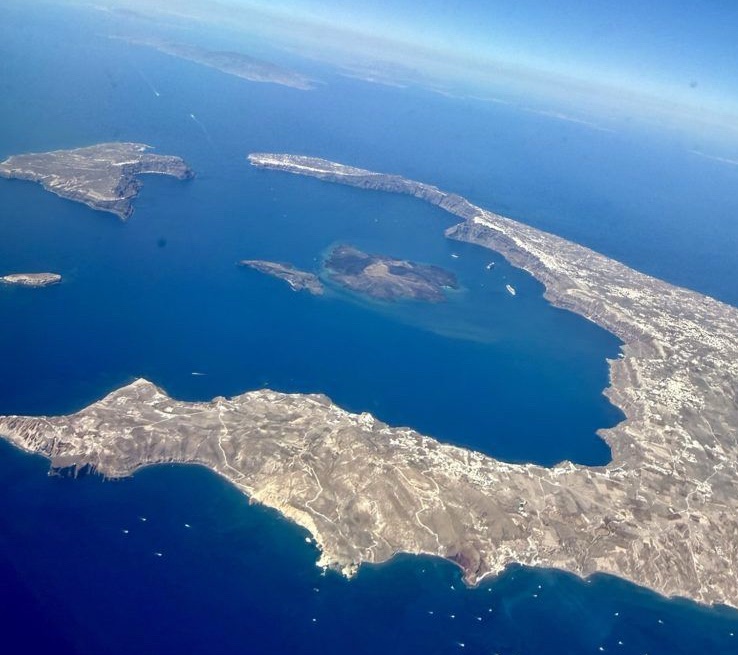
Our return began at Thira Airport, where a private transfer organised by the hotel was waiting to take us to Perissa.
After a flight, I don’t want a long journey, a complicated route, or the kind of transfer that makes you question every life decision you’ve made since booking the holiday.
I want ease.
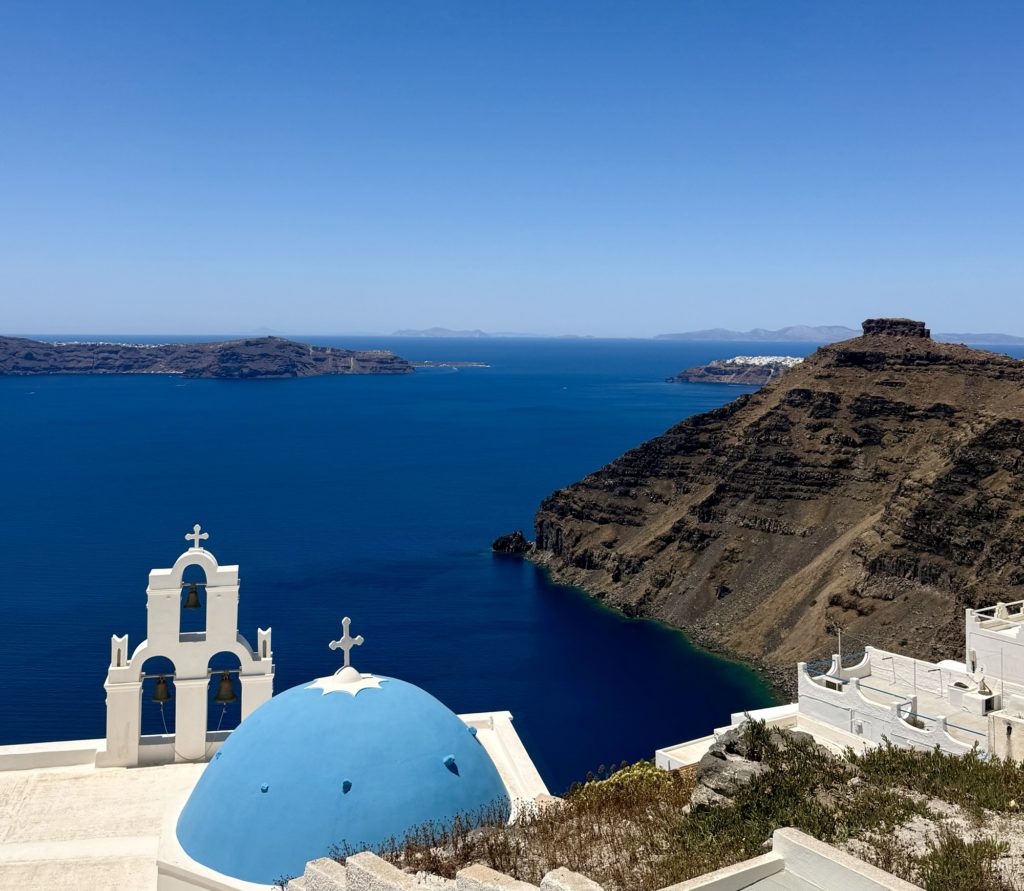
The drive takes around 20 minutes, just enough time to start noticing the island again. The light. The dry stone. The flashes of sea. The way Santorini somehow manages to look dramatic even when you are only driving past a wall.
Our driver was warm from the start. No script. No polished welcome speech. Just that lovely kind of local warmth that makes you feel you have arrived before you have even reached reception.
You exhale a little.
You breathe in the island.
A welcome that felt remembered
Before we had even properly gathered ourselves, we could see familiar faces.
No sooner had my wheelchair been brought round than we were wrapped in hugs.
Big ones.
The kind where you have a tiny moment of, “Oh. You really do remember us.”
And then I saw George.
I don’t think I even made a decision. My handbag hit the floor, he came running towards me, and he got the biggest hug of all.
Apparently, George is the only person I will willingly drop my handbag on the floor for.
I knew I remembered the team, of course I did. These were people who had helped make Santorini feel possible at a time when I was carrying the usual wedding nerves, plus the extra layer disabled travellers often carry quietly underneath everything.
Will this work?
Will they understand?
How many times will I need to explain myself before I can simply enjoy being here?
Last year, Meltemi had answered those questions with care.
This year, they answered them with hugs.
George checked us in with the kind of energy that made the whole thing feel less like a formal arrival and more like being folded back into a story that had never quite closed.
He was excited to take us to our room.
I soon understood why.
There were cards. Handwritten notes. Gifts. Prosecco. Thoughtful touches, with personal references from members of the Meltemi team that made Martin and me stand there looking at each other like two people who had accidentally wandered into someone else’s anniversary surprise.
We had been on the island for about an hour.
Maybe less.
And already, from the car to the cuddles to the cards, we had been welcomed in a way that felt deeply personal.
Not polished personalisation.
Real personalisation.
The kind that comes from people remembering not just your name, but why this place matters to you.
Luxury hospitality talks a lot about personalisation.
This felt more like relationship.
And relationship changes everything.
As a returning disabled guest, recognition is not only lovely.
It is reassuring.
You are not arriving as a problem to solve.
You are arriving as someone they already know how to welcome.
The woman setting the tone
I don’t think a hotel feels like Meltemi by accident.
Warmth can exist in individual people, of course. But when that feeling runs through the whole hotel, it usually means something deeper is happening.
At Meltemi, so much of that tone comes from Marialena.
She oversees the hotel with a rare kind of energy. Calm, warm, completely switched on, and somehow able to make every conversation feel both personal and purposeful.
She listens properly.
To guests, her team, and to the small details that could easily be missed.
And she wants things right.
Not nearly right.
Not “that will probably do.”
Right.
If getting something right required moving one of Santorini’s volcanoes, I genuinely think Marialena would pause, consider the logistics, and then quietly find the person most likely to own the necessary equipment.
That is the kind of energy she has.
But what I love most is that her standards do not make the hotel feel stiff. They make it feel held.
Meltemi still feels relaxed, warm and human. But underneath there is a sense that someone is paying attention.
Guest experience is never just one lovely person at reception, one thoughtful note in a room, or one well-timed glass of prosecco.
It is culture.
And at Meltemi, that culture clearly starts from the top.
Why Perissa works
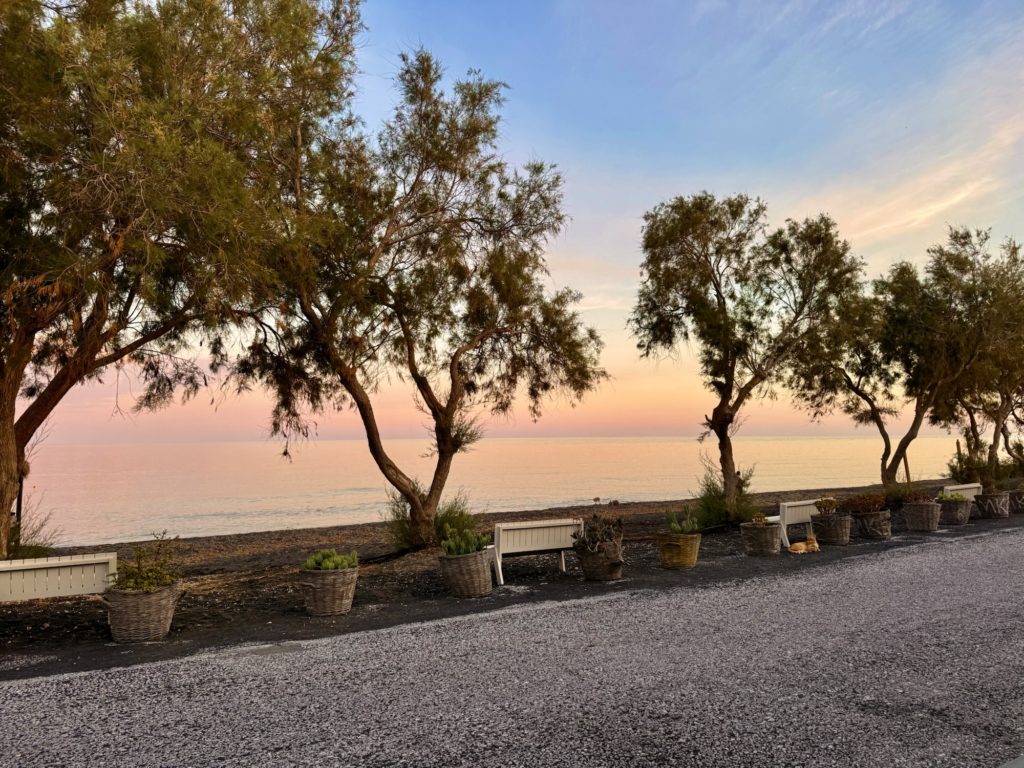
TUI Blue Meltemi sits in Perissa, moments from the black-sand beach and close to the town centre, where restaurants, bars, shops and the rhythm of island life are all within easy reach.
Santorini is one of the most beautiful places in the world, but it is not an easy island everywhere. The caldera villages carry the postcard image, but they also come with steps, slopes, crowds and routes that can change from one doorway to the next.
Perissa offers something different.
It is flatter. Calmer. More practical. Beachside without feeling detached from the island. For me, it offers a version of Santorini that gives you room to settle into the experience rather than constantly calculate the next bit of access.
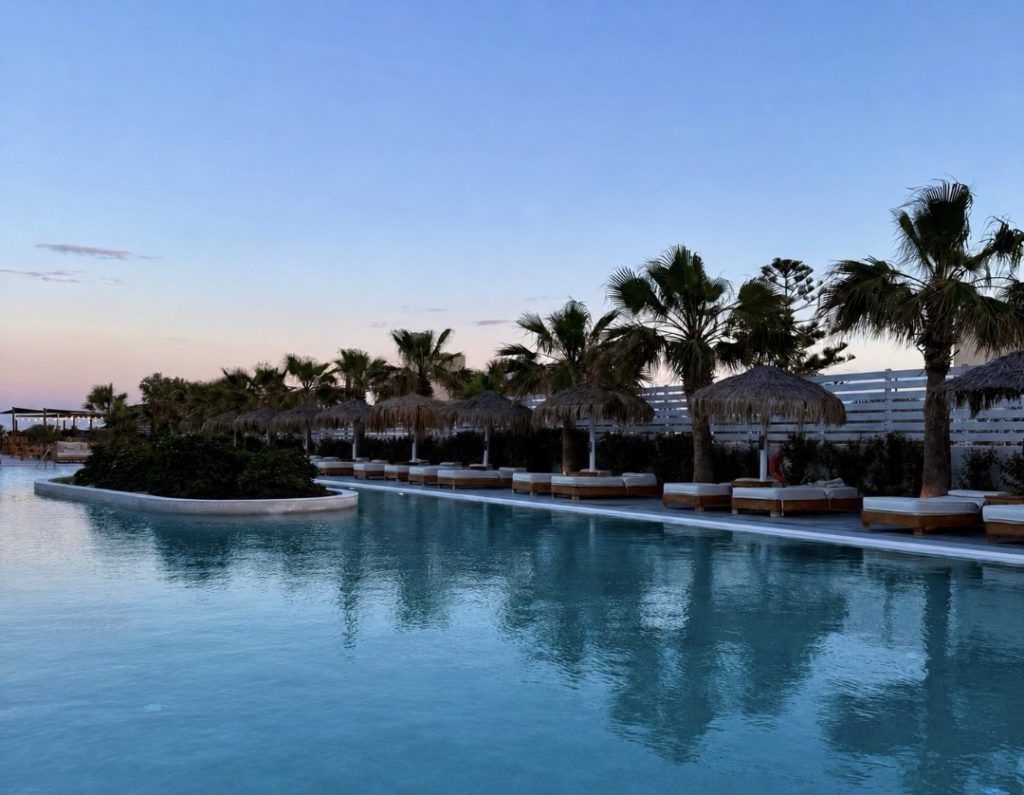
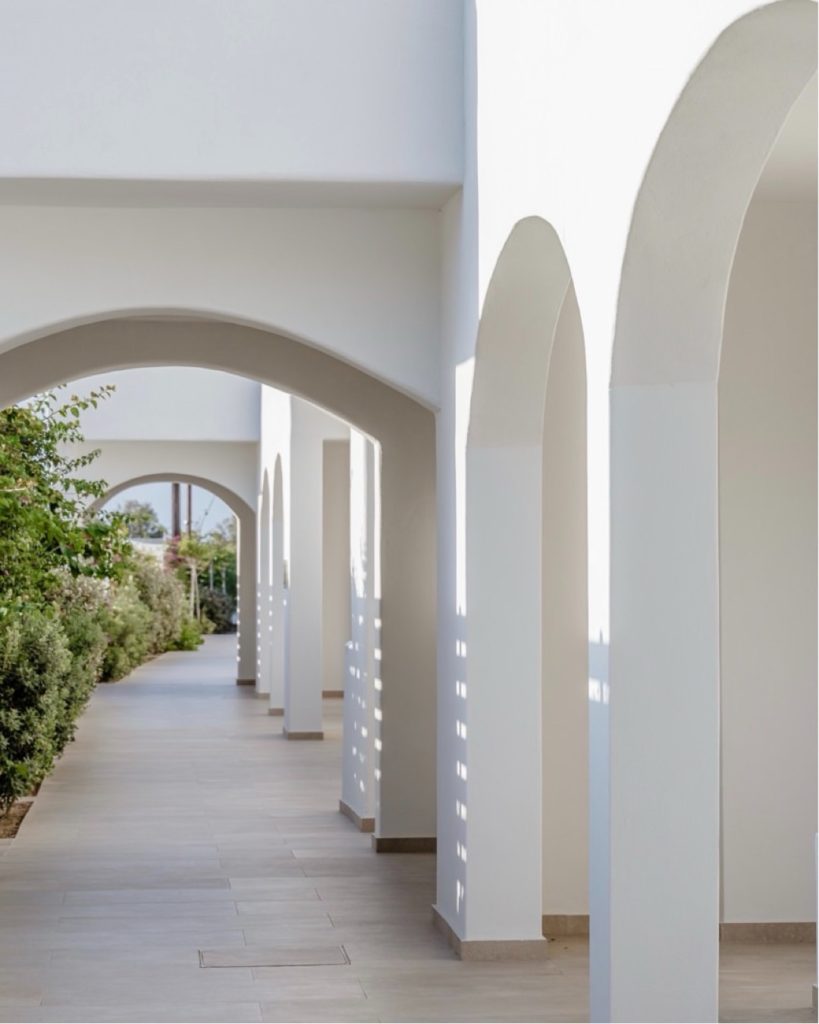
Meltemi has the easy brightness people imagine when they think of Santorini, but without the intensity of the caldera crowds. It feels open and sunlit, with white buildings, planting, pools, terraces and quiet corners sitting together in a way that feels relaxed rather than overwhelming.
I’m not only looking at whether a hotel is beautiful.
I’m looking at whether I can move through that beauty without feeling like I am working too hard to belong in it.
Meltemi is one of the larger hotel complexes on the island, which could easily make it difficult to navigate. But the layout, ramps, open spaces and lift access to public areas meant I never felt like the hotel was quietly saying, “not this bit.”
That is what I am always looking for.
Not perfection.
Just the ability to keep moving through the experience without being separated from it.
The room George couldn’t wait to show us
Our room was in the newer part of the complex, reached by smooth paths lined with palms and bright planting.
The first thing I noticed was the ramp.
I know. Very glamorous.
But honestly, when you are a wheelchair user, a good ramp can be romantic.
Not because of the ramp itself, obviously. I am not that far gone.
But because of what it means.
Nobody has to fetch a piece of metal from a cupboard or, offer an awkward apology. Nobody has to say, “Just one second,” while you wait outside your own room wondering how much of the experience you are going to have to smile through.
This ramp was smooth, permanent and properly considered, with a landing platform outside the door.
It felt like part of the room.
Not an afterthought attached to it.
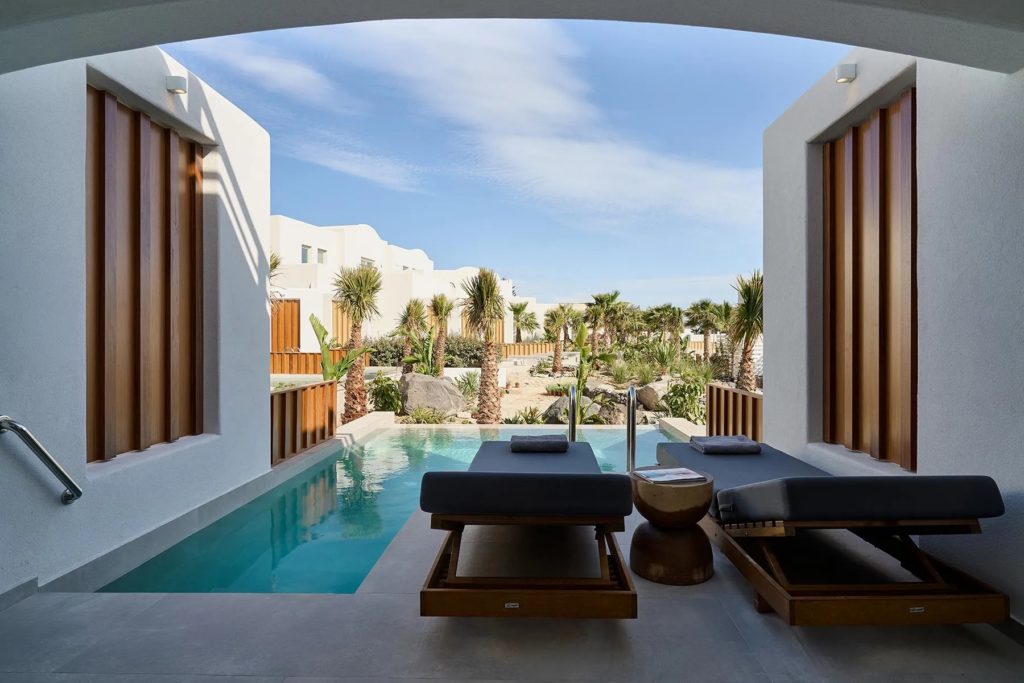
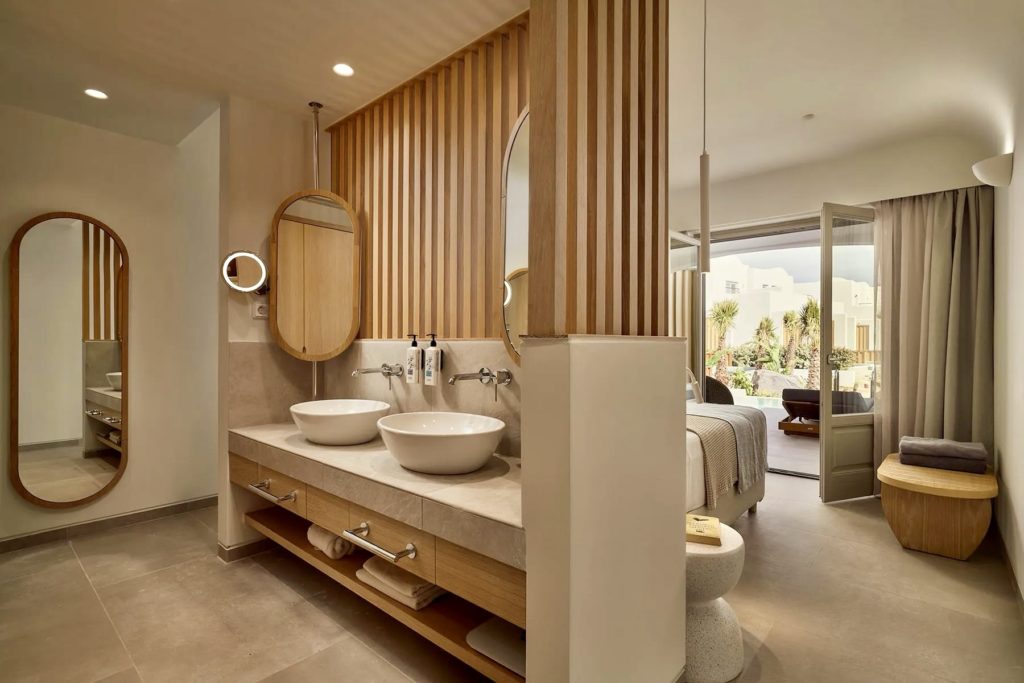
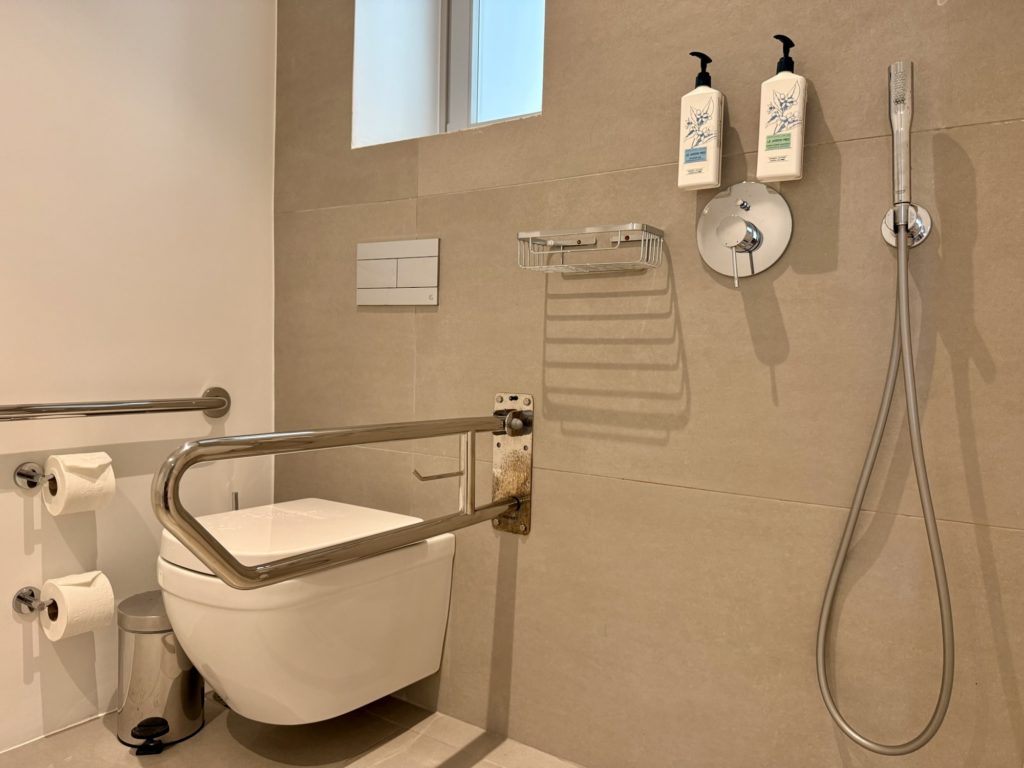
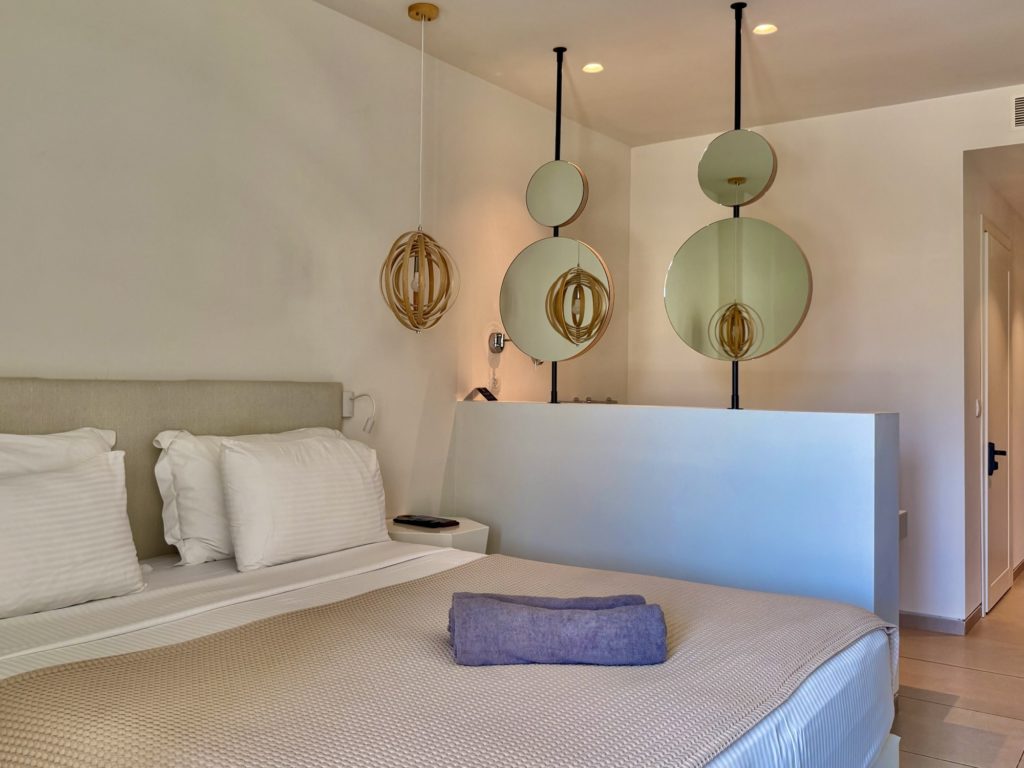
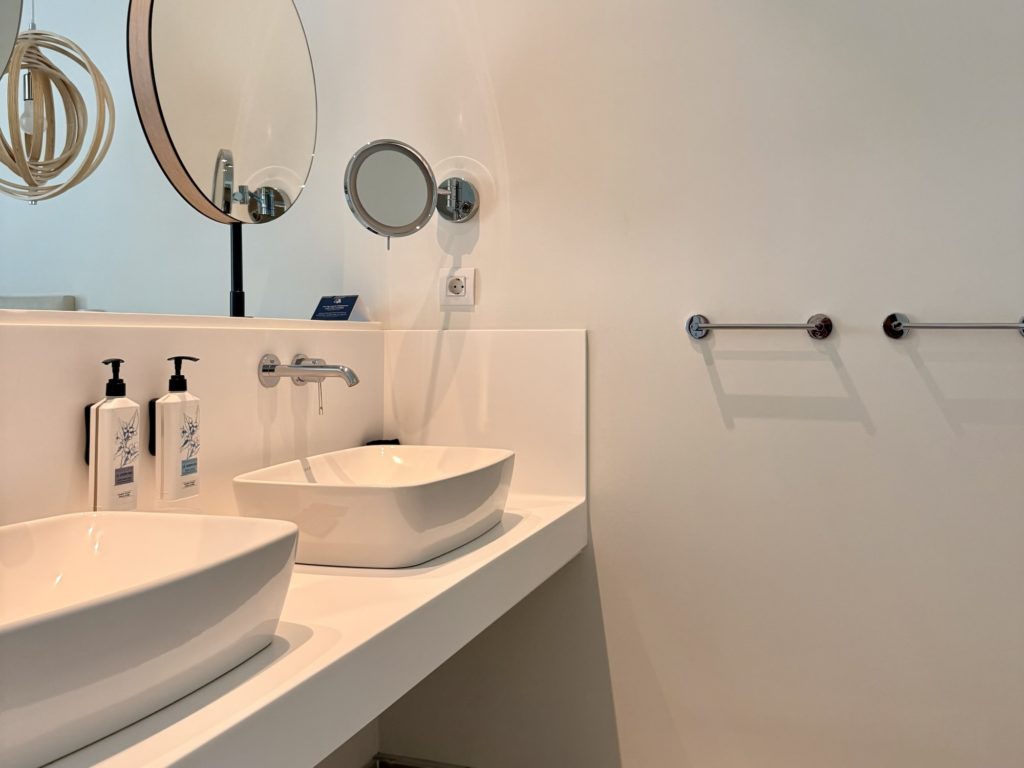
Inside was a beautiful double room with a terrace and private pool. Clean white walls, stone tiles, soft curves, warm furnishings and enough space for me to move without the room feeling clinical or stripped back.
That balance is harder to find than it should be.
Accessible rooms often give you function and forget feeling.
This one remembered both.
The bathroom followed the same design properly, with a large roll-in shower, shower stool already in place, a high rainfall shower and a lower adjustable shower beside it. There was space to move, transfer, breathe, and roll out onto the terrace without the pool becoming something lovely to look at but awkward to actually enjoy.
The access did not interrupt the beauty of the room.
It allowed us to enjoy it.
Accessible, adapted, and why it is worth speaking to the hotel first
One of the most useful things I learned on this return is that Meltemi has five rooms with different access features, and they don’t all work in exactly the same way.
When you are booking an accessible stay, the smallest details can change the whole experience.
At Meltemi, there is a distinction between rooms described as accessible and rooms described as adapted. Some offer easier wheelchair access in and out. Others have more adaptations inside the bathroom or living space.
I understand the intention behind that.
It gives guests different options, rather than assuming access means the same thing to everyone.
Because it doesn’t.
What works beautifully for one guest may not work for another. Some people need step-free access above all else. Others may prioritise bathroom layout, transfer space, shower set-up, terrace access or proximity to hotel facilities.
The intention is absolutely there, and the team were open, warm and genuinely keen to explain the differences properly.
But I do think the language could be clearer before booking, especially when the stay itself is booked through TUI.
My honest advice is to contact the hotel as part of the booking process, let them know what matters to you, and ask which room would be most suitable for your access needs.
What I saw during both of my stays at Meltemi was willingness, not defensiveness.
The team wanted to explain. They wanted to understand. They wanted the stay to work.
And that is often the difference between access feeling like a problem and access feeling like part of the hospitality.
Moving, dining and choice
The public routes we used were smooth and manageable, with ramped access and lift access to all public areas. Reception was also accessible in a way I really appreciated.
By that, I don’t just mean there was a way in.
I mean the actual experience of speaking to reception felt accessible.
There were tables and chairs. Space. Seated conversations. No leaning over a high desk trying to look elegant while your shoulders slowly give up on life.
That might sound small, but it changes the whole feeling of the interaction.
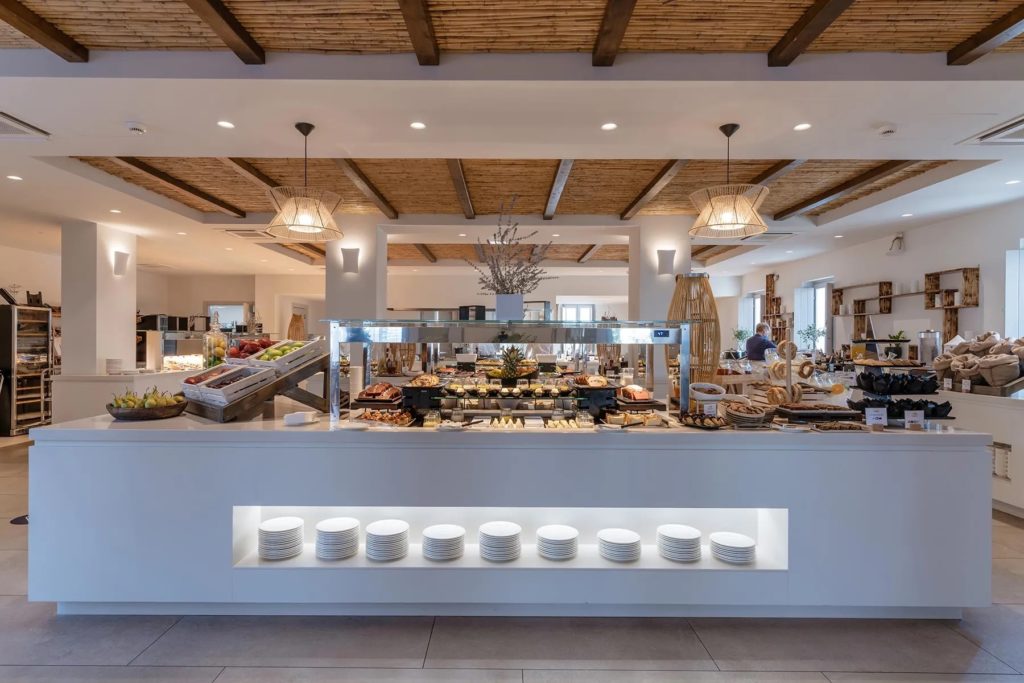
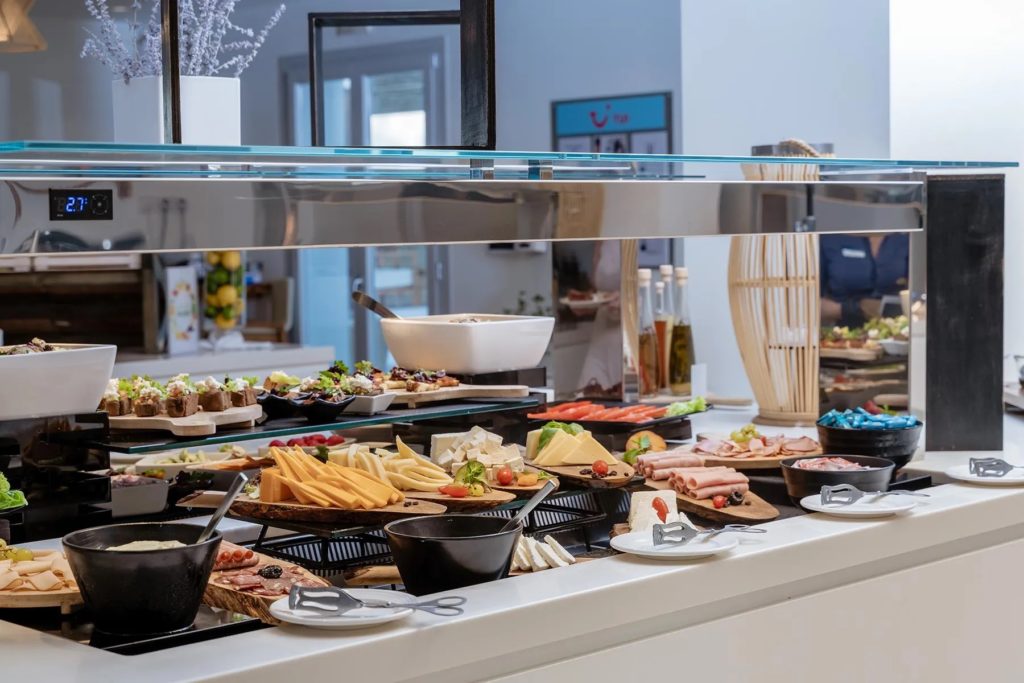
The main restaurant is buffet style, and I really liked how accessible the space was. I enjoy being able to serve myself when I can, and seeing what is available. I like choosing. Not having to ask someone to reach something for me unless I actually need them to.
At Meltemi, I could move through the buffet, and staff still offered help every day.
They didn’t disappear and leave me to prove a point. Nor did they hover and make me feel incapable. They offered. I chose. They stepped in when needed and stepped back when not.
That balance is everything.
Staff also asked whether I wanted to transfer into one of their dining chairs or stay in my wheelchair.
A simple question.
But a really good one.
Because people assume all the time, that I want to stay in my chair. They assume I want to transfer. They assume Martin will decide on my behalf.
At Meltemi, they asked.
No fuss, or awkwardness. No performance.
Just choice.
And choice is where dignity often lives.
There is also a wheelchair and mobility scooter available to hire on site, and one day, when I was particularly tired, I took the scooter out.
Honestly?
I had an absolute whale of a time.
I love pushing myself in my wheelchair. It is something I’m able to do and I enjoy doing my daily 5k down the Perissa beach front. But I also know the reality of my body.
Some days, the cost of pushing is not just physical. It is attention. Energy. Pain. Concentration. Constantly looking down at the ground, checking the surface, planning the next push.
Taking the scooter out gave me something back.
It meant I could look around more. Notice the beach, the shops, the people, the sunshine, and the ridiculous joy of being in Santorini without spending every second calculating the pavement.
Mobility support, when it is available without drama, doesn’t reduce independence.
It can protect it.
Food, rhythm and low-key leisure
Meltemi gave our trip a rhythm on our low-key days.
Kalimera. Breakfast. Pool. Wandering. Rest. Dinner. Coffee. Repeat.
There is something very comforting about a hotel that lets you settle into a rhythm without making the days feel flat, or in need of filling.
The main restaurant was easy and relaxed, with staff who seemed to learn guests quickly. What people liked. Where they liked to sit. How they moved through the space. Whether they were morning people.
I am mostly a morning person in Santorini. Maybe it’s the Aegean sunshine and freddo coffees.
This should not be held against me when I am back in the UK.
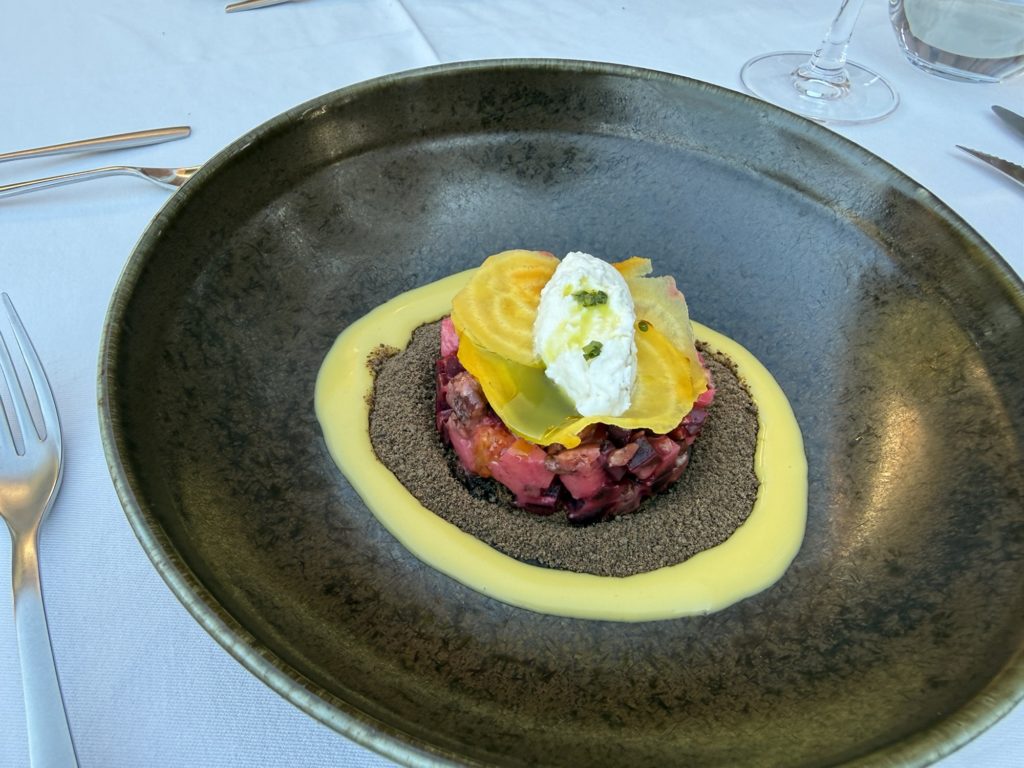
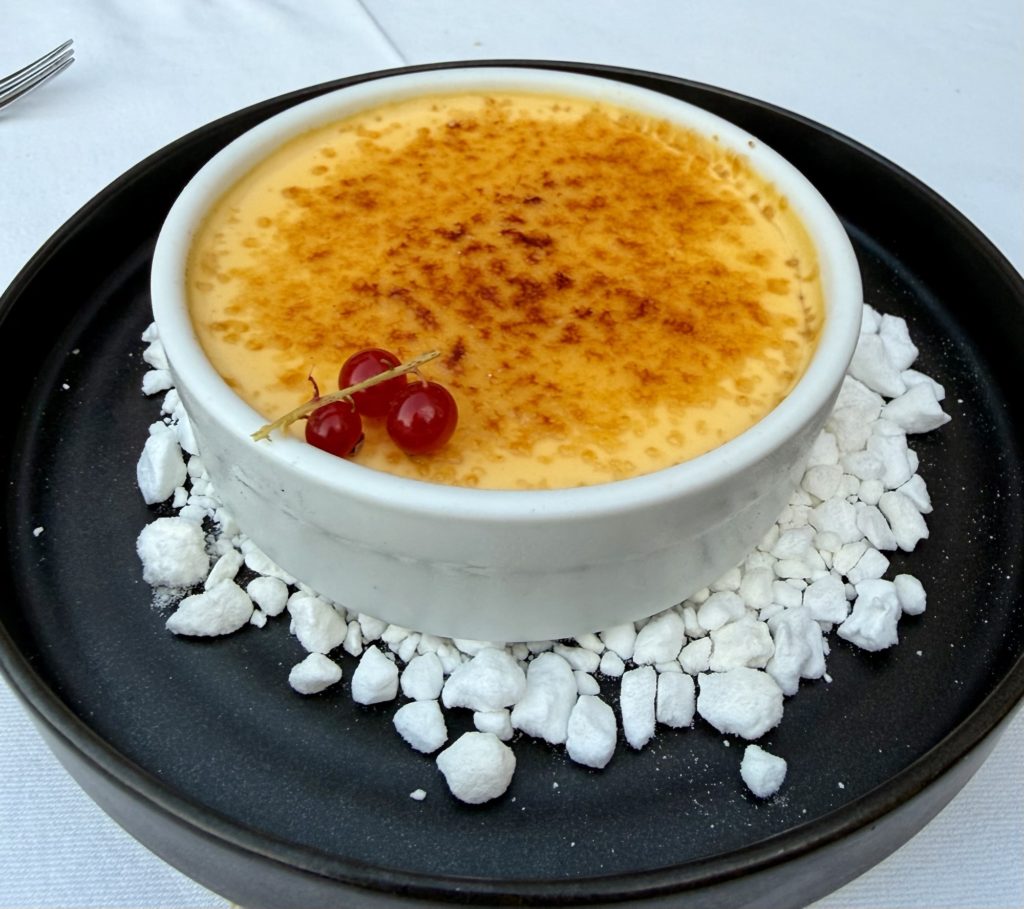
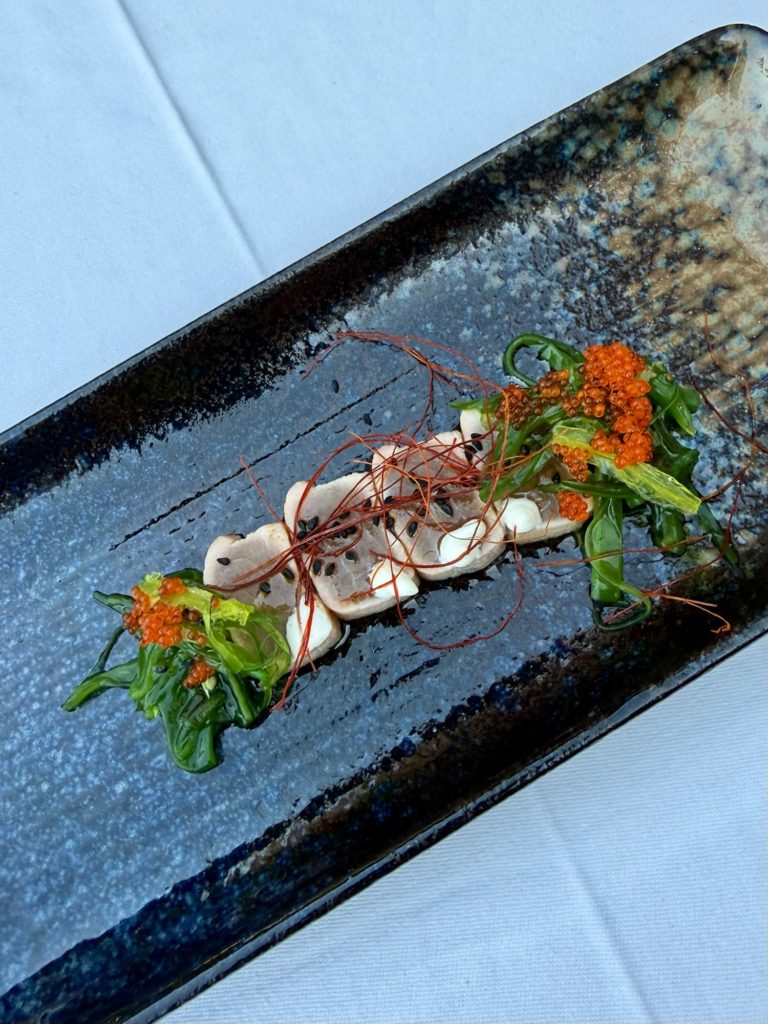
Then there is Culinarium, the hotel’s regional fine dining restaurant.
Each guest is invited to eat there during their stay, with further bookings available at an additional charge, and I would absolutely recommend going.
Although I highly suspect you will then book again.
Culinarium has that beautiful alfresco feeling that begins in the last of the sunlight and slowly slips into candlelight. The waiters take time to explain each dish, where the flavours come from, and how the menu connects back to the island.
The menu brings regional dishes into something more refined, with twists on local ingredients that still feel rooted in Santorini rather than trying too hard to be clever.
It is thoughtful without being stiff. Beautiful without feeling formal for the sake of it.
The kind of evening where the food, the setting and the service all seem to understand that this is not just a meal.
It is part of the memory.
For milestone travel, these things make the difference.
A slow dinner. A familiar table. A hand held across the candlelight. The feeling that you do not have to leave the hotel to make a memory.
A spa afternoon that felt like ours
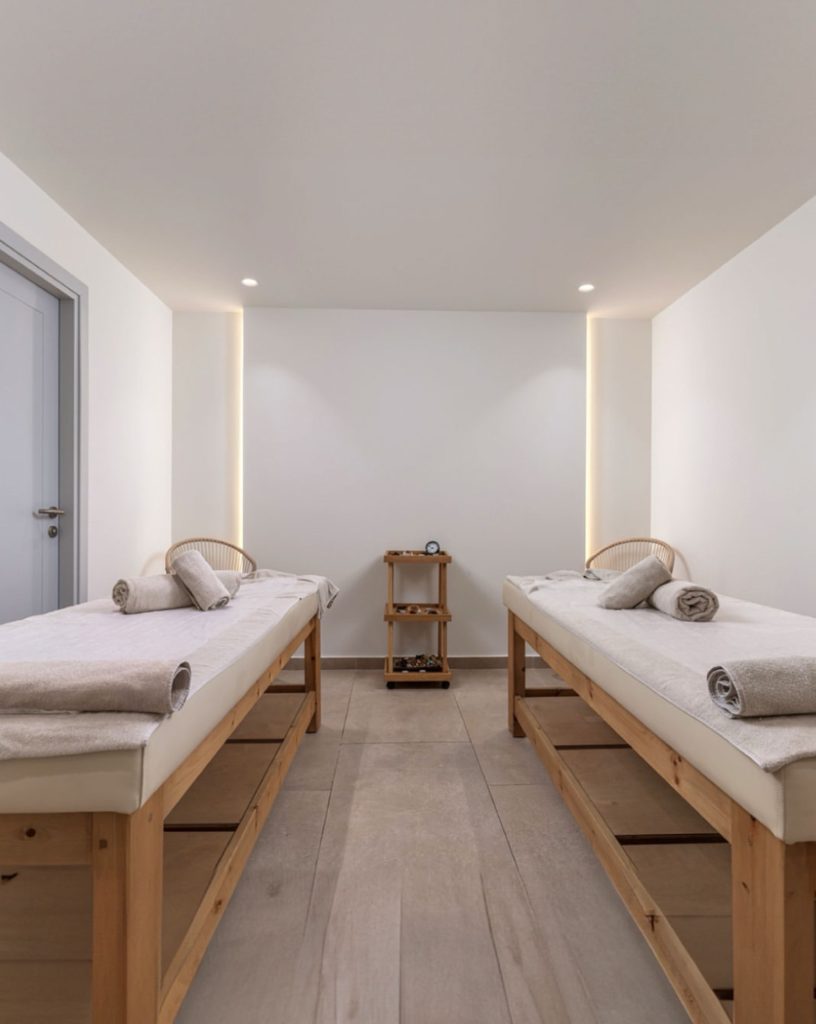
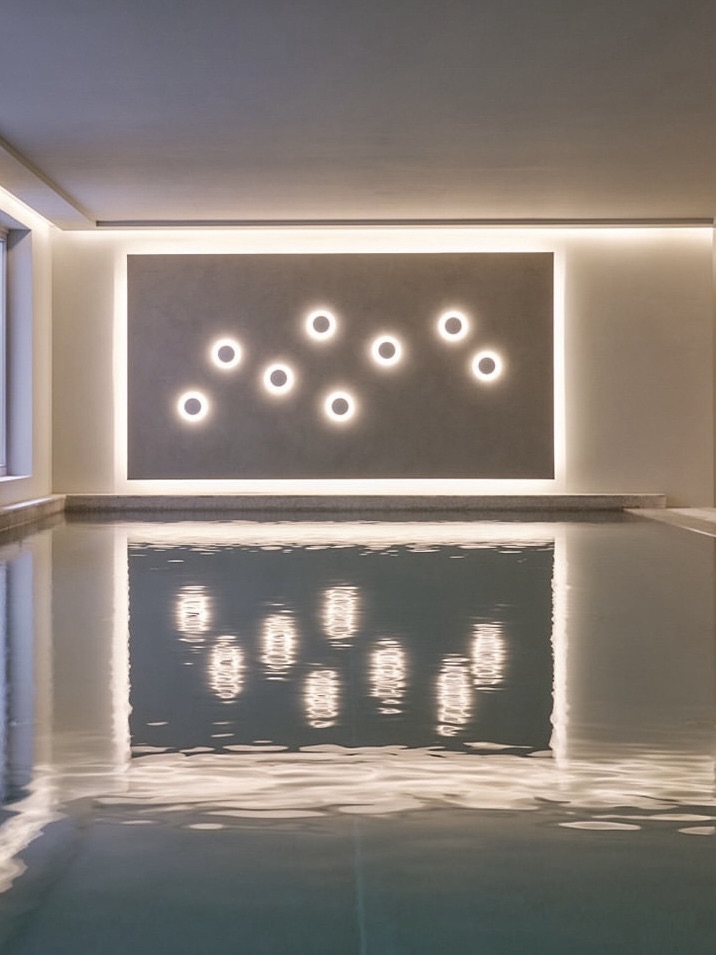
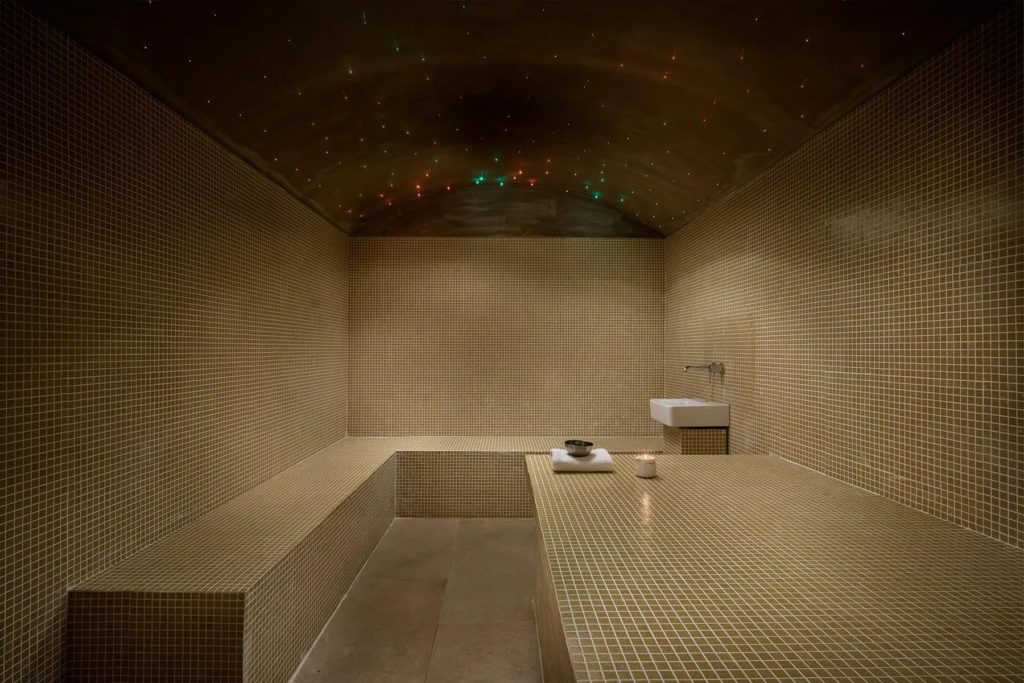
The spa was one of the loveliest parts of the stay.
Not because it was “good for an accessible spa.”
Because it was good, full stop.
There’s the distinction.
It was warm from the moment we arrived. Calm, welcoming and easy to move through, with enough space for me to feel comfortable rather than carefully managed through the experience. The access was there, but it didn’t announce itself. It simply allowed the afternoon to work.
Christos welcomed us with the same warmth and openness that seemed to run through the whole hotel. He asked about the treatments, what I might need, whether anything needed adapting, and if there was anything else they could do to make the experience right for us.
There was no panic in the questions.
No awkwardness.
Just care.
Martin and I both had massages, and they were wonderful.
Roula listened properly.
She understood my body’s needs in a way that is not always guaranteed when you have pain, sensitivity, fatigue and a nervous system that occasionally behaves like it has been left unsupervised with a box of matches.
She was confident, and confidence makes such a difference.
There is a huge gap between a therapist who is willing to work with a disabled body and a therapist who is comfortable doing it.
Roula was comfortable.
Afterwards, I had reflexology. When I mentioned that Martin does a lot of my massage therapy at home, she invited him to learn a little as she worked on me.
That really meant a lot to us.
It was generous, practical and intimate in the most thoughtful way.
We had the whole spa to ourselves that afternoon, and it became one of those experiences that felt beautifully normal.
Not accessible spa use.
Just spa use.
An afternoon for the two of us, a quiet pause, and a memory.
A number one in lights, and a floating breakfast
On the day of our first wedding anniversary, we returned to the room to find a hand-decorated cake, balloons, a handwritten card with a beautiful note from Marialena and the team, wine, and even a number one in lights.
They really had thought of everything, even down to the call to the room that morning about “pool servicing”, which I later realised was their way of checking whether the coast was clear to put the surprises in place.
They’d thought of it all.
As if they had not already done enough. As if the welcome, the gifts, the cards, and all the general loveliness had not already finished me off.
The thoughtful gestures just kept appearing.
That is what I mean when I say Meltemi did not simply get one element right.
They held the whole stay.
It was not one grand gesture.
It was the consistency of care and attention to detail throughout.
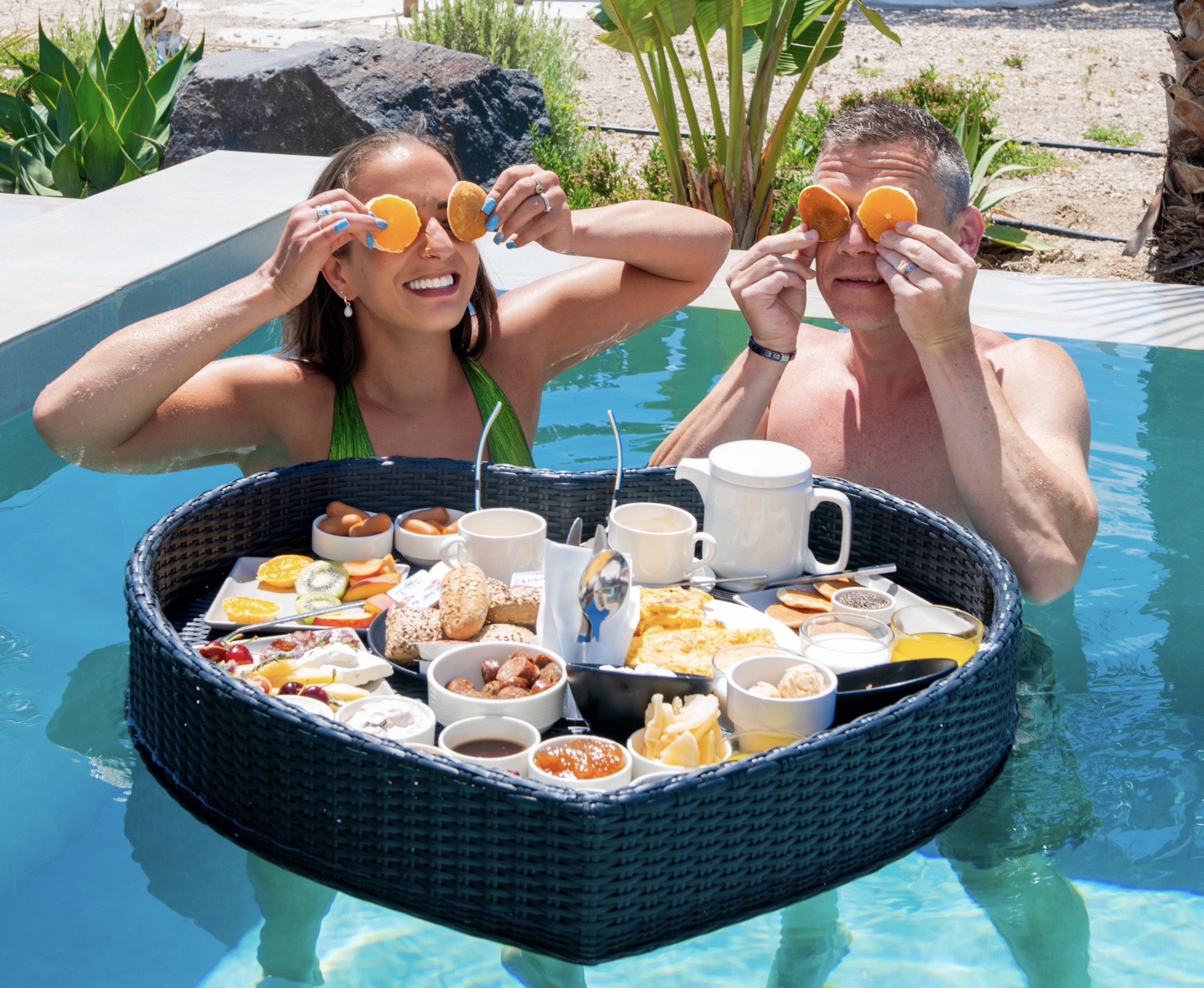
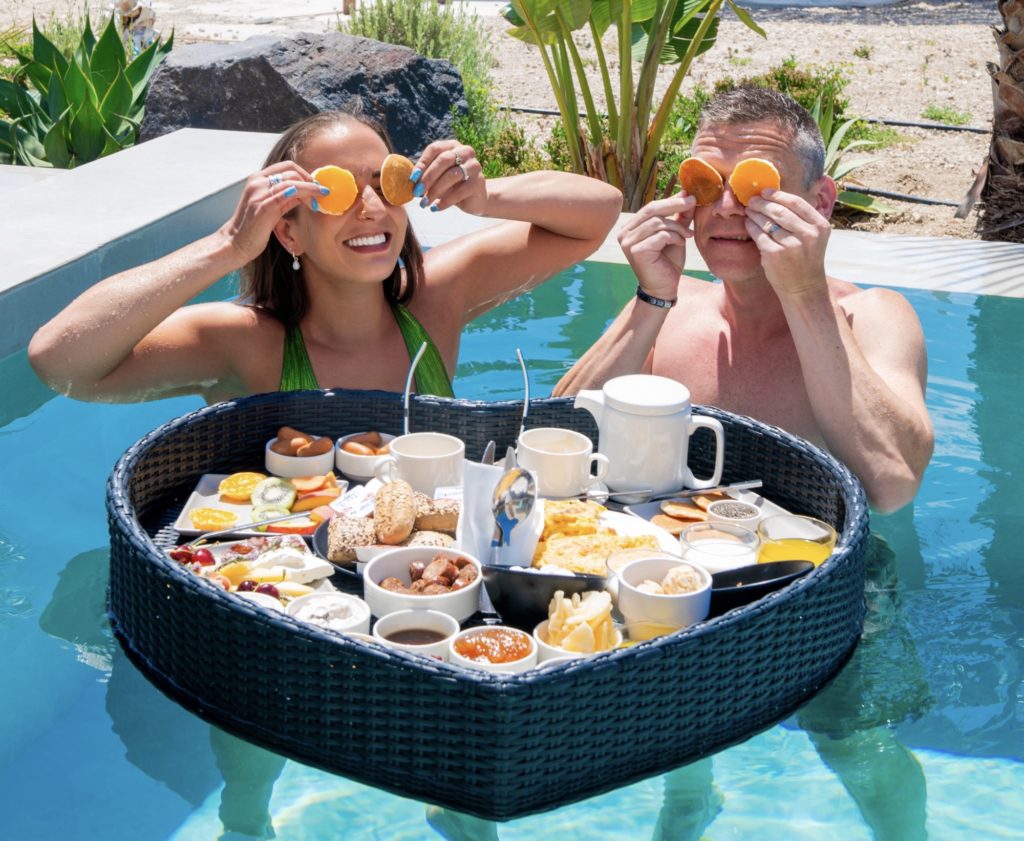
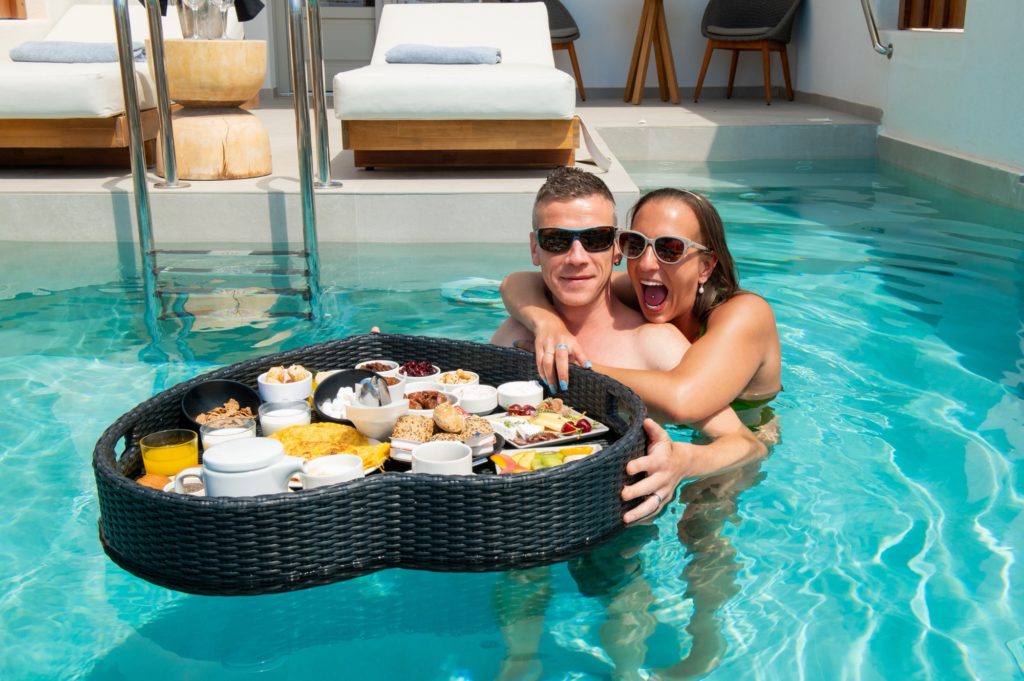
Then there was the floating breakfast.
If your room has its own pool at Meltemi, waking up to a floating breakfast feels like something you simply have to do.
It seems mildly illegal to have Santorini sunshine, a rattan tray full of treats, the person you love, and not spend at least two hours being absolutely no use to anybody.
Those are the pinch-me moments.
The ones where Martin and I look at each other and say, “Are we really doing this?”
Experiences like that are part of why Meltemi works so well for milestone travel.
It gives you Santorini outside the hotel.
But it also gives you reasons to stay exactly where you are.
The little things that become the story
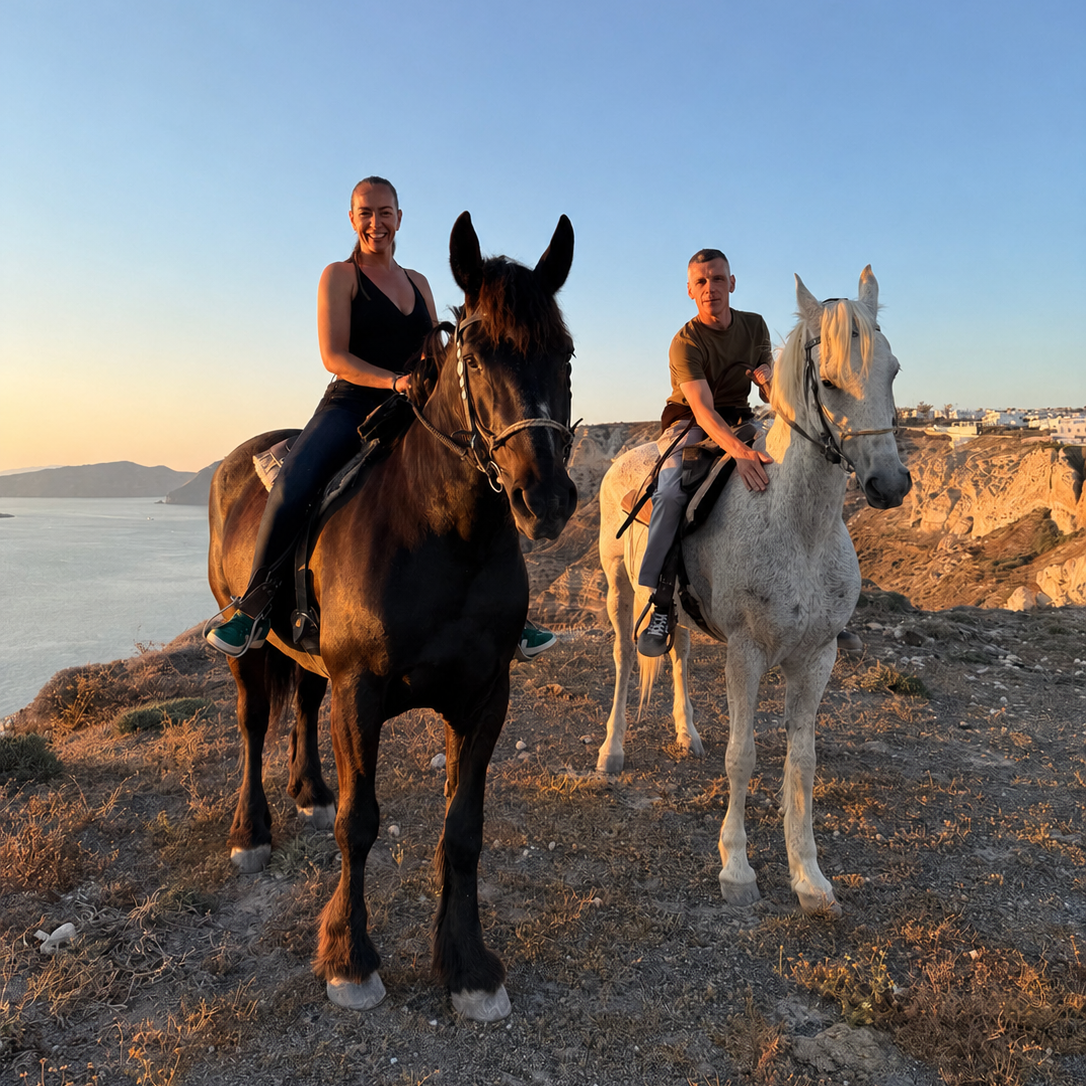
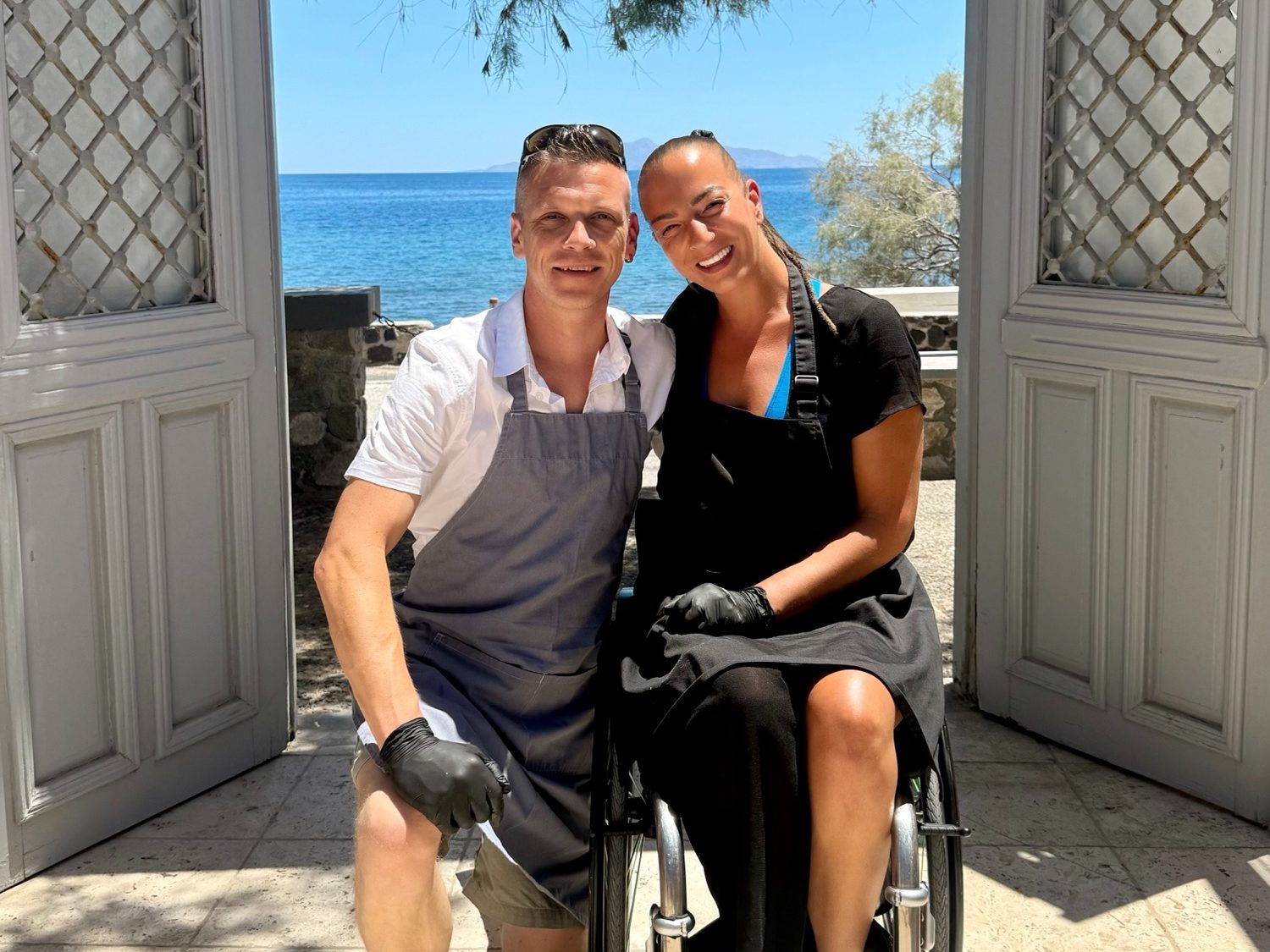
Both the hotel and TUI offer experiences and excursions that can be booked during the stay. On this trip, we had a couple arranged through them, including horse riding over the caldera and a Greek cookery class. The hotel also helped with much of our transport around the island.
We used taxis most of the time.
The Santorini bus service is, well… spirited. It may work for some people, depending on access needs and confidence, but it is not something I would personally rely on for ease.
Taxis were much better for us. Whether pre-booked or arranged at the time, we never had a problem getting the right vehicle to take us where we needed to go.
When you stay somewhere that knows you, or at least wants to understand how you move through the world, the practicalities feel less heavy.
That is the value of a good base.
Then there were the smaller things.
Martin making chickens out of towels and leaving them for the housekeeping and bar staff, because apparently we had decided to reverse the traditional hotel towel animal arrangement.
The bar team knowing how we liked our coffee.
Our favourite spot in the restaurant being remembered.
The “Kalimera” greetings on the way to breakfast.
The little chats that were never really little.
The people who asked how our day had been and actually waited for the answer.
The sense that we were not passing through the hotel, but somehow becoming part of its rhythm for a while.
And then the goodbyes.
At Meltemi, the goodbyes began before we had even finished packing.
There were hugs the day before departure. Then more hugs on the day itself. So many members of the hotel team came to say goodbye, to wave us off, and to stand there with the kind of warmth that makes you feel deeply grateful and slightly ridiculous because you are trying to leave gracefully while wondering if crying in reception is acceptable behaviour.
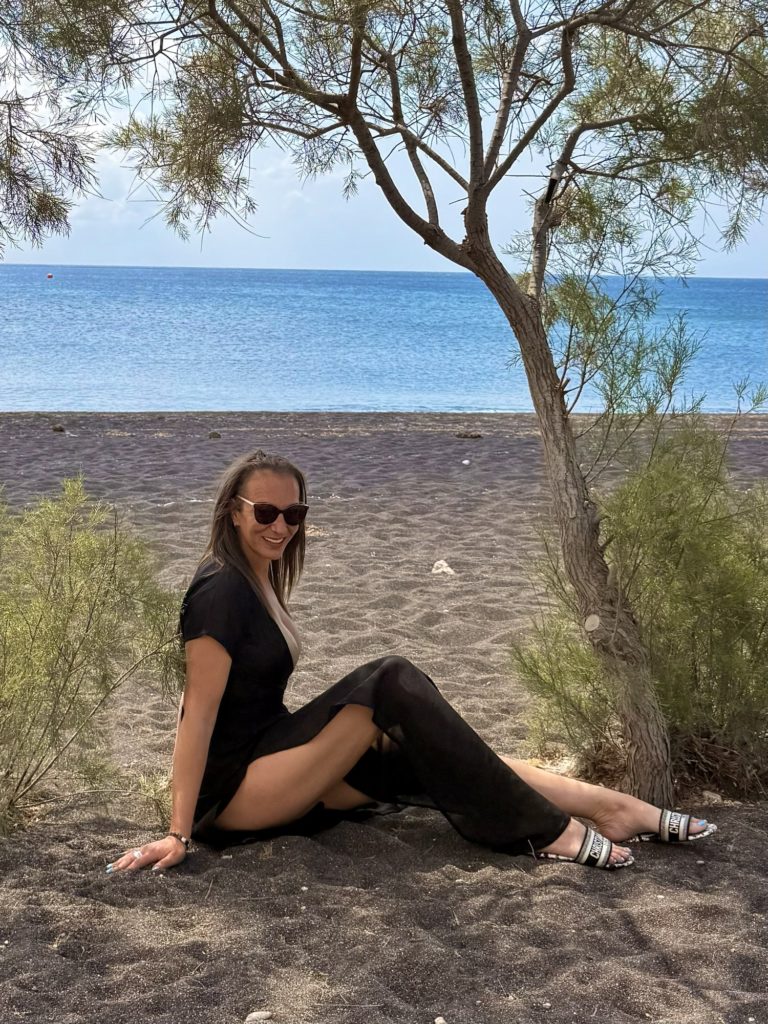
Leaving Santorini is always hard.
Leaving Meltemi felt like leaving family.
Our Santorini family.
And I do not write that lightly.
There are plenty of hotels where staff are kind, professional and helpful, and I never dismiss that.
But this was something else.
This was relationship.
The kind built through attention, consistency, humour, care, and the simple but powerful act of making people feel they matter beyond the booking reference.
What this return taught me
What this return taught me is that consistency is its own kind of luxury.
It is one thing for a hotel to get a wedding stay right. There is emotion everywhere. Everyone knows that time matters. The whole trip has a sense of occasion wrapped around it.
Returning a year later showed me something quieter.
Meltemi had not simply held one special fortnight for us.
It still understood what made that stay work.
The same warmth was there. Care showed up in small, steady ways. Willingness was woven through the experience, from the room to the restaurant, the spa, the transport and the goodbyes.
Access didn’t sit outside the stay, waiting to be managed separately.
It was part of how everything else became possible.
A spa afternoon that felt like ours. A dinner that became a date night. A scooter day that gave me more of Perissa. Anniversary surprises that made me cry on holiday.
Easy mornings, familiar faces, long goodbyes, and that very particular feeling of returning to somewhere that had already held your story, and realising it still knew how to hold it.
That is why this stay belongs within The Inclusive Edit’s Santorini milestone travel series.
Not because Meltemi proves Santorini is easy for everyone.
It doesn’t.
Santorini is still Santorini. Beautiful, dramatic, uneven, occasionally chaotic, and fully committed to making you work for some of its best views.
But Meltemi shows what becomes possible when the right base, the right people and the right attitude come together.
Luxury is not only the beautiful room or the dinner under candlelight.
It is whether those things can actually be enjoyed.
With ease, dignity, and enough energy left to be present in the moment.
A year after our wedding, TUI Blue Meltemi still felt like the place that understood that.
Not perfectly.
But personally.
And sometimes, personally is what brings you back.



Leave a Reply