
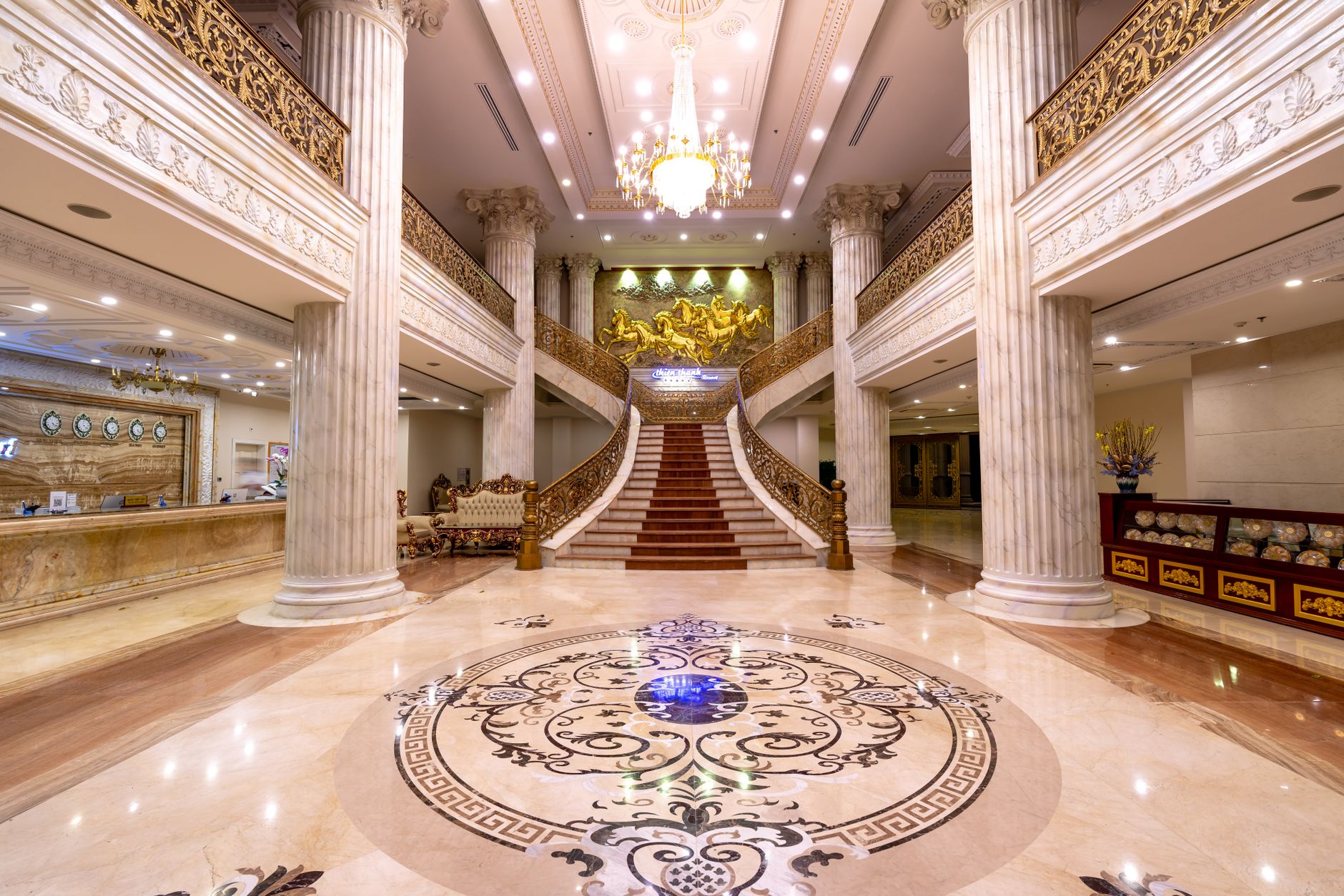
Luxury hospitality is talking about invisible friction with a new confidence.
The language is everywhere now. Ease, calm, emotional intelligence, guest psychology, a sense of arrival, and a stay that feels personal rather than processed.
It’s a good conversation.
A necessary one, actually.
For a long time, luxury has relied too heavily on what can be seen. The finish, the fabric, the view, the marble bathroom, the welcome drink, and the candle placed exactly where a candle should be placed.
None of that is unimportant.
Beauty matters. Atmosphere matters. The sensory world of a place matters.
But it isn’t enough.
Guests are becoming more aware of how a place makes them feel, not just how it looks. They notice whether an experience has been thought through, whether the service feels warm or rehearsed, and whether the space invites them to settle or quietly asks them to perform.
Luxury isn’t only about excess anymore.
It’s about ease.
Good.
But if we’re going to talk seriously about invisible friction, we have to talk about accessibility.
Not eventually.
Now.
Because accessibility isn’t adjacent to the guest experience conversation.
It’s one of the clearest ways to understand whether that conversation has been understood at all.

Invisible friction isn’t abstract for everyone.
For many hospitality consultants, invisible friction means the small moments that disturb the guest experience. A slow check-in. A confusing arrival. A room that photographs beautifully but doesn’t feel restful. A spa journey that asks too many questions. A restaurant booking process that feels more complicated than it should.
All of that matters.
But for guests who move through the world differently, invisible friction isn’t a theory.
It’s the difference between booking and not booking.
It’s the entrance that may or may not work. The accessible room that may or may not be available. The bathroom that either gives enough space to move or quietly turns the stay into something harder than it needed to be.
It’s reaching the restaurant with ease, rather than being taken through a service corridor. It is knowing whether the spa is truly part of the experience, or something quietly understood to be out of reach. It’s the transfer that has either been thought about properly or left as another question for the guest to solve.
And often, it’s the website.
The place where a guest should be able to understand enough before they have to send an email that begins, once again, with an explanation of their body, their needs, their mobility, their pain, their energy, their family, or their limitations.
That isn’t a niche version of guest experience.
It’s guest experience, revealed more clearly.
The guest may never tell you.
This is the part luxury hospitality needs to understand.
Not every guest will disclose a disability, access need, health condition, sensory need, pain condition, mobility difference, or energy limitation before they book.
Some will.
Many won’t.
Some don’t think of themselves as disabled. Others are travelling with someone else who needs the information. There are guests managing temporary injury, chronic illness, neurodivergence, fatigue, anxiety, pregnancy, ageing, recovery from surgery, or simply a body that needs more certainty than the website currently gives them.
Some are tired of explaining. Others don’t want the first conversation with a luxury property to feel clinical. There are also guests who worry that if they ask too many questions, the experience will change before it has even begun.
So they do what guests so often do.
They assess quietly.
Yes, they read between the lines, look closely at photographs, scan room descriptions, and check reviews. They zoom in on doorways, terraces, bathroom layouts and restaurant images, trying to work out whether the experience will include them without making them work for it.
And if they can’t tell, they may simply choose somewhere else.
No complaint. Not a feedback form. No opportunity for recovery.
Just a booking that never happened.
Expedia Group’s Inclusive Travel Insights Report found that only 54% of respondents had seen options accessible to all abilities when booking a trip, and that only 1% of travel marketing represented disabled travellers, despite disabled people spending significantly on travel.
Open Doors Organization’s 2024 market study found that 25.6 million travellers with disabilities in the United States took 76.9 million trips and spent almost $50 billion over two years, with 81% using the internet to support their travel needs.
This isn’t a marginal audience.
It’s a market making decisions.
Often silently.

What luxury says, and what the guest experiences?
This is the gap The Inclusive Edit exists to explore.
Not the gap between luxury and accessibility as separate ideas.
The gap between what luxury promises and what the guest actually experiences.
I saw it clearly in Manchester.
The reason the first Access Manchester piece mattered wasn’t because everything was perfect. It mattered because the experience held together. Arrival worked. The room worked. Rooftop lunch worked. Atmosphere, service, access, and ease belonged in the same sentence.
That is rarer than it should be.
Not because hotels don’t care.
Most do.
But because access is still too often treated as a feature, rather than part of the experience.
The same thread ran through The Night Before Santorini.
That article wasn’t really about a hotel stay before a flight. Not only.
It was about the fact that accessible milestone travel begins long before the destination. The chauffeur transfer, the pre-flight hotel, the accessible room, dinner, rest, timing, and the absence of panic all shaped the journey before Santorini ever came into view.
That is luxury.
Not because it was extravagant.
Because it made the journey possible to enjoy.
The same question sits at sea.
In cruise and yacht travel, the industry often focuses on cabins. Important, of course. But the guest journey is much bigger than that. Boarding, tendering, dining, deck movement, excursions, transfers, port access, spa and wellness, emergency planning, and the confidence to know what happens if something doesn’t go to plan.
A cabin can be technically accessible while the wider experience remains uncertain.
And uncertainty is friction.
Beautiful isn’t the same as clear.
Luxury hospitality is particularly good at beauty.
It knows how to describe texture, place and feeling. A secluded terrace, a candlelit dinner, a deep soaking tub, a private pool, a spa hidden beneath stone arches, and a suite designed for complete escape.
This language sells the dream.
But for some guests, it also raises questions.
Can I reach the terrace? Is the tub the only bathing option? Is the private pool stepped? Can the spa be reached by lift? Is the restaurant on level ground?
The questions continue because the experience continues.
Can a wheelchair user sit at the table without being placed awkwardly at the edge of the room? Can an ambulant guest manage the distance from reception to the room? Is there somewhere to rest between arrival and dinner?
For neurodivergent guests, the rhythm of the experience may matter just as much as the route. For a family travelling with a disabled child, the question may not be whether the holiday is technically available, but whether it feels genuinely possible.
These questions don’t diminish luxury.
They reveal whether luxury has been fully considered.
A hotel can have exquisite interiors and still leave too much for the guest to solve. A villa can offer privacy, space, and beauty, while giving almost no meaningful information about entrances, bedrooms, bathrooms, terraces, gradients, pool access or the local terrain.
A destination can describe itself as welcoming and still leave disabled travellers piecing together the practical truth from three review sites, a floor plan that doesn’t exist, and one photograph of a bathroom taken at an angle that hides the most important part.
And it begins before arrival.

Accessibility isn’t the opposite of luxury.
This is where the conversation often goes wrong.
Accessibility is still sometimes imagined as something that interrupts beauty. A practical requirement. A compromise. A compliance issue. A set of adjustments that sit awkwardly beside the main experience.
But that isn’t how guests experience it when it’s done well.
When access is considered properly, it doesn’t flatten luxury.
It deepens it.
This gives the guest confidence and allows service to feel effortless rather than reactive. It helps a family relax, lets a couple book the anniversary trip, and allows someone travelling alone to arrive without feeling exposed.
And it means the spa, the restaurant, the terrace, the pool, the beach, the transfer and the room can be understood as part of the same experience.
It protects dignity.
And dignity isn’t a soft concept in luxury hospitality.
It’s the standard underneath everything.
The Valuable 500’s UK travel findings reported that 74% of disabled people thought accommodation providers needed to improve at least one feature to be more accessible, while respondents also highlighted the importance of clear accessibility information, details of adjustments, staff understanding and dignity in how they are treated.
This isn’t about adding a paragraph at the bottom of a website.
It’s about understanding what confidence is made of.
The missed opportunity
There is a commercial point here that luxury hospitality can’t afford to miss.
Guests who need clearer access information aren’t only looking for function.
They’re often looking for the same things every luxury guest wants: a beautiful setting, good food, strong service, privacy, wellness, ease, a sense of occasion, a place to celebrate something important, and a stay that feels considered.
The difference is that they may need more information before they can trust the promise.
That is all.
When that information is missing, the industry can mistake silence for lack of demand.
It isn’t always lack of demand.
Sometimes it’s lack of confidence, or the lack of clarity. It could be the guest decides that the effort required to find out whether the experience will work is already too much.
That is the quiet commercial cost of inaccessible communication.
Not only lost bookings.
The lost recommendations, and lost return stays. Lost trust and editorial opportunity. Lost word of mouth from people whose opinions travel further than a hotel may realise.
Where the industry is getting it right
There are places getting this right or at least moving closer.
Not always perfectly.
Perfection isn’t the point.
The most encouraging moments often come from teams willing to think beyond the standard answer.
A room changed because another layout would work better. Furniture moved without fuss. A route explained before it becomes a problem. Breakfast supported quietly, plate by plate, so the buffet remains part of the stay rather than a moment of awkwardness.
Sometimes it’s as simple as a restaurant team asking whether a guest would prefer to transfer or remain in their wheelchair, instead of assuming either.
Sometimes it is a hotel recognising that a bath may be part of pain management and recovery, not a decorative extra.
And sometimes it is a destination partner understanding that family travel, solo travel, milestone travel and accessible travel aren’t separate lives. They’re often the same guest, in different contexts.
This is where luxury starts to feel intelligent.
Not because every need has been predicted.
But because the service culture has enough humility to ask better questions, and enough structure to respond well when the answers matter.
Where it’s still missed
The misses are rarely dramatic.
That’s why they’re so easy to overlook.
A website may say accessible rooms are available but give no meaningful detail. A hotel can have a step-free entrance while the accessible parking sits at the far end of a cobbled route. A restaurant may provide an accessible toilet but place the tables so tightly that moving through the room becomes difficult.
A spa treatment might be technically available, with the route to the treatment room still left unclear. A villa can be described as suitable for all ages, while no one has explained the bedrooms, bathrooms, thresholds, gradients or pool access. A cruise line may highlight accessible cabins, but give far less clarity around excursions, tender ports, dining flow and the wider experience.
None of this necessarily comes from bad intent.
Often, it comes from not thinking far enough.
But luxury is supposed to think far enough.
That is the point.

The next level of luxury
If the next level of luxury is emotional intelligence, then accessibility belongs at the centre of the conversation.
If the next level of luxury is invisible friction, accessibility is one of the most honest places to look for it.
And if the next level of luxury is confidence, calm and ease, guests who move through the world differently have been showing the industry exactly where the gaps are for years.
The question is whether the industry is ready to listen before it must.
Not defensively.
Nor as charity.
Not as a campaign.
As a commercial and editorial standard.
Because the future of luxury hospitality won’t only be judged by how beautifully a place presents itself.
It will be judged by how clearly a guest can understand whether they belong there.
Before they book.
Or before they arrive.
Before they have to explain.
That is where the next conversation needs to go.
And that is where The Inclusive Edit will keep holding the standard.
Luxury travel held to the standard it sets itself.

Leave a Reply