
Some places stay with you because they’re beautiful.
Others stay with you because of how they make you feel.
Santorini has been both for me.
Last year when I toured the island, I saw some extraordinary places. I lit a candle at the monastery at Profitis Ilias, stood at viewpoints I still think about and reached parts of Santorini I’m genuinely glad I saw.
But I paid for it.
In the very real, my-body-needed-days-to-recover kind of way.
At the time, it was explained that most of the key places on the tour involved steps, uneven ground or routes that wouldn’t really work for my wheelchair. They could take me close to some of them, but not necessarily through them. And if we did, it would require work.
So I did what disabled travellers so often do.
I made it work.
There were stairs, uneven ground and, at times, moments where I was carried in my wheelchair up steps. My husband and the driver were both up for the challenge, and in many ways they made it into an experience.
I’m glad I did it.
I really am.
But writing that down made me realise how much I was asking of my body at the time.
That’s the part accessible travel writing often misses. Not whether something was technically possible, but what it cost to make it possible.
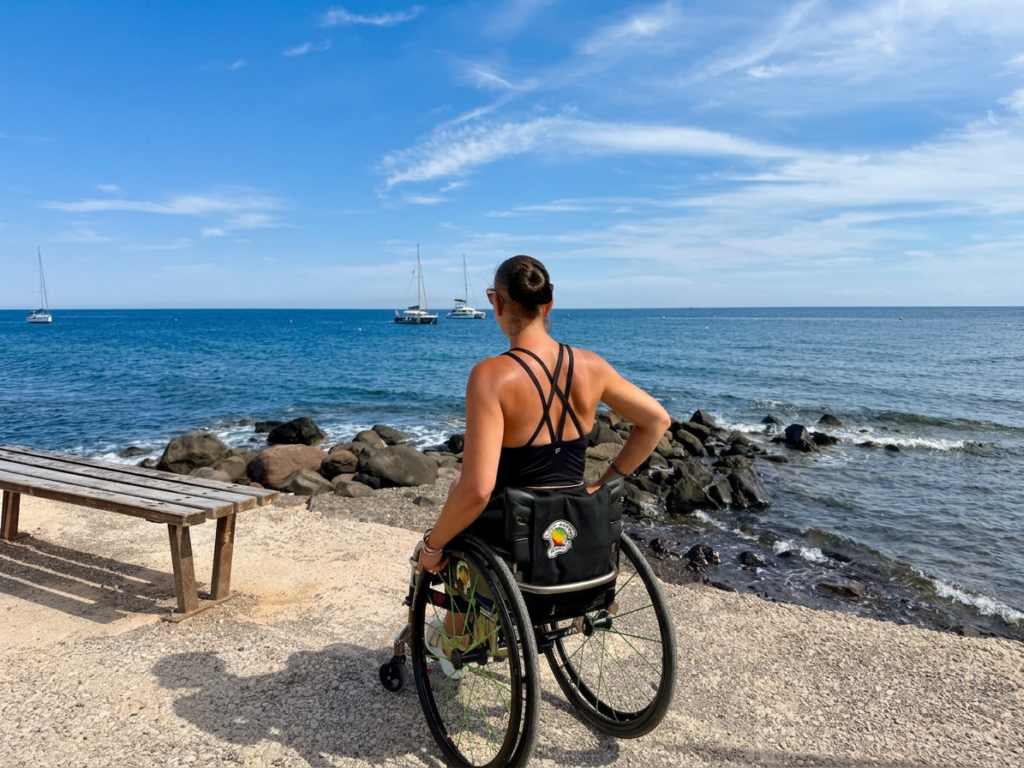
Returning to Santorini with different questions
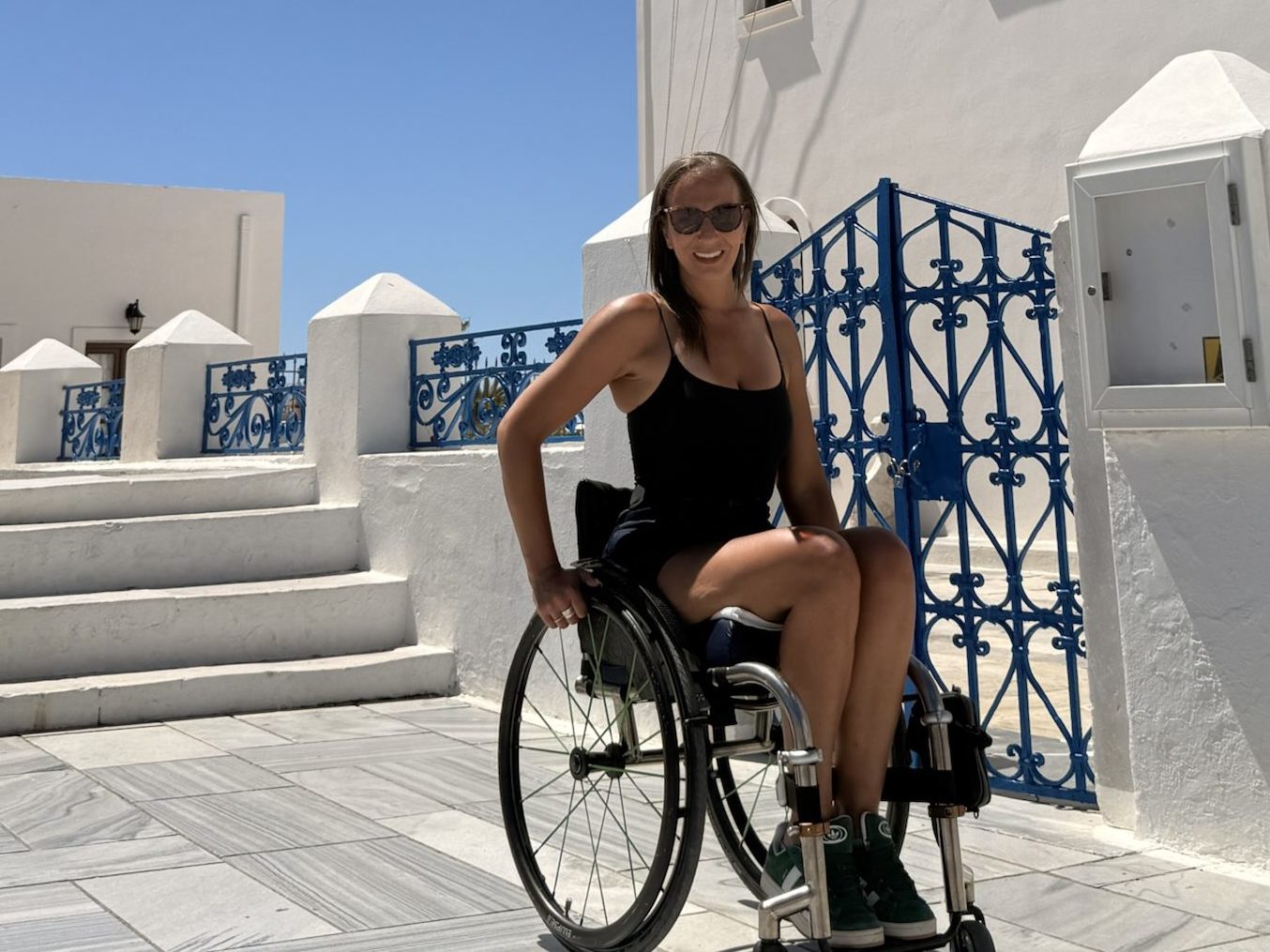
When I returned to Santorini this year for The Inclusive Edit, I wanted to understand the island more fully.
Not just as a milestone destination, or as one of the most beautiful places in the world. And not just the version I’d already experienced, or the places I’d managed to reach.
I wanted to understand more of the island itself: the routes, the people, the operators who’d already thought about access properly, and the experiences that could open Santorini up without asking so much of my body in return.
Because the desire is there.
People still want the views, the sea, the villages, the food, the quiet moments and the once-in-a-lifetime feeling that Santorini does so well.
The question is whether they can trust the experience enough to book it.
So this time, I wanted to find a private tour that had thought about access before I even had to ask.
That’s how I found Santorini Experts.
The first access test happened before I arrived
First impressions matter.
When I click on a website and can’t find any clear access information, I know immediately that I’m probably in for a long process of questions.
Can I get in? Are there steps? How far is the walk? Is the bathroom accessible? Can the vehicle take my wheelchair? Will I have to transfer?
With Santorini Experts, the accessible tour information wasn’t hidden away.
It was there clearly, confidently and warmly.
That matters more than people realise, because before a traveller books anything, they’re already deciding whether the experience feels possible.
A good accessible guest journey doesn’t begin when the car arrives.
It begins when the guest can see themselves in the experience before they enquire.
Meeting Kathrin and Ioannis
I contacted Santorini Experts on Instagram and quickly heard back from Kathrin, the founder and managing director.
Straight away, there was warmth. But there was also confidence.
That combination is important.
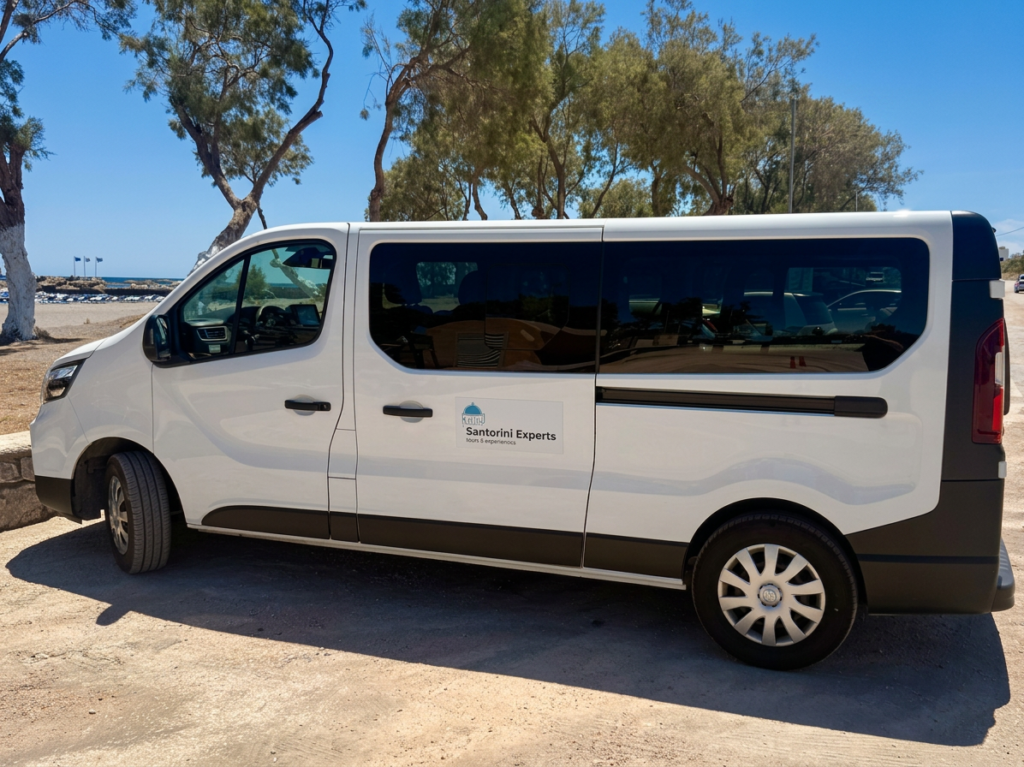
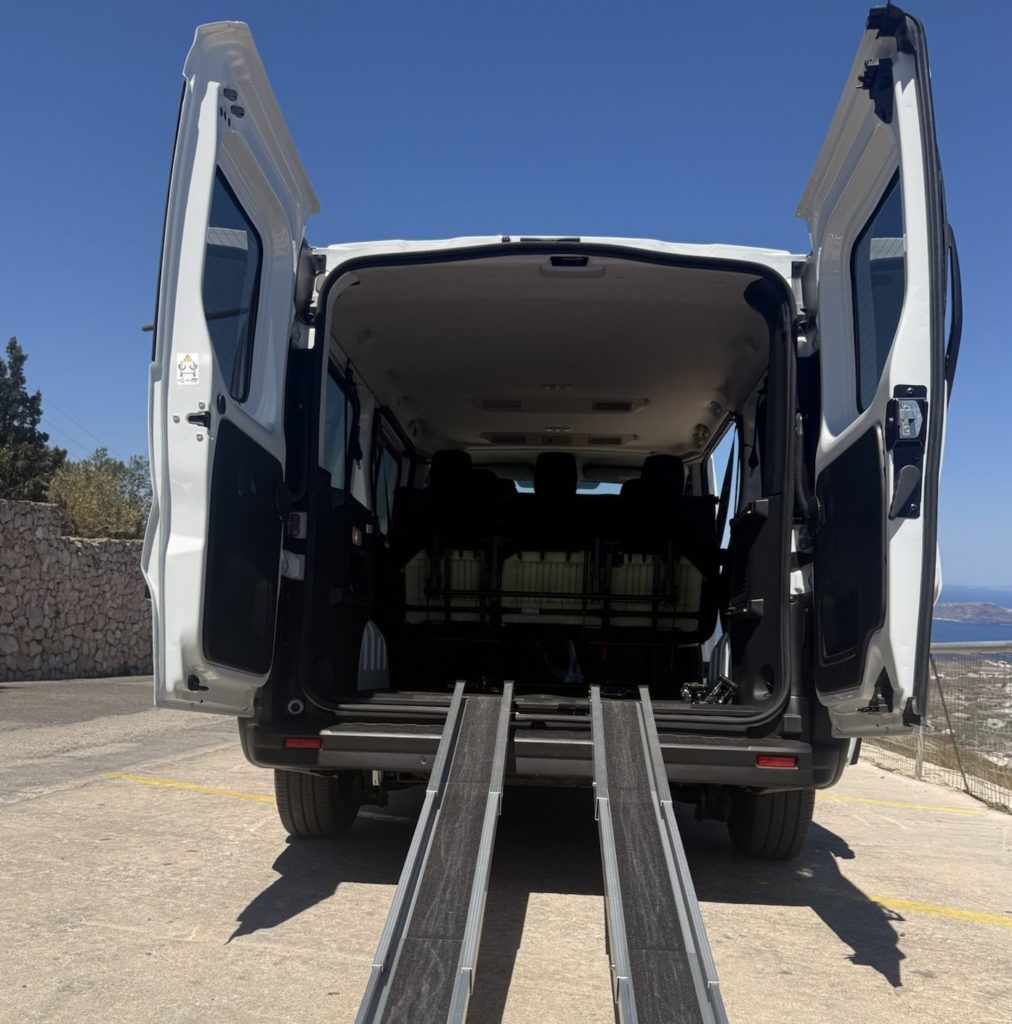
Kathrin didn’t make access feel like an awkward problem to solve. She asked the right questions naturally and explained what would be possible, how the day would work, and that the tour would use a manual wheelchair accessible van.
She also let me know they had a wheelchair available if needed.
I brought my own, but I appreciated that detail.
Not everyone who needs support uses a manual wheelchair all the time. Some travellers are ambulant wheelchair users, and some may walk short distances but need a chair for longer days. Others may not use mobility equipment at home, but would still benefit from it in a destination like Santorini.
That one detail told me something.
Energy wasn’t going to be the thing getting me around the island.
And that made me happy before the tour had even started.
On the day itself, Kathrin arrived with her son, John, or Ioannis, who drove and supported with the wheelchair transfers in and out of the vehicle.
From the beginning, the experience felt calm.
Ioannis asked whether I wanted to transfer into a seat or stay in my own chair. I did both at different points, and that choice mattered.
I’d half expected to be put in the back and then have to explain what I preferred.
I loved being wrong.
They’d already thought about choice.
That’s a small detail if you’ve never needed it. It’s a very big detail if you have.
Choice is often where dignity begins.
Profitis Ilias without the effort
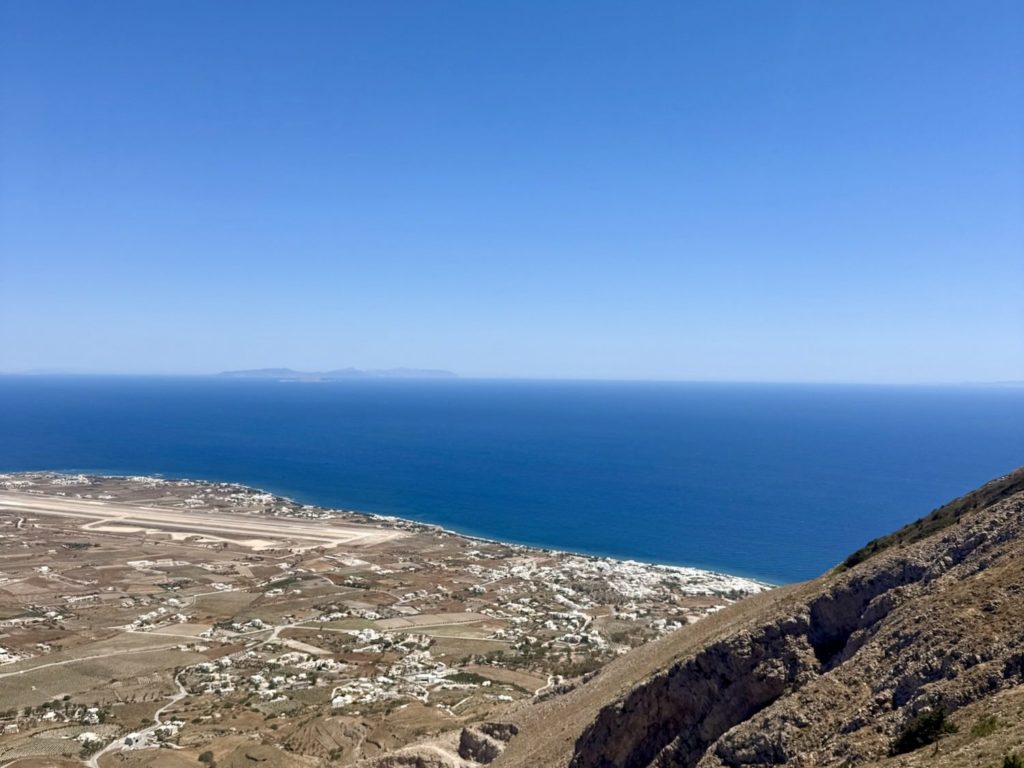
Our first stop was Mount Profitis Ilias.
I’d been there before, but the experience couldn’t have felt more different.
The first time, so much energy had gone into physically getting there that I don’t think I fully took it in.
This time, we pulled up to the viewing point, rolled out of the van and looked across the island.
There was no drama, no negotiation and no recovery calculation.
Just Santorini, spread out in front of us.
That’s what access can do.
It doesn’t make the view more beautiful. It gives you enough ease to actually receive it.
The ‘really scenic’ route through the island
From Profitis Ilias, we took what I like to call the really scenic route.
Although, when I say that, there isn’t really anywhere on Santorini that isn’t scenic.
This was one of those winding island roads that lets you see a little bit of everything as you move through it. Rock formations. White buildings. Beaches in the distance. Pistachio fields. Vineyards. The island changing shape with every turn.
That’s something I’ve come to appreciate more and more about Santorini.
It isn’t one thing.
It isn’t just the caldera, or the sunsets, or Oia.
There’s another Santorini between those famous moments, and private touring is one of the best ways to understand it.
Monolithos Beach
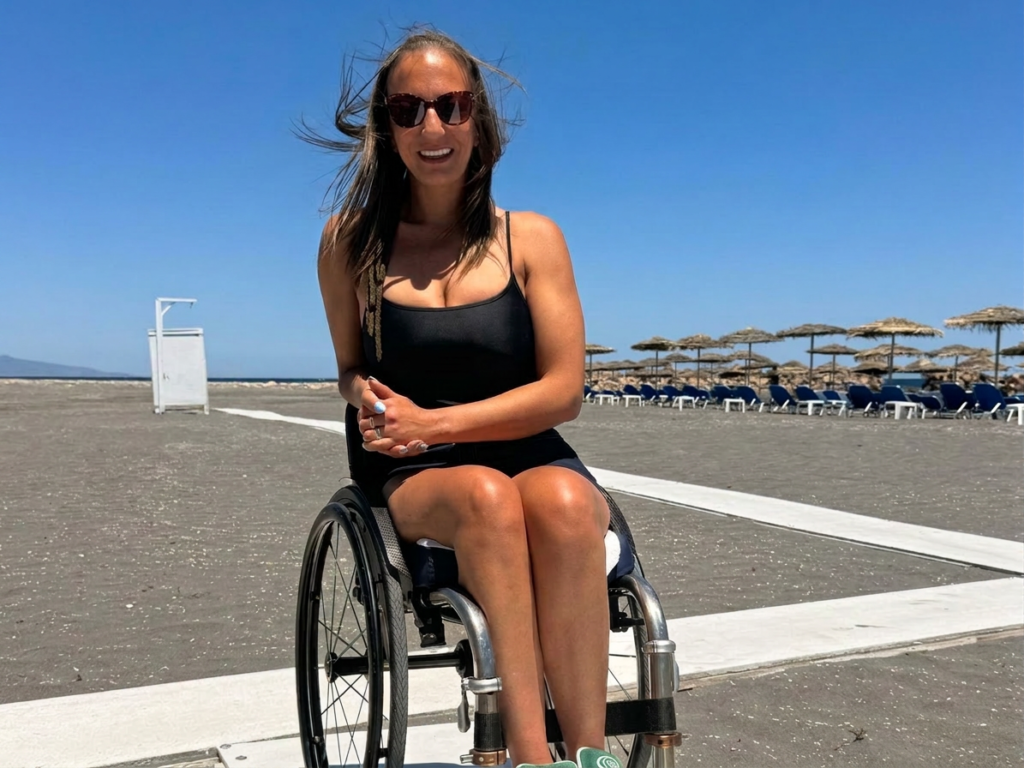
Our next stop was Monolithos Beach.
It was somewhere we’d never been before, and I’m so glad we went.
Monolithos is popular with families during the summer season. The sea is shallower for longer and a little calmer. The volcanic sand is fine and soft, which felt like a complete contrast to Perissa and Perivolos.
We visited during the first week of June, so the season was only just waking up. There was barely anyone on the beach.
We strolled along the boardwalks with the sea in front of us and the meltemi wind doing what meltemi wind does best, creating wild hairstyles and making every photo feel a little more alive.
I couldn’t get right down to the sea, but I insisted Martin went for a paddle.
It was lovely to watch.
He walked along the edge of the water while I sat burying my toes in the sand, before we sat together, hand in hand taking in the quietness of a beach we might never have found on our own.
Kathrin captured the moments for us along the way. Not in a staged way, just gently, like someone who understood this was still our afternoon, not a photoshoot.
That balance was something else the things Santorini Experts did very well.
They guided the day without taking it over.
Firostefani and the blue of Santorini
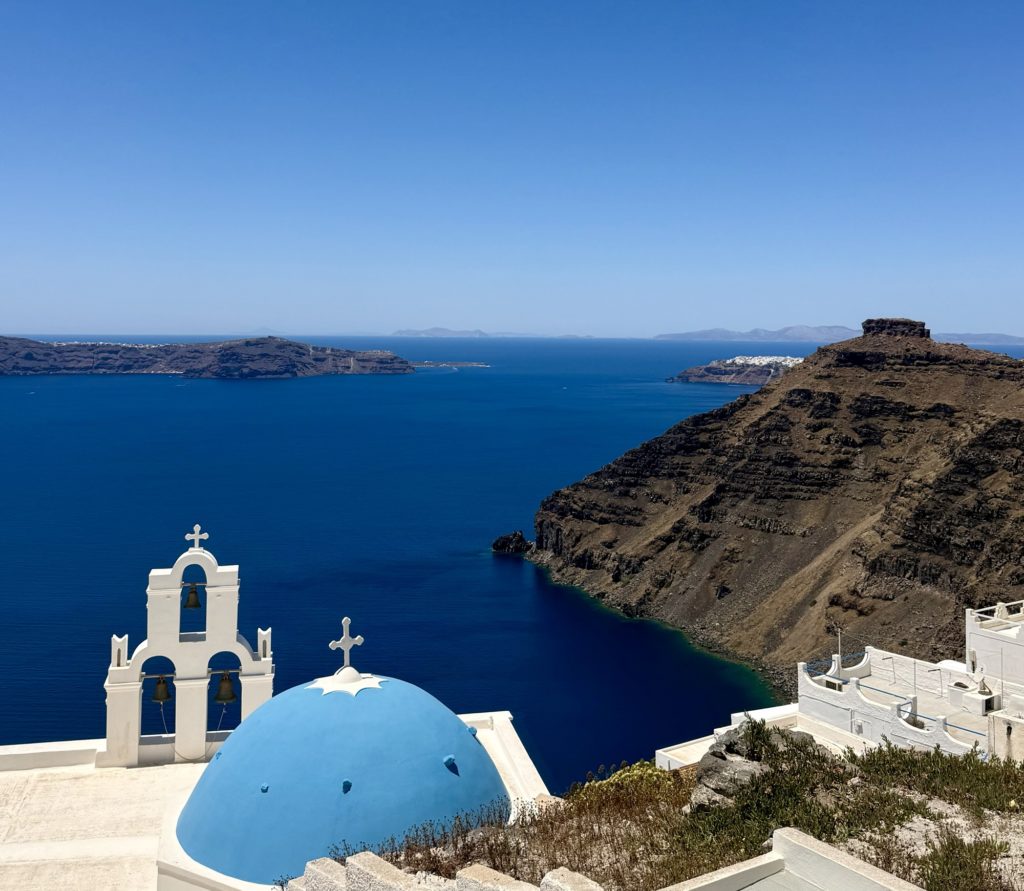
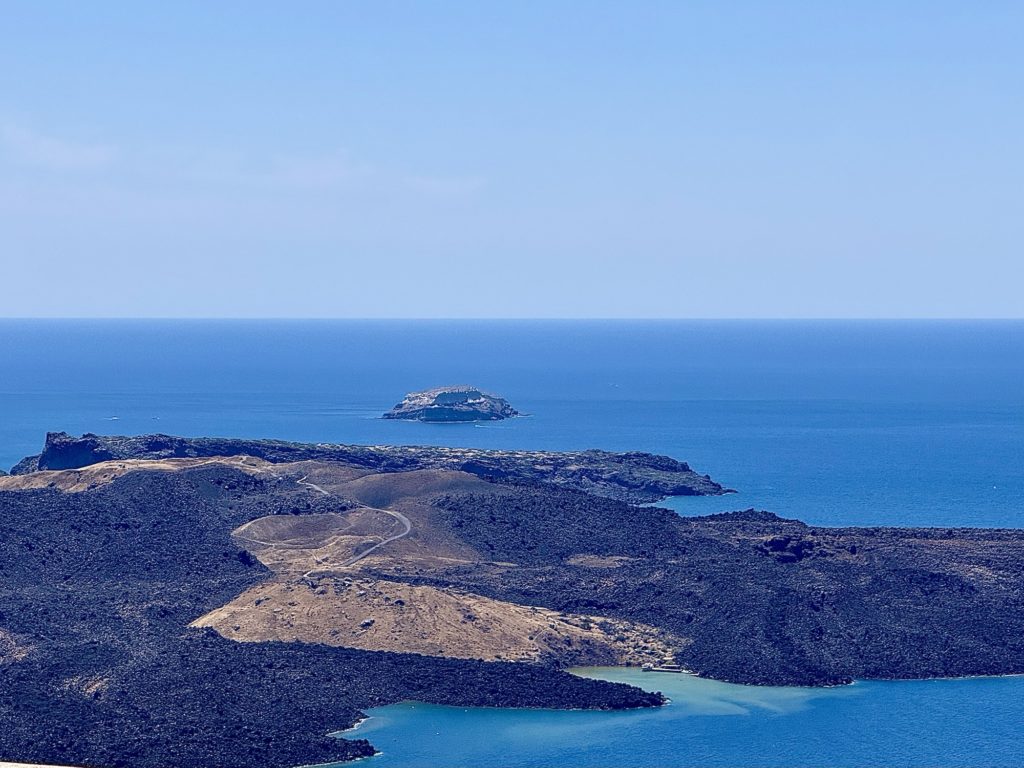
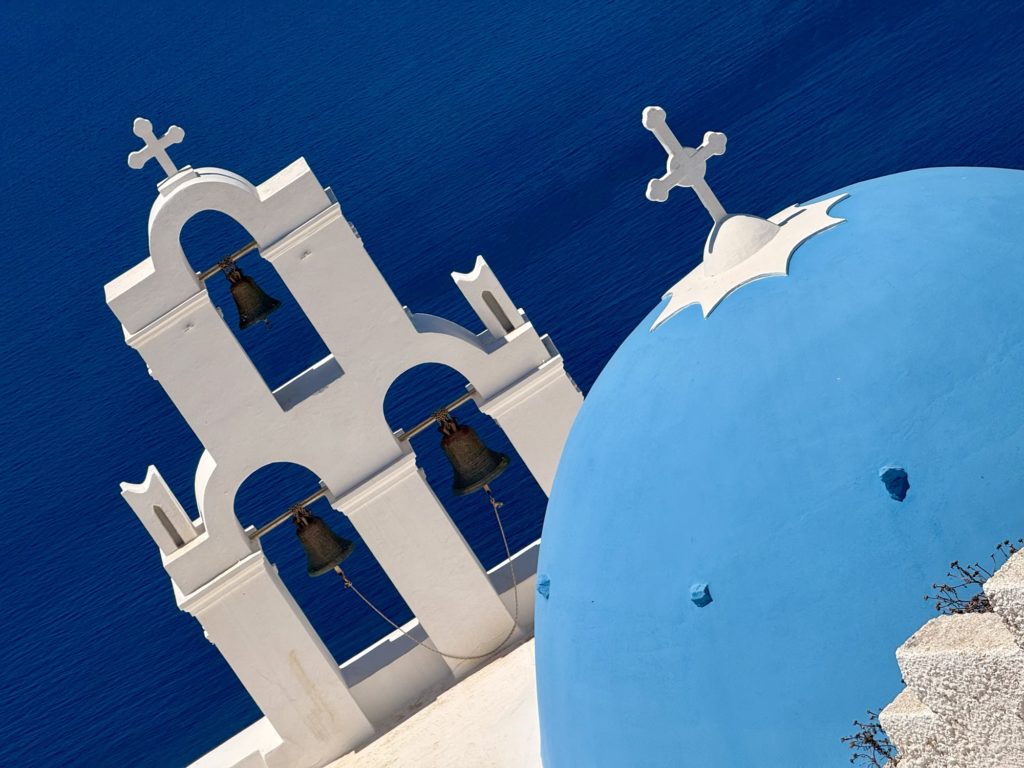
From Monolithos, we continued to Firostefani, on the rim of the caldera.
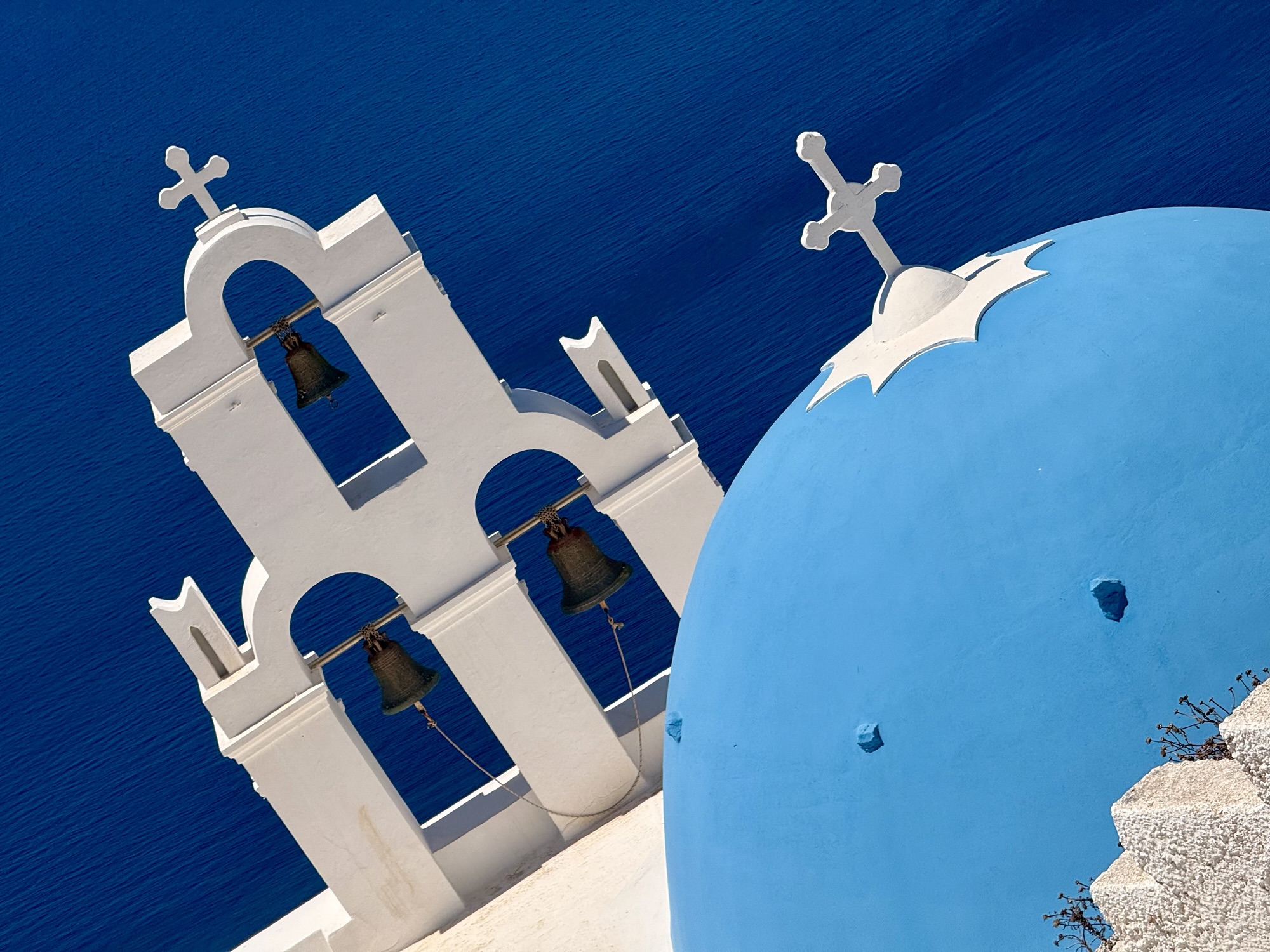
This is where you overlook the Three Bells of Fira, with the white buildings that could almost be mistaken for snow (had it not been 24 degrees) sitting against that impossible Santorini blue.
There’s a lot to say and talk about on a journey like this. Kathrin shared stories, history and local knowledge and we asked questions as we moved through the island.
But there are also moments when you just stop speaking.
Not because there’s nothing to say, but because the view has taken the words from you for a moment.
That happened in Firostefani.
We stood there together, taking in the caldera, the church, the white buildings and the blue sky. The kind of view that makes you understand why Santorini has the reputation it does.
But what I noticed most was how present I felt.
I wasn’t bracing myself, calculating the next step, or deciding whether I had enough energy left to continue.
I was simply there.
Oia, without the stairs
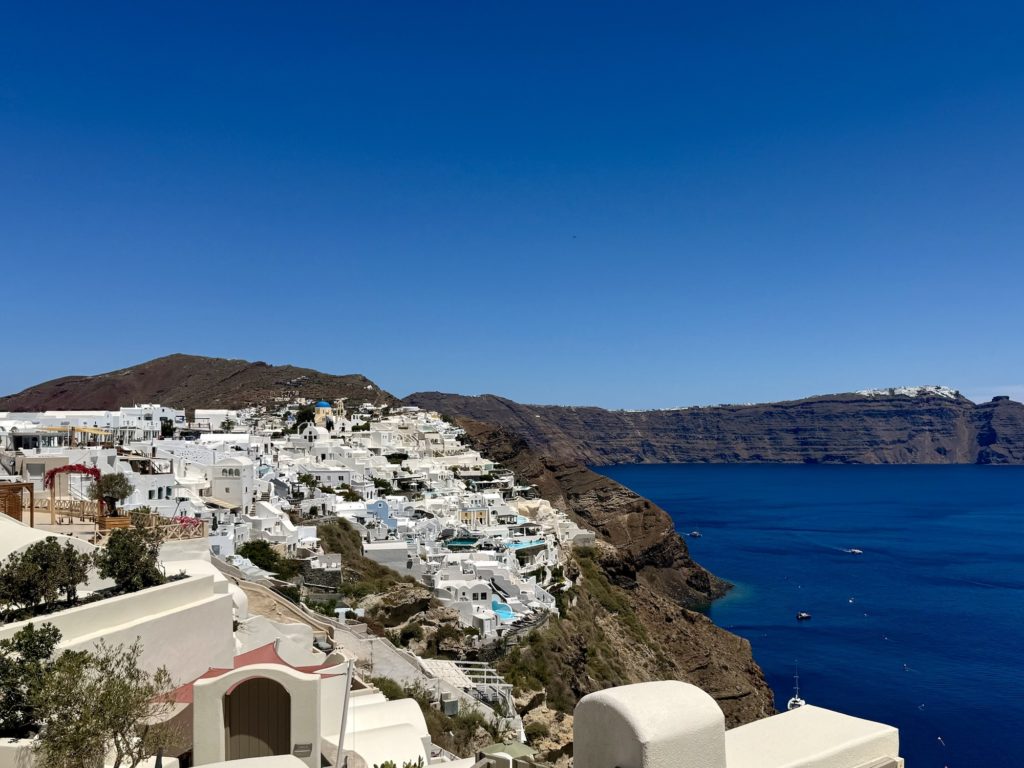
Our final stop was Oia.
Everyone knows Oia for its views, high-end restaurants, boutique hotels and cruise ship crowds.
But Oia is also famous for something else.
Steps.
Lots of them.
Every time I’ve visited Oia, it has involved navigating multiple sets of stairs just to move through the streets. Shops, bars and restaurants don’t always have level access, and some routes that look beautiful in photographs feel very different when you’re trying to move through them in a wheelchair.
So I was curious.
And, if I’m honest, a little doubtful.
But this is where Kathrin’s knowledge of the island really showed.
Over the years, she’s built relationships with places across Santorini that are accessible without compromising the experience. From historic sites to cocktails with views, and coffee stops, tavernas and gelato bars, she has it all thoughtfully covered for a truly bespoke tour.
That matters.
Because accessible doesn’t mean lesser. It should never mean a reduced version of the place everyone else came to see.
We parked up and somehow, I still don’t know how she did it, we strolled through Oia without a flight of stairs in sight.
There was no rush, no stress and no “you might just have to manage this bit.”
We simply rolled through the streets.
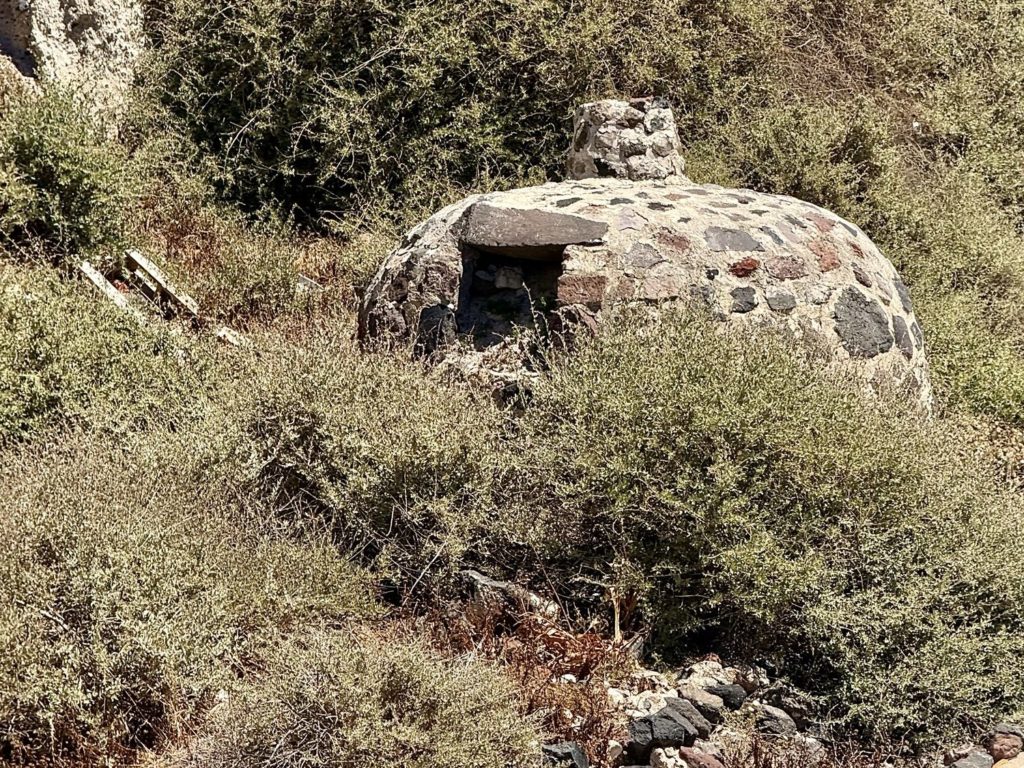
Kathrin explained the development of Oia, from the original humble cave houses people once lived in, to the luxury boutiques and hotels that now cost thousands a night.
Seeing some of the original remains still nestled between the opulence was fascinating. It gave me another appreciation of the island from a different perspective.
Santorini is often presented as timeless, but Oia has changed enormously in just a few decades.
There’s beauty in that. There’s also history. And when you have someone with you who can explain both, the place becomes much more than a backdrop.
We stopped at the memorial, where Katherine explained the history of the monuments, and we listened.
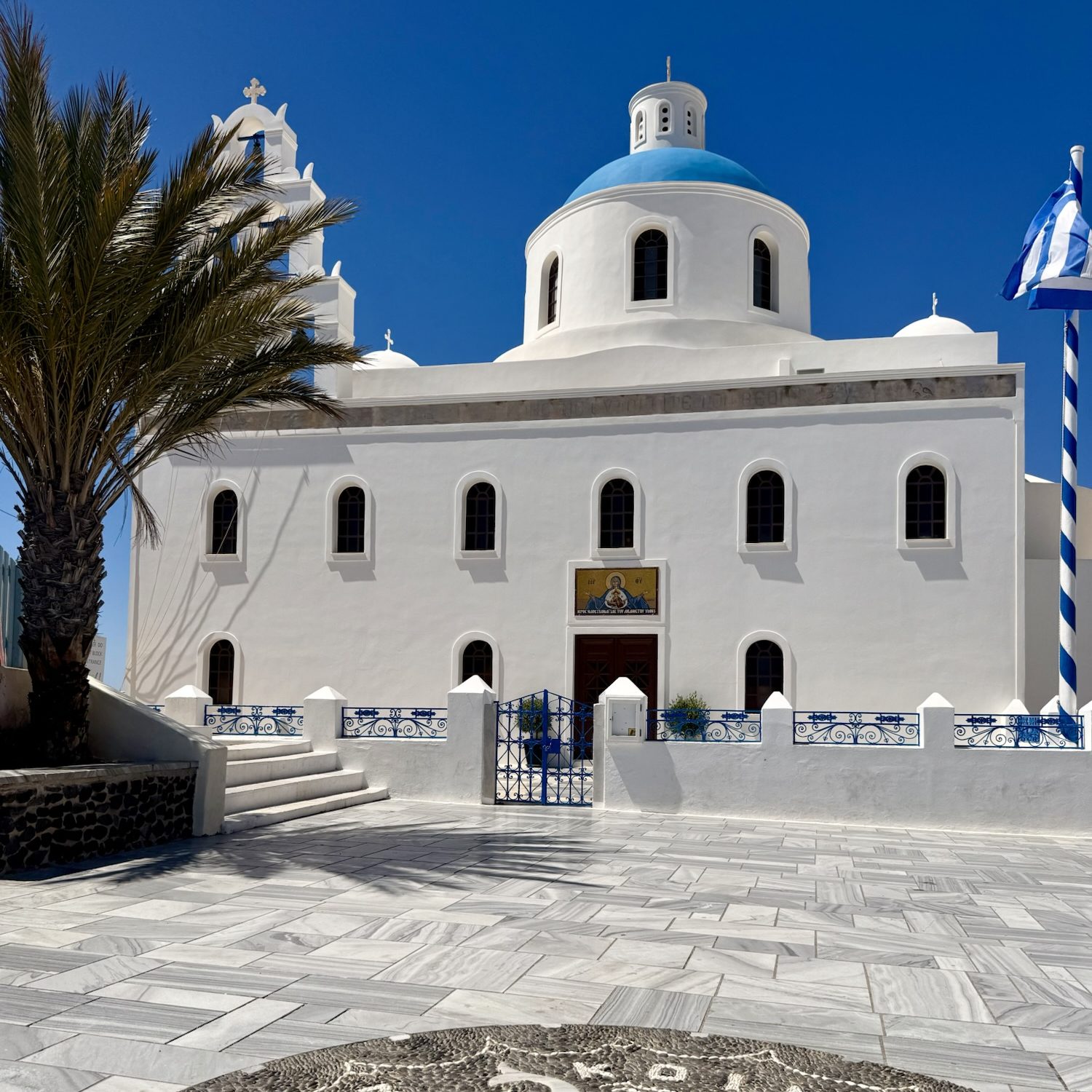
Then we visited the square and the church, which is usually packed with tourists.
It was completely empty.
That alone felt like a small miracle.
The difference was in the flow
The whole afternoon flowed beautifully.
There was no urgency, no pressure and no sense that we were being rushed from point to point.
Kathrin had that rare balance of being a knowledgeable guide while still allowing the experience to feel private. She shared stories, answered questions, gave context and captured photographs, but none of it felt intrusive.
It still felt like our experience as a couple.
That isn’t always easy to achieve, especially on an accessible tour where the practical side can so easily become the whole focus.
Usually, I expect compromise.
I expect the extra energy of getting in and out of a car, the discomfort of clambering up steps and the mental calculation of whether something is worth the effort.
I expect the awkward moment where someone asks, “Are you going to be able to do this?”
Or the point where I have to say, “No, I’m beaten on this one.”
On this tour, there was none of that.
There was no friction, no jarring points of compromise, no awkward questions and no sense that access was being handled moment by moment.
It had already been thought about.
And because of that, I had more of myself left.
I had seen more, absorbed more, and been more present
On the drive back to the hotel, I couldn’t help but realise just how different this trip had felt.
I’d seen more, absorbed more and been more present.
And, perhaps most importantly, I had more of myself left to enjoy the rest of the evening.
That isn’t a small thing.
Because access isn’t only about whether you can technically reach a place.
It’s about what it costs you to reach it, whether you arrive at the view with anything left to feel, and whether the day gives you memories, or just recovery.
Santorini Experts didn’t make Santorini simple.
That wouldn’t be honest.
This is still an island of hills, steps, uneven routes and places that need to be understood properly before they’re promised.
But what they did was something just as important.
They made more of the island feel possible.
Why this matters
This is where The Inclusive Edit always comes back to the guest journey.
Not as a checklist, but as an experience.
A good accessible tour isn’t only about having the right vehicle, although that matters.
It isn’t only about avoiding steps, although that matters too.
It’s about confidence. Communication. Choice. Local knowledge. Timing. Pace. Privacy.
It’s about a guide who knows the island well enough to find a route that still feels beautiful.
It’s about being able to have the experience without the entire day becoming a negotiation.
And about a team who work seamlessly together, ensuring the experience and the practicalities come together effortlessly.
That’s what Santorini Experts gave us.
Not a smaller version of Santorini.
A fuller one.
One where the practical details had been considered enough for the beautiful parts to come forward.
And that’s the standard.
Not perfection, and not pretending every part of the island is accessible.
But understanding the journey well enough that more people can see themselves in it.
For me, Santorini Experts changed the way I experienced the island.
They didn’t just take me to the view.
They gave me enough ease to actually enjoy it.
And that’s what good accessible travel should do.
It shouldn’t shrink the world.
It should give more people a way into it.

Leave a Reply