
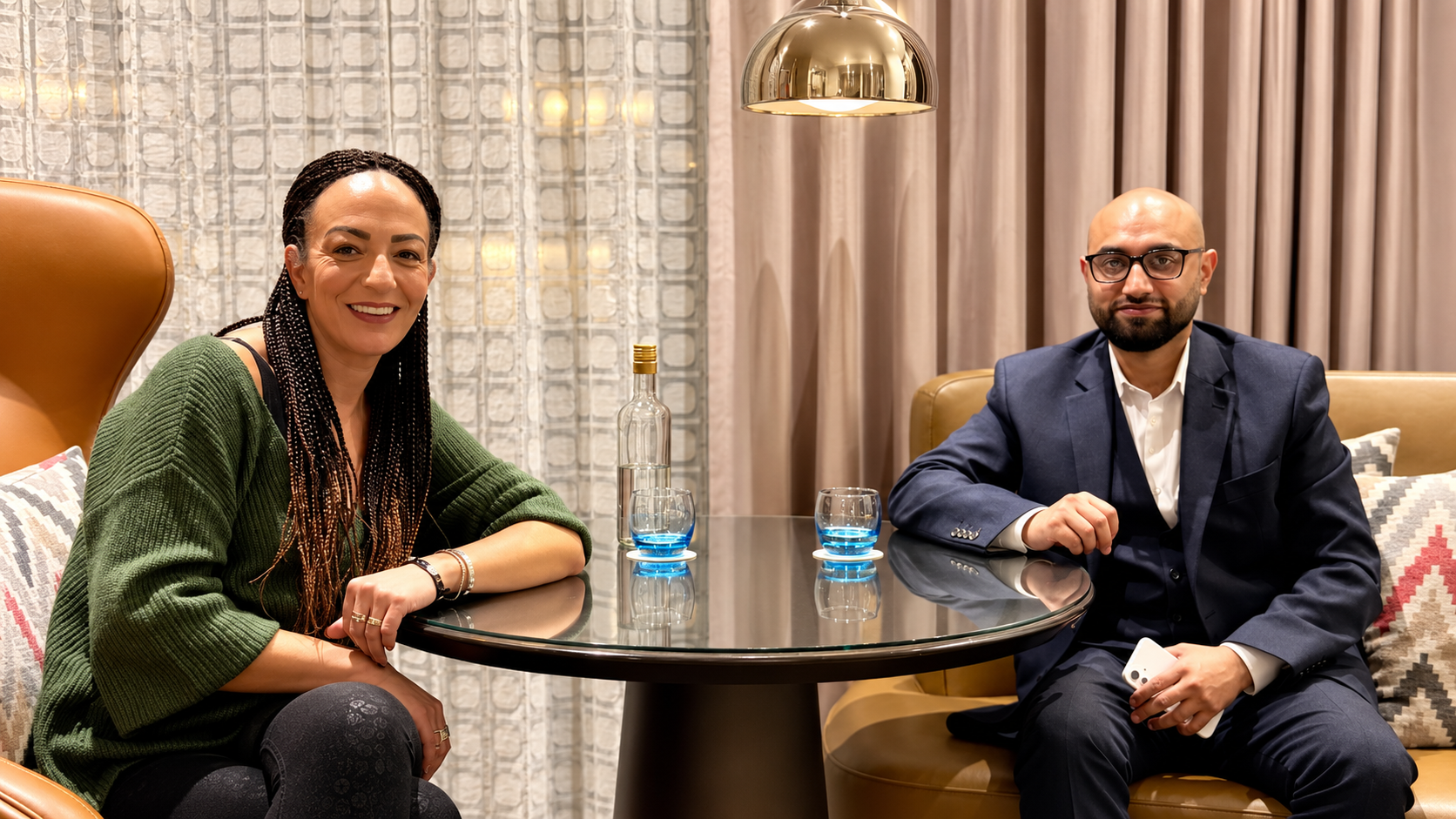
From one car and a family name to a growing chauffeur business, Kam Mirza talks about legacy, service and why the smallest details can shape the way an entire journey feels.
The call came around midnight, only a few hours before Martin and I were due to leave for the airport.
We had booked Legend Executive Chauffeurs for the beginning of our wedding journey. There was luggage, my wedding dress, my wheelchair and all the emotion that comes with finally setting off for something you have spent months imagining.
There were also blue ribbons for the car.
The driver was calling because Kam had looked at them and decided the blue didn’t work quite as beautifully with the vehicle as it should. They had tried some alternatives and wanted to know what I thought.
I laughed. Partly because it was midnight and somebody else was apparently more concerned about the colour coordination than I was. Mostly because it told me exactly how seriously they were taking our journey.
The ribbon itself was a tiny detail. The feeling it created wasn’t.
Legend Executive Chauffeurs has since become The Inclusive Edit’s exclusive chauffeur travel partner. As always, everything I’ve written here is based on my own experience.
Luxury begins before the car arrives
By the time the car arrived, I wasn’t wondering whether they had remembered us, whether there would be room for my chair or whether the driver understood what had been discussed. Those questions had already been asked, properly, before the journey began.
That distinction sits at the centre of how I understand luxury travel now.
It isn’t simply the quality of the vehicle waiting outside. It is the confidence created before it gets there.
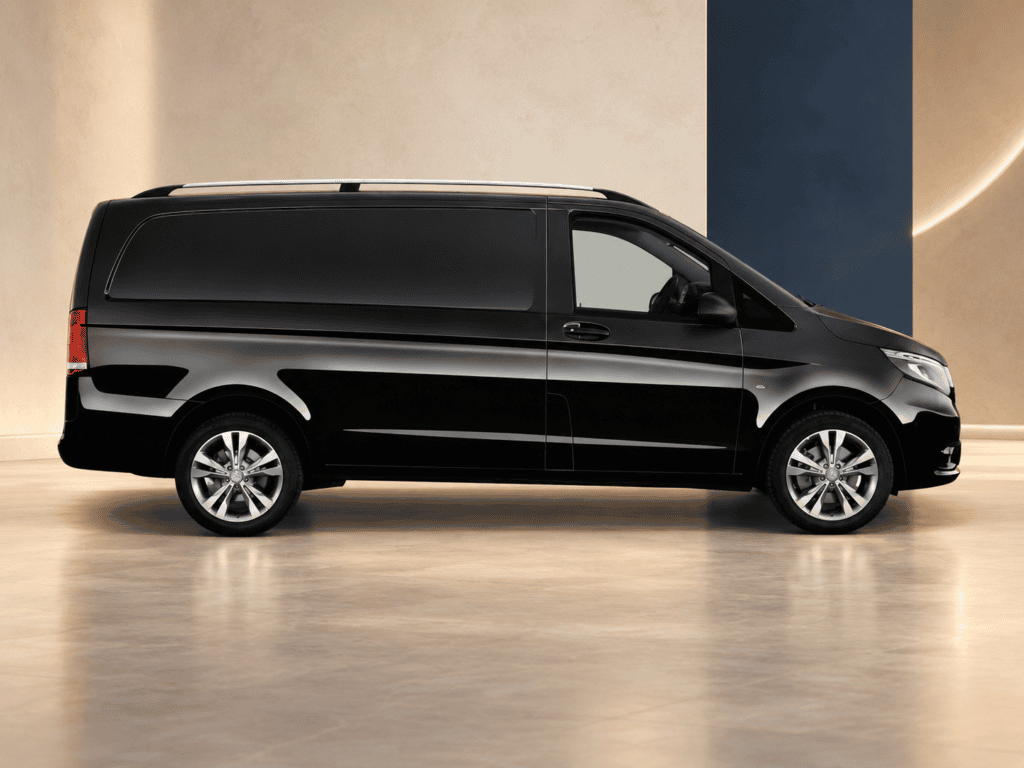
That first transfer became the opening chapter of our Santorini wedding and honeymoon. A year later, when we returned to the island for our anniversary, we booked Legend again. This time, the team carried us from home to Kimpton Clocktower and then onwards to Manchester Airport in a Mercedes-Benz V Class, a journey I explored in The Night Before Santorini.
Experiencing the same attention across two milestone trips gave me more than a good first impression. It gave me a point of comparison.
The luxury of not having to manage the process
My first contact with Legend began with an ordinary enquiry and a fairly detailed set of needs.
I’m a wheelchair user who can transfer into a car. We were travelling with more luggage than usual, including a wedding dress, and needed a vehicle with enough space for everything without making the journey feel like a complicated exercise in logistics.
The team asked how I transferred, talked me through the fleet and considered which vehicle would work. They asked the questions they needed without making me feel that I had to manage the conversation for them.
That matters more than it may sound.
Disabled travellers often become the unpaid project managers of their own journeys. We explain the problem, identify the likely solution, remind people what was agreed and then arrive prepared for the possibility that none of it has travelled from the enquiry desk to the person delivering the service.
My experience with Legend was different. I could answer the questions and trust somebody else to do their part.
This should not be read as a claim that every vehicle in the fleet will suit every disabled passenger. My experience involved transferring out of my wheelchair and storing it in the selected vehicle. Someone who needs to remain seated in their wheelchair will have different requirements and should confirm those directly before booking.
What I can speak to is the quality of the conversation I had and the way the information shaped the service that followed.
The experience didn’t feel accessible because somebody used the right language. It felt accessible because they listened, planned and delivered what we had discussed.
A family name with something to live up to
Legend began with Kam’s father, Umran Mirza, one vehicle and decades of professional driving experience.
The name came from Kam’s grandfather. Once chosen, it became something the family carried into the businesses that followed. It is memorable, certainly, but it also creates its own pressure. Call a business Legend and people will reasonably expect the experience to live up to it.
Kam doesn’t shy away from that.
When we spoke, he described the daily reality behind a polished chauffeur service: traffic, changing routes, mechanical problems, vehicle availability, drivers, timings and the hundred other things a passenger should never have to see.
The guest experiences a calm car arriving at the right place and time. Behind it sits an operation built around anticipating everything that could disrupt that calm.
The passenger shouldn’t carry the mental load
One rule captures the service standard particularly well:
“You should never be looking for your driver. Your driver needs to be looking for you.”
It is simple, but it changes the balance of responsibility. The passenger should not have to search a crowded arrivals hall, chase an update or wonder whether the booking has been forgotten. The service provider carries that mental load.
Kam joined the family business after working in healthcare transport operations, where he had experience managing a fleet of more than 100 vehicles. On the surface, patient transport and prestige chauffeuring occupy very different worlds. Operationally, they share some of the same demands.
People need to be collected safely. Timings matter. Circumstances change. A route that works for one passenger may not work for another. Most importantly, the person in the vehicle is not simply a booking reference moving between two postcodes.
Kam says that background taught him to think on his feet and to understand that every journey brings its own needs. He carried the logistical discipline into Legend, but also the attentiveness.
Service is not the same as performance
Luxury service can sometimes become theatrical.
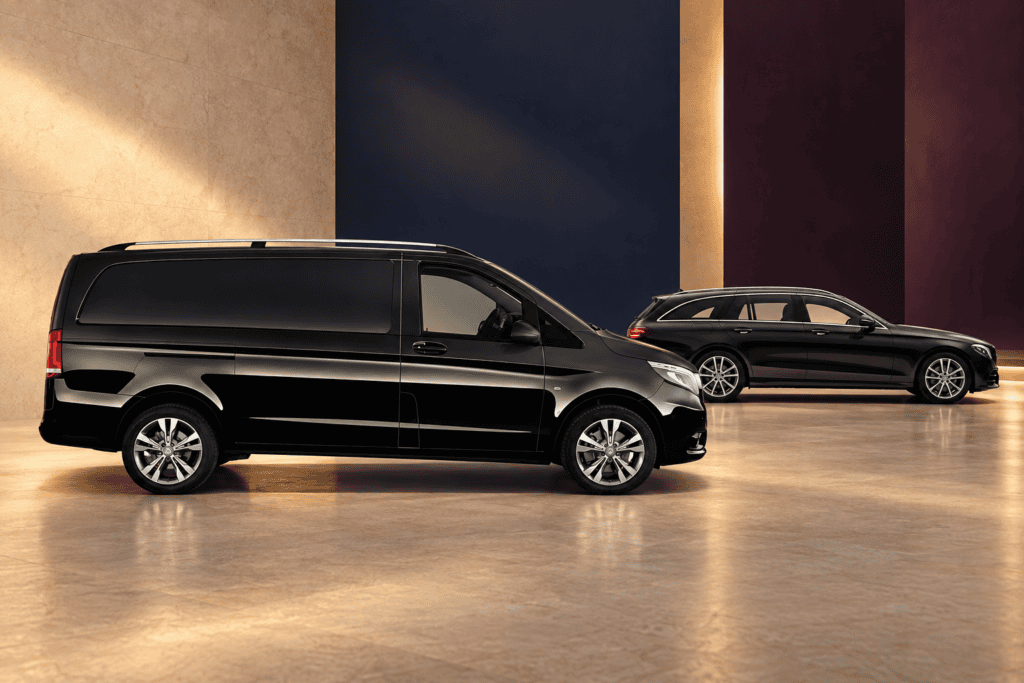
There may be a beautiful vehicle, a suited chauffeur, chilled water and an immaculate arrival. All of those details can add to the experience, but presentation alone doesn’t tell us whether the service is personal.
Personal service begins with noticing what will matter to the individual passenger.
One person may value complete silence so they can prepare for a meeting. Another may need reassurance around an airport collection, help with luggage or the certainty that a folded wheelchair will fit without compromising passenger space. In our case, it meant the right vehicle, room for a wedding dress and a late-night discussion about ribbons.
None of those choices is universally luxurious. Their value comes from being the right choices for the person making that particular journey.
That is why the first enquiry matters so much. Personalisation cannot begin when the car arrives if nobody has taken the time to understand the passenger beforehand.
The same principle runs through the hotels, transport providers and travel experiences I examine across The Inclusive Edit. A brand can describe itself as bespoke, premium or guest-led. The real test is whether the experience demonstrates that promise when somebody’s needs fall outside the most familiar version of the journey.
From the family garage to a growing operation
Kam joined Legend during the uncertain period around the pandemic, initially working from a converted garage at his parents’ house.
He remembers the long nights, the cold and damp, and the hours spent working before heading out to drive. The business later moved into a small unit that the family largely fitted out themselves, before its continued growth required another move and a more established base.
One of the quietest moments in our conversation stayed with me.
Kam described sometimes driving past the newer unit simply to look at the illuminated signs outside. Not because he had forgotten where he worked, but because the physical building reminded him how far the business had travelled from those desks in the garage.
There is ambition in his plans for Legend. He wants the company to operate more widely across the UK and the current website presents a growing service extending from its North West base into several major cities.
Growth, however, presents its own test.
In a small family business, care can live inside the memory and vigilance of a few people. Kam knows which driver completed a journey, what a returning client usually needs and whether the experience felt right. As the fleet, team and geographical reach expand, that knowledge has to become part of the company’s systems without losing its humanity.
That may be the most important challenge ahead. The standard cannot depend entirely on Kam being awake, available and thinking about every detail himself. A genuinely excellent service must teach every person within it how to listen, record, communicate and respond with the same care.
The ambition is not simply to make Legend larger. It is to preserve what made people trust it while it grows.
A partnership across more than one journey
Following our wedding, Legend became our exclusive UK chauffeur travel partner for the early Inclusive Edit journeys. They supported our travel for Belfast, where I wrote about The Armoury at Haymarket and ORA Tapas & Wine Bar, and Tenerife, where our stay at The Ritz-Carlton Abama became 24 Hours at The Ritz. Those journeys took place before The Inclusive Edit became a standalone publication. The relationship continued into 2026 with our return to Santorini.
Community beyond the car
Our relationship also extended beyond travel.
At the time of our conversation, Legend was also supporting Kronik Warrior UK, the adaptive boxing and wellbeing organisation I founded.
When Kam first visited one of our sessions, he saw people training in powerchairs and manual wheelchairs, alongside participants with different physical, sensory and communication needs. His response was practical. He wanted to understand how he could become involved and help.
That led to conversations about supporting our community programmes, including activities bringing movement, food and practical wellbeing together.
It would be easy to package that part of the story as generosity from a business to a community. The relationship felt more reciprocal than that. Kam was interested in what our members were doing, what he could learn and where the resources and experience of his own family business might be useful.
Community, in his understanding, is not a marketing audience. It is something a business belongs to and has responsibilities within.
That sits naturally alongside the way he talks about service. Both begin with paying attention to the person in front of you rather than deciding in advance what they should need.
What happens when care becomes the standard?
Kam is candid about being hard on himself. When something goes wrong, his first instinct is to ask what he could have done differently. He also admits that switching off does not come naturally because he wants to know that every client has been looked after.
There is dedication in that, but it shouldn’t need romanticising. Endless availability isn’tt the only proof that somebody cares, and no growing business can rely indefinitely on one person carrying every journey in their head.
The more interesting question is what happens when that attentiveness becomes the culture rather than the exception.
Can every team member ask the useful question before a passenger has to? Do access requirements travel reliably from booking to driver? Will a returning client feel recognised without assumptions being made? As the business grows, can it preserve discretion, warmth and personal judgement?
Those are not disability-specific questions. They are questions of premium service.
Disabled guests simply encounter the consequences more quickly when the answers are unclear.
Legend and legacy
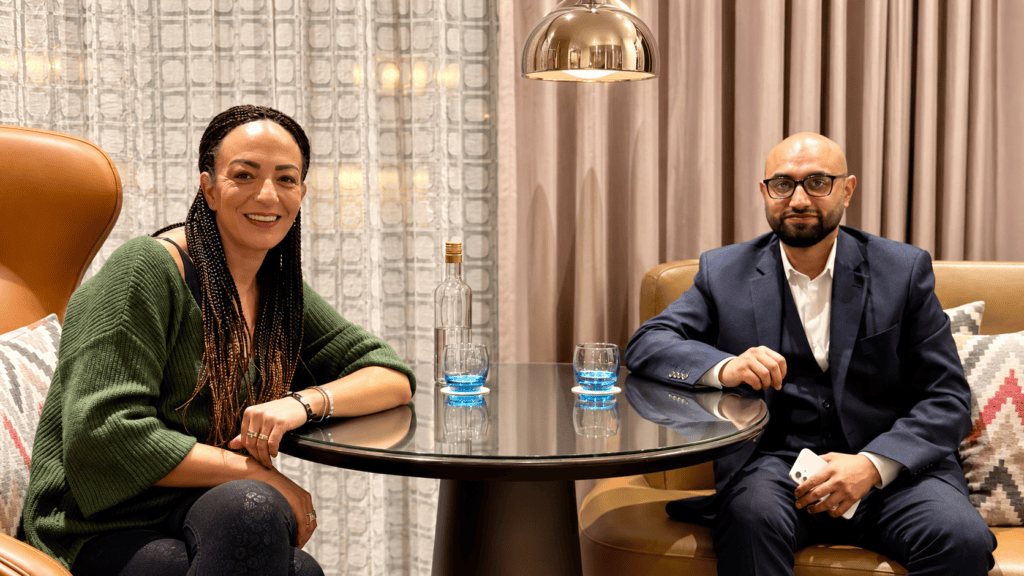
Near the end of our conversation, I asked Kam what the word legend meant to him.
His answer brought everything back to where it started:
“It’s a legacy that I’m building with my father.”
The fleet is part of that legacy. So are the new premises, the returning clients and the plans for national growth.
But the more lasting part may be the standard beneath them.
For Martin and me, that standard was visible before we stepped into the car. It was there in the questions asked about my transfer, the thought given to the luggage, the driver who knew what had been agreed and, yes, the midnight concern that the ribbons should look right.
The car was beautiful. The journey worked. What stayed with me was the feeling that somebody else had taken responsibility for making it work.
Luxury travel rarely begins at the hotel entrance. It begins with the first enquiry, the first answer and the first person who makes you feel that the details are safely in hand.
That is the part of Legend’s legacy worth carrying forward.
Watch the original conversation
My full Life Without Limits conversation with Kam Mirza was first published on 24 November 2025. You can watch Legend and Legacy on YouTube or revisit the original post in the Kronik Warrior UK archive.
You can also learn more about Legend Executive Chauffeurs and its current management team.

Leave a Reply