
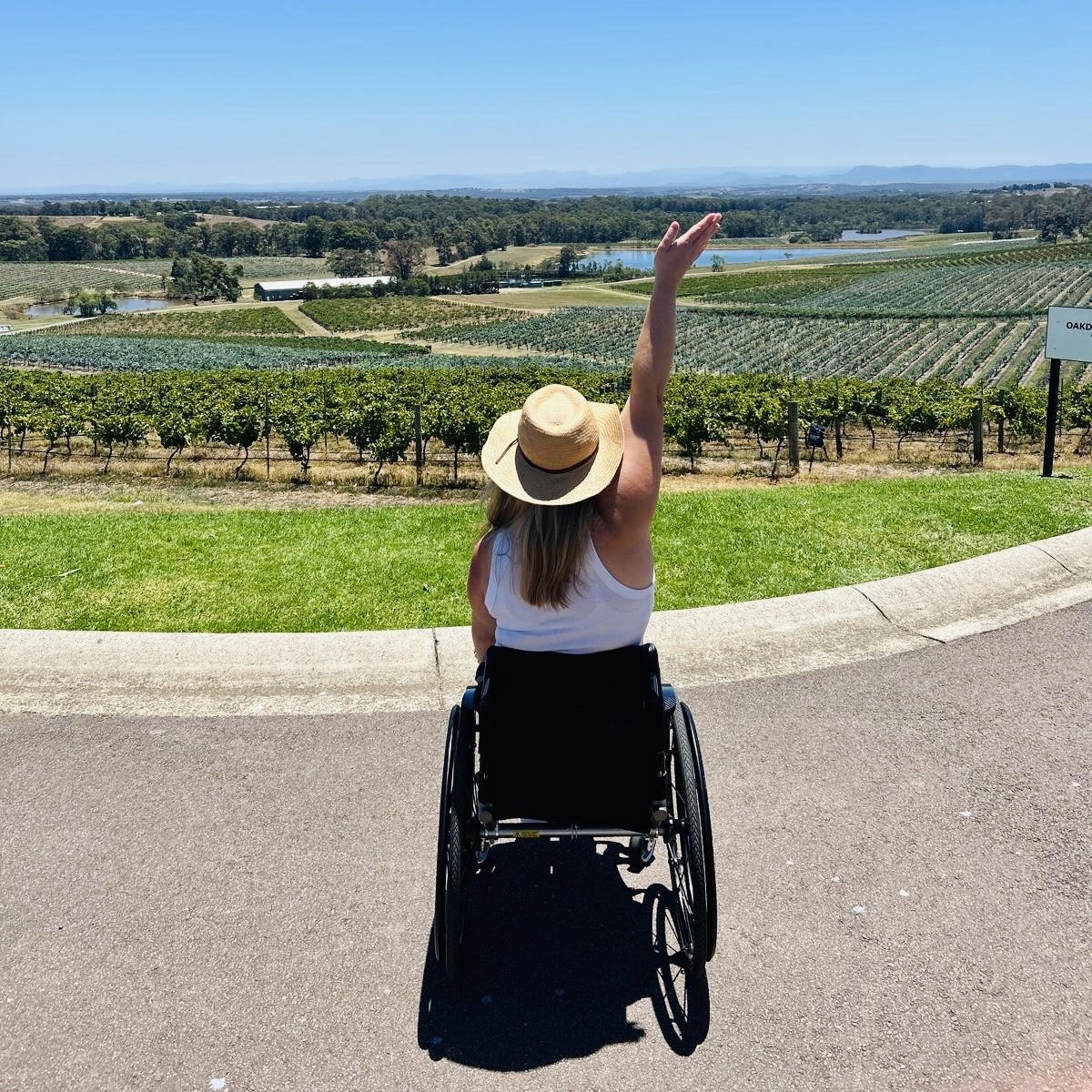
In the first Reader Journeys, Annabelle Moult reflects on four accessible UK hotel stays and the details that shaped her independence, from a lowered check-in desk in Battersea to a heavy door between her and a Surrey vineyard.
Words and photographs by Annabelle Moult | Edited by The Inclusive Edit
Annabelle Moult has been a full-time T5 wheelchair user since 2007. Together with her husband, she plans journeys around local flavours, memorable wine and the next view worth lingering over.
Here, in the first of our Reader Journeys within Life Without Limits, Annabelle shares four very different UK stays and the practical details that decided whether she could simply enjoy them or had to spend part of the trip asking somebody else to make them work.
Annabelle, what makes a journey worth taking?
I love travelling, from breaks around the UK to adventures further afield. My husband and I are always looking for the next destination. We tend to begin with food and wine because, for us, local flavours are one of the best ways into a new culture. A beautiful view and a good glass of vino never hurt.
I’ve been a full-time T5 wheelchair user since 2007, and my wheels have only accelerated my love of exploring. The practical side of booking the hotels and experiences I love can still be challenging, though.
When access is thoughtful, I can arrive, settle in and get on with the reason I travelled. When it isn’t, my energy is spent on doors, slopes, desks and asking somebody else to make the journey work.
I don’t expect every old country house to work in exactly the same way as a hotel designed today. I do hope for clear information, honest thought and an experience that considers my independence. These four stays were quite different in style and price, but each taught me something about what luxury actually means to me.
What did art’otel London Battersea Power Station get right?
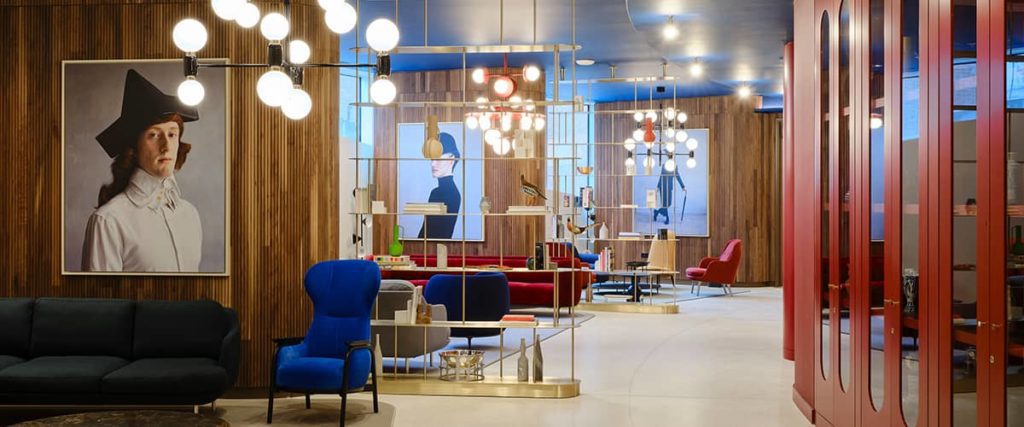
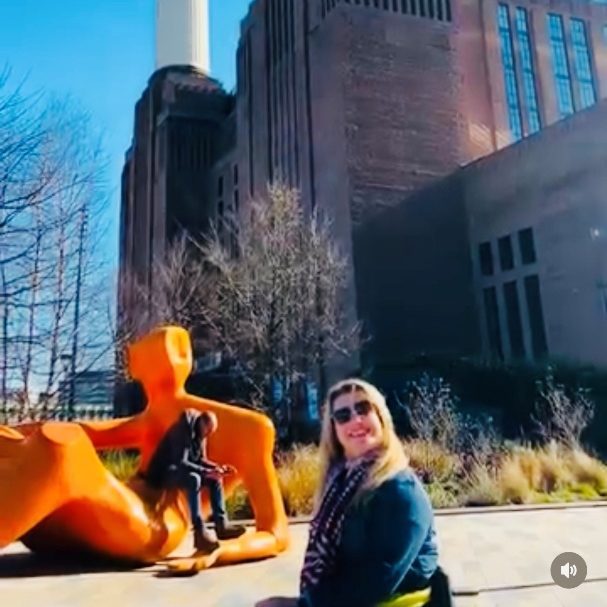
The arrival at art’otel London Battersea Power Station made a brilliant first impression. The entrance was flat, the doors opened automatically and the route through the art-filled foyer to reception was easy.
What stayed with me most was the check-in. The receptionist welcomed me, brought me to the lowered part of the desk and sat directly opposite me. I wasn’t spoken over or left watching my husband handle the practicalities. I checked in as the guest. It was a small moment, but it set the tone.
The public areas worked equally well for me. I could reach the restaurants, bars, gym, spa and rooftop pool by lift, moving around without having to ask for a different route or wait for assistance. That gave me freedom, which is one of the things I value most in a hotel.
And where did the room itself become harder?
The accessible bedroom was less convincing. It felt tight even with my compact manual chair, and the wet-room bathroom was on the smaller side. I could use it, but I’d be cautious about assuming the same room would work for somebody using a larger manual chair or a powered wheelchair.
Size does matter, especially when you’re paying for luxury. We spent most of the weekend out exploring Battersea, so the lack of space didn’t dominate the stay, and it wouldn’t deter me from returning. I would still expect the room itself to offer the same ease as the rest of a modern hotel. Next time, I’d ask more detailed questions about the layout and turning space before booking.
Could Lainston House make access part of the country-house luxury?
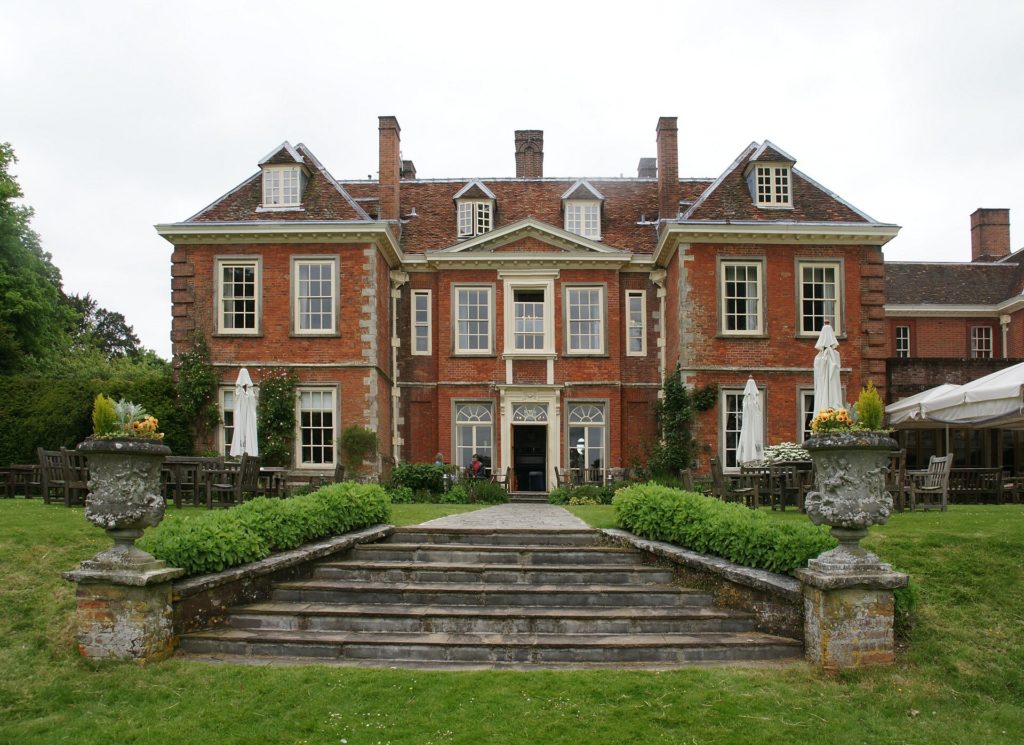
Lainston House is a 17th-century country house in the Hampshire countryside. The arrival felt immediately warm, with an accessible entrance, wooden corridors, old English furniture and an open fire.
The reception desk was too high for me, so my husband handled the check-in. It was a reminder that one small decision at arrival can change who gets to take part in their own stay.
The room, though, was exceptional. There was space to move, a separate seating area for tea, a wonderfully comfortable bed and high windows looking towards the courtyard.
The bathroom was the real surprise. It looked like a beautifully designed luxury bathroom, with a freestanding bath, open shower and double vanity. The access features sat quietly within it. Supports folded out where they were needed and a shower seat appeared without making the room feel clinical.
It showed me that access doesn’t have to be treated as the awkward thing a designer works around. It can be part of a beautiful room from the start.
We could move easily through the ground floor, have cocktails in the drawing room and sit down to a tasting menu at The Avenue with friends. The stay became exactly what we’d booked it to be: a relaxed, food-filled night away, rather than a weekend organised around my wheelchair.
Why can knowing exactly what you’re getting feel like luxury?
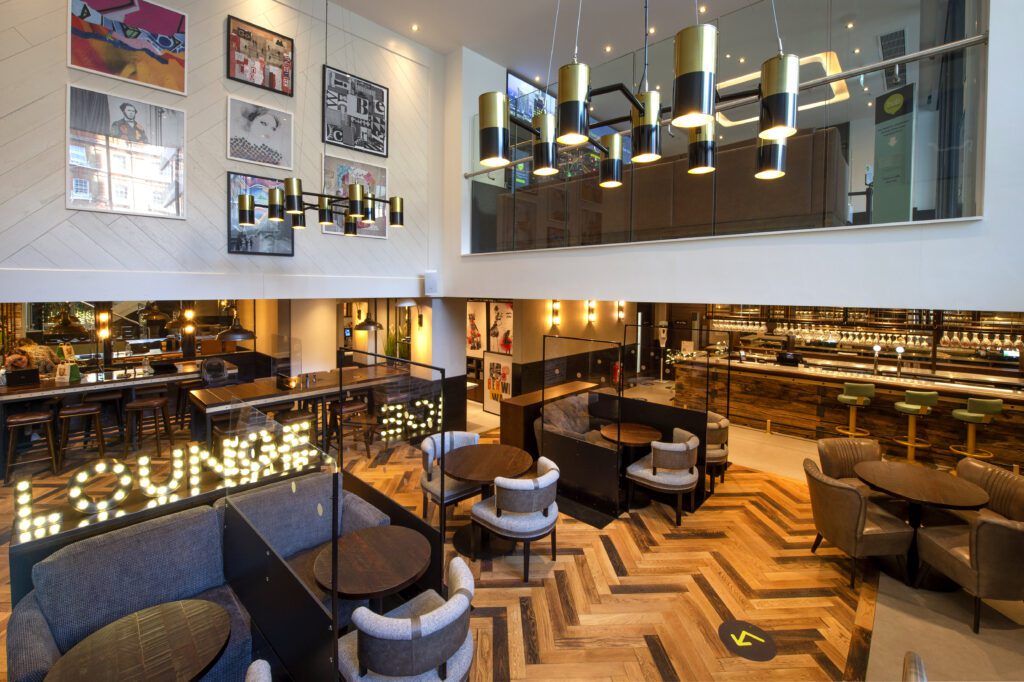
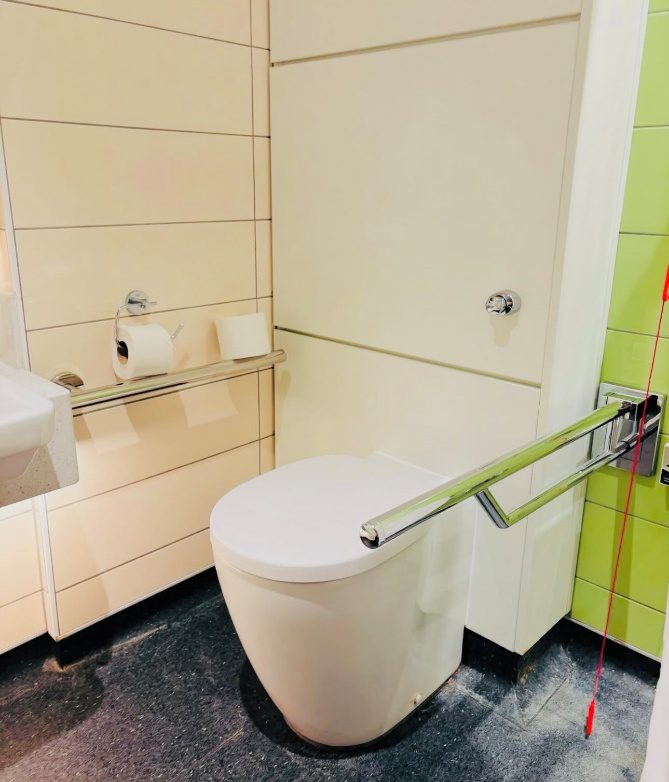
A hub by Premier Inn isn’t trying to be a country house or a five-star design hotel. That is exactly why I wanted hub by Premier Inn London Soho in this story.
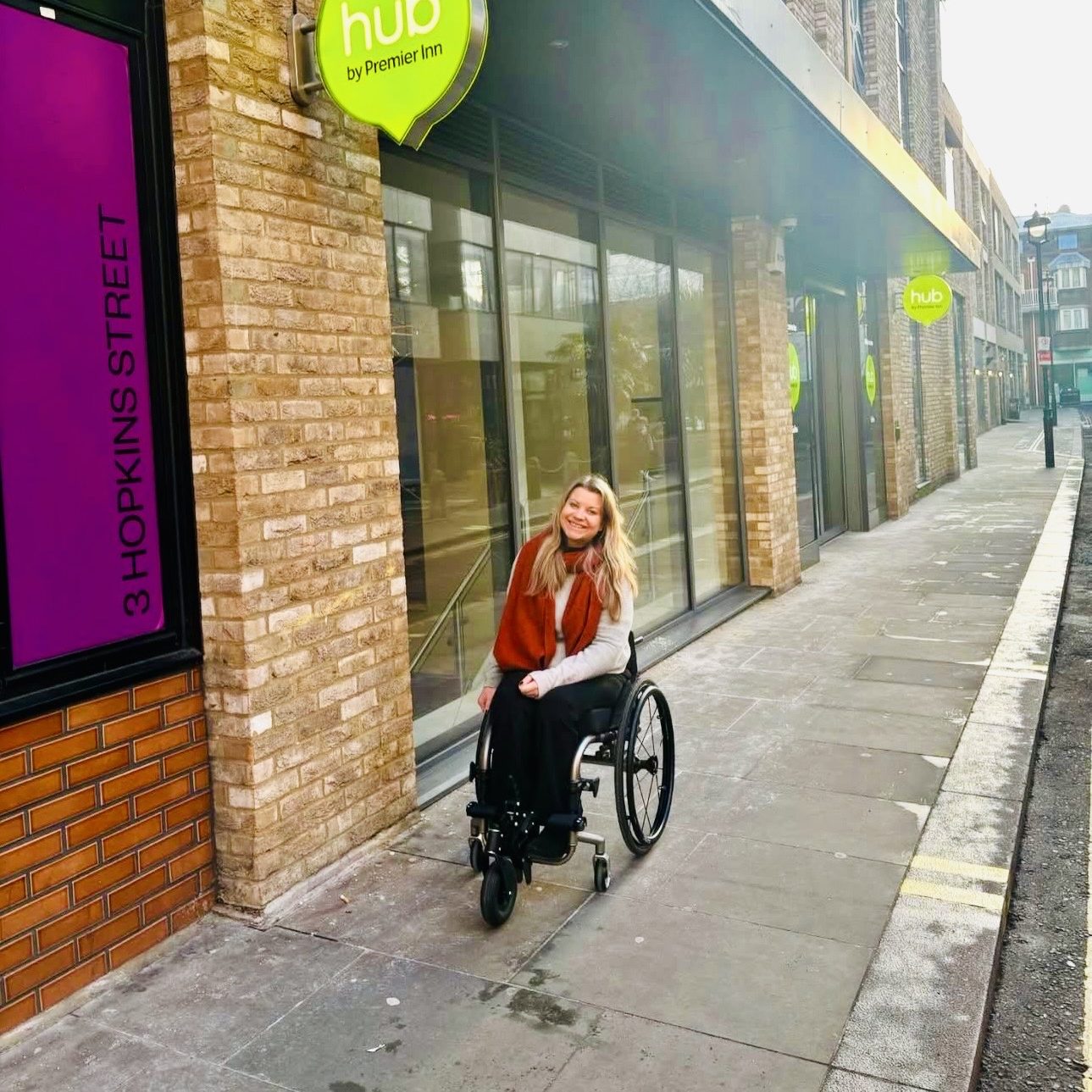
At the Soho property, and at other hub hotels I’ve used, I’ve generally known what I’m wheeling into. The entrances have been flat, the doors automatic, the teams welcoming and the accessible rooms easy to reach.
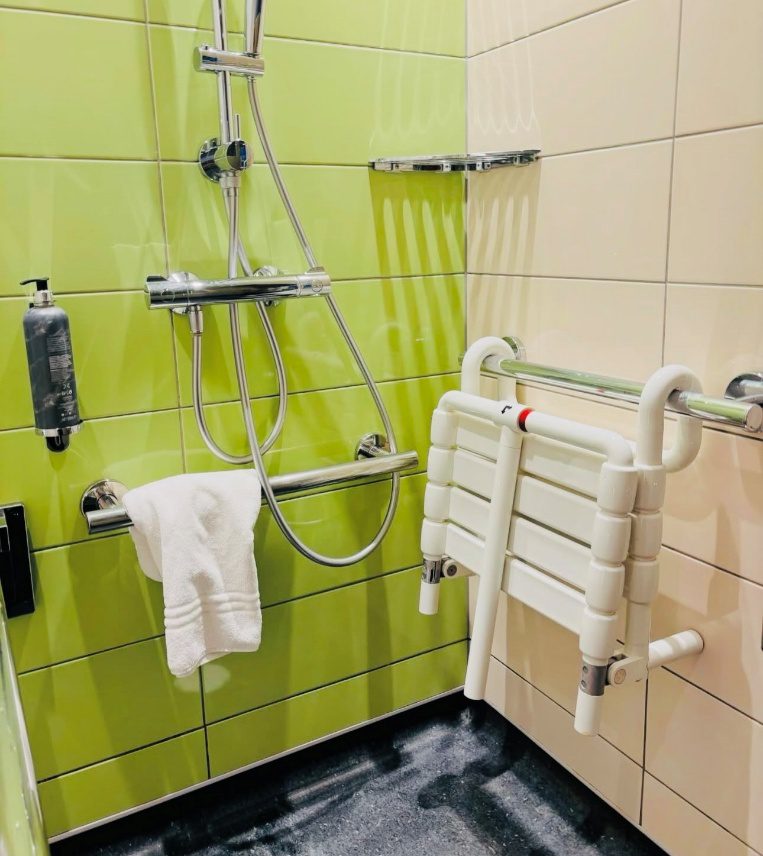
The accessible bedroom in Soho gave me plenty of space. The bed was low enough for me to transfer comfortably, which felt particularly welcome when I returned after a long day in London. The wet room was simple, with the rails and seating I needed.
My phone now contains an unreasonable number of toilet photographs, but that is part of wheelchair travel. The unglamorous details are often the ones that decide whether the glamorous parts can happen.
For me, a hub stay is often a base rather than the destination. I want to leave my bags, head into the city and know that getting back into bed won’t involve another negotiation. Sometimes luxury isn’t lavish. It’s the ease of knowing what you’re getting.
Was The Vineyard Hotel at Denbies worth the access compromises?
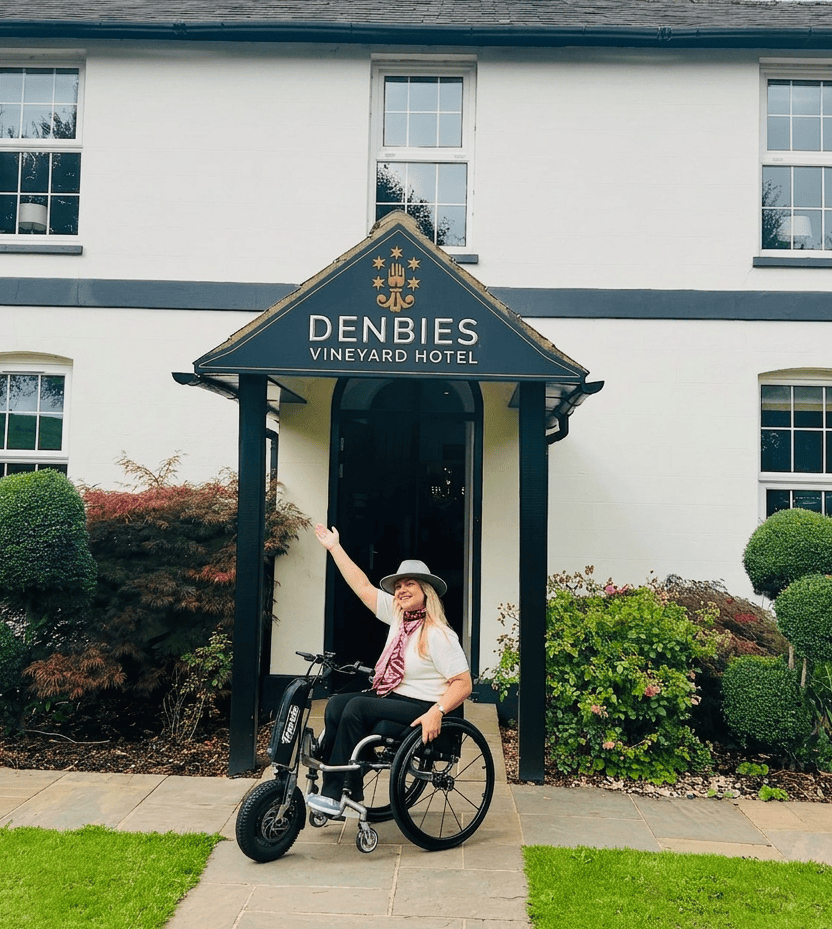
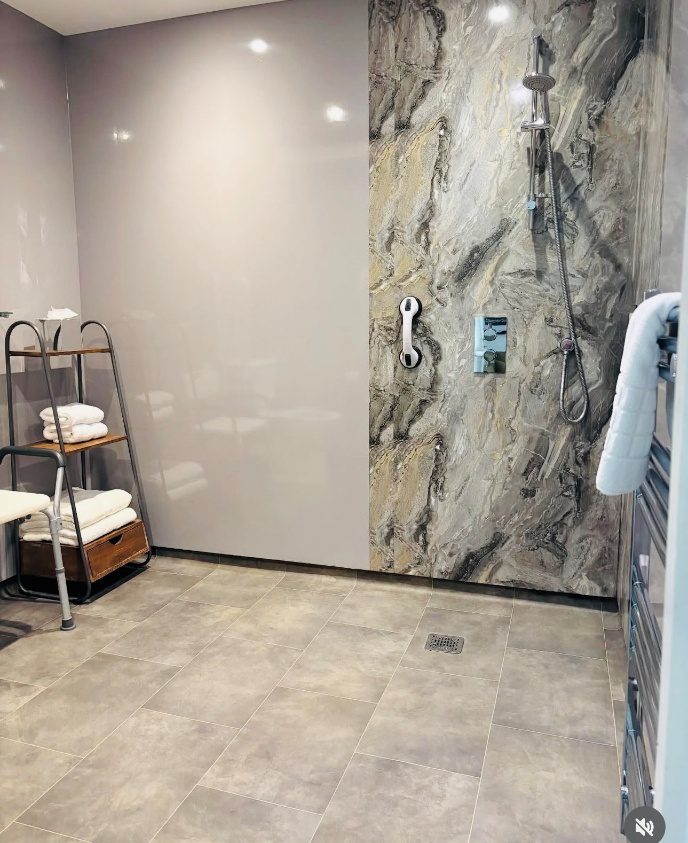
As a wine lover, staying on a vineyard was always going to be an easy yes.
The Vineyard Hotel at Denbies Wine Estate gave us the views, food and sense of escape I hoped for, but it also asked for more assistance than I would have liked. The slope to reception was steep and the entrance door heavy, so I needed help to get inside. The reception desk and bar were both too high for me to use comfortably.
Thankfully, the restaurant and terrace were only a short wheel away. Cheese and wine overlooking the vines can repair quite a lot. There was wine on the other side of the difficult door, so needs must.
The route to the bedroom brought another slope and heavy door, which meant I couldn’t enter independently. Once inside, the room was large and easy to move around. The bathroom was spacious too, although the freestanding shower chair didn’t feel as stable as I would choose for transferring.
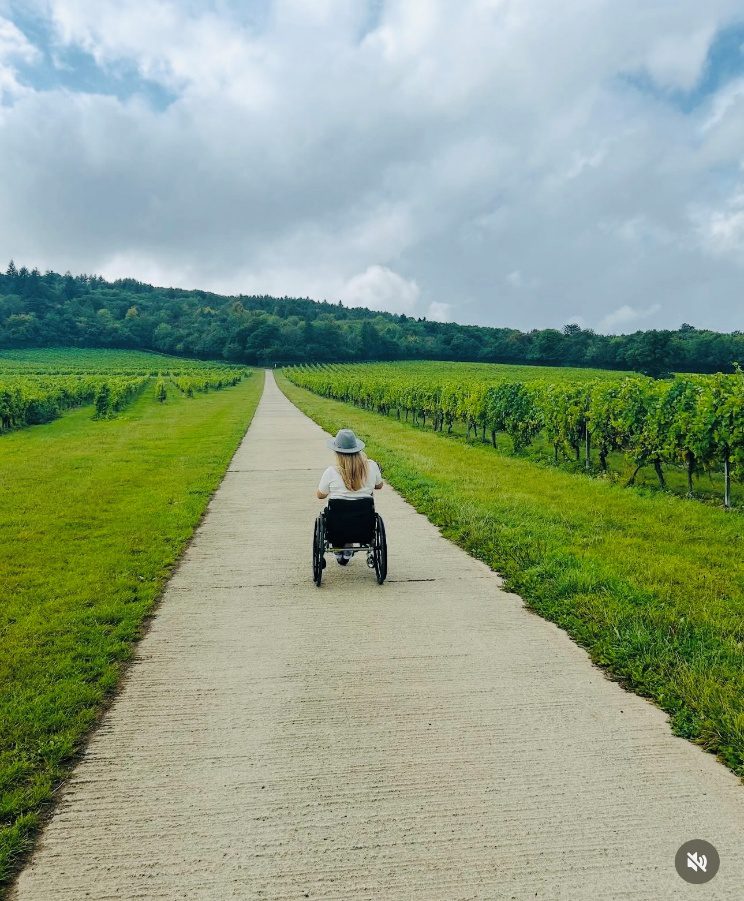
What I remember most is taking my Triride attachment out around the vineyard, then finishing the day with dinner and a view across the estate. It was a genuinely lovely experience and I’d recommend it to somebody whose requirements were similar to mine, provided they knew where assistance might be needed.
The weekend was worth having. It simply could have asked less of me along the way.
So what does luxury mean to you now?
These four stays offered very different versions of luxury. Battersea gave me design, energy and the freedom to move through almost every part of the hotel. Lainston House showed that access can sit beautifully within a traditional room. hub gave me the reassurance of a space I could use without fuss. Denbies gave me a memorable vineyard weekend, even if getting through parts of it depended on help.
I don’t need every hotel to look the same. My access requirements won’t be the same as the next person’s either. What I want is enough thought, clarity and space for the practical details to fade into the background.
I travel for rooftop views, tasting menus, weekends with friends and the joy of discovering somewhere new. Good access doesn’t need to become the story of the trip.
It gives the rest of the story room to happen.
About Annabelle
Annabelle Moult has explored the world as a full-time T5 wheelchair user since 2007. She and her husband plan their adventures around local food, memorable wine and views worth lingering over, sharing the pleasures and occasional practical realities with warmth and humour. She writes about more of their travels on her blog, AnnabelleMoult.com.
About Reader Journeys
Reader Journeys is a Life Without Limits feature sharing thoughtful first-person travel stories from people who experience the world differently. These aren’t universal access guides or hotel assessments. They are honest accounts of what worked, what didn’t and what made a journey matter.
Have a journey you’d like to share?
You don’t need to send us a finished article. Tell us where you went, what shaped the experience and what stayed with you afterwards. Send a few lines and up to ten original photographs through The Inclusive Edit contact page. If the story feels right, we’ll work with you to shape it while keeping your voice at the centre.
Read more travel stories from Life Without Limits.
Leave a Reply