
Choosing a luxury hotel in London ought to be one of the lovely parts of planning a trip. You might be picturing afternoon tea, a long dinner, a bath after an evening out, or a bedroom calm enough to make a busy working visit feel manageable.
When you use a wheelchair, there’s another layer to that choice. The bathroom layout, the route into the restaurant and the space beside the bed can decide whether you’ll be able to settle in and enjoy what you’ve booked. I still want to know about the atmosphere, the design and the neighbourhood. I also want enough practical detail to understand how the stay might work.
These accessible luxury hotels in London offer different starting points, from the Art Deco character of The Beaumont Mayfair to the ceremony of The Ritz. The useful question is which combination of room, location and experience comes closest to the London you have in mind.
About this guide
These six hotel entries are based on published information checked on 17 October 2026, rather than stays or physical access inspections by me. I’ve prioritised hotel and room pages, with clearly identified supporting sources where useful. Published room sizes describe categories unless stated otherwise; they don’t establish the layout of every adapted room. The selection isn’t ranked, and the details below explain what’s known and what needs matching to your own requirements.
The Beaumont Mayfair: Art Deco and a Mayfair address
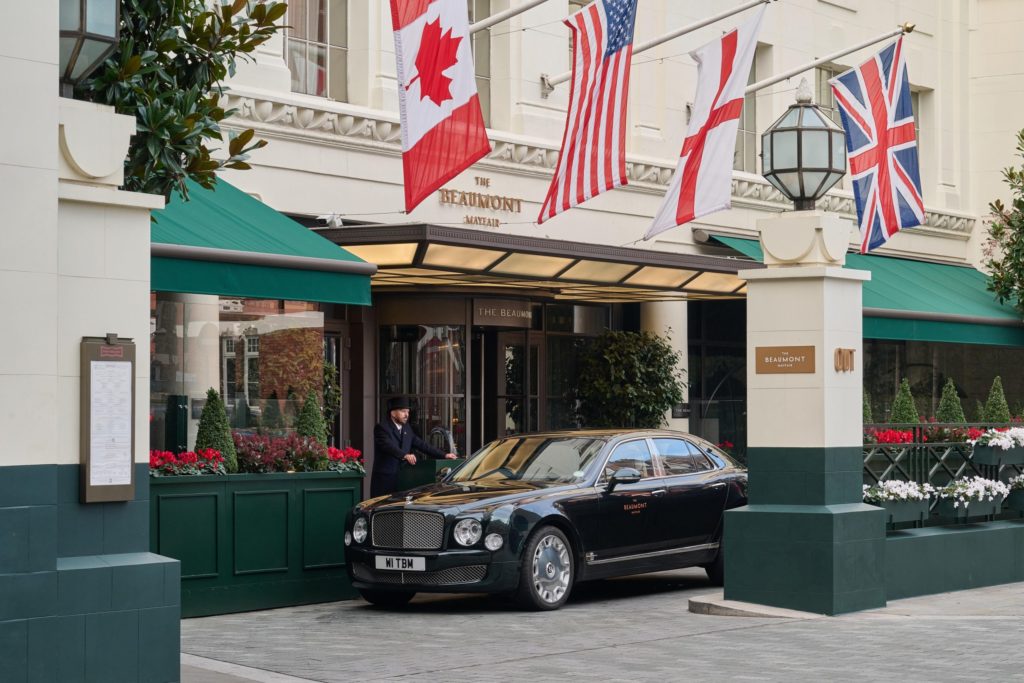
The Beaumont’s Art Deco detailing and Brown Hart Gardens address give it a distinct identity within Mayfair. Its Superior Rooms are described in pale tones with marble bathrooms, while the Superior Grand Rooms look across the gardens. Both category pages explicitly identify adapted options. That gives you something specific to discuss, rather than beginning with an unnamed accessible bedroom.
The hotel’s published accessibility information records six accessible rooms and level access to public spaces including Le Magritte, The Gatsby Room, Rosi and the spa. For a stay built around meals, drinks and time in the hotel itself, those named routes are useful information.
The room pages don’t establish the adapted bathroom layout, bed height or transfer space. Before reserving, ask to see the particular bedroom and bathroom being offered. An adapted Superior or Superior Grand room is the starting point; the arrangement inside it is what will decide whether it works for you.
The Langham, London: a West End grand hotel
At 1c Portland Place, by Regent Street, The Langham brings together a West End address, afternoon tea and the option of spending an evening at Artesian. It’s a different proposition from a small Mayfair retreat: there’s plenty of hotel life to make part of the trip.
Its Accessible Facilities page provides unusually specific information. It lists a roll-in shower, toilet and shower grab bars, seating, at least 30 inches of clearance beside the bed and at least 32 inches through bedroom and bathroom doorways. It also describes a lift at the main entrance and level, ramped or lift access to public areas. Those measurements are a useful basis for a conversation about your chair and routine.
An accessibility section also appears on the Deluxe Room page. It shouldn’t be read as a guarantee that every room in the category has that configuration. Ask reservations to identify and confirm the adapted room. My separate investigation into booking accessible London hotel rooms directly records the difficulty I encountered selecting one online in September 2026; it’s a dated account of that booking journey, not an assessment of the room itself.
45 Park Lane: a smaller hotel opposite Hyde Park
With 35 rooms and 11 suites, 45 Park Lane offers a smaller setting for a Mayfair stay. Hyde Park is opposite, with CUT and BAR 45 within the hotel. It’s worth considering if you’d like your London base to have restaurants and a spa on hand without the scale of a much larger property.
The overview identifies two accessible rooms. Its accessibility page describes roll-in shower provision with seating, handheld showerheads, grab handles near the bath and emergency cords. The hotel also states that its public areas are wheelchair accessible. The published information doesn’t identify the adapted room categories or show how those bathroom features are distributed between them, so confirm the configuration you’ll receive.
The spa includes a heated swimming pool and hydrotherapy pool. If those are part of the reason for booking, ask specifically about entering the water and the transfer equipment available. The general public-area statement doesn’t answer that question, and reaching the poolside is only one part of a swim.
The Ritz London: a stay shaped by tradition
For some trips, the hotel is the occasion. The Ritz’s Piccadilly address, afternoon tea and formal dining make it a particular kind of London choice, especially if you want the rituals of the hotel to shape the visit.
Its accessibility page describes an adapted room with lower controls, bathroom grab rails, an additional basin for wheelchair use, emergency cords and a level-entry shower with a seat. A raised toilet seat and shower chair can be provided on request. It also identifies an accessible entrance, in-room check-in and wheelchair access to public areas.
That is a more useful basis for planning than relying on the hotel’s reputation alone. Ask reservations which room category contains this arrangement and which entrance to use when you arrive. If a health condition or impairment makes the dress code difficult, the hotel explicitly invites guests to discuss that before arrival too.
Claridge’s: period character and the Mayfair Room
Claridge’s offers a choice of traditional and Art Deco interiors within its Mayfair Room category, which averages 40 square metres. Original features and marble bathrooms are part of the appeal. The same room page identifies an accessible option on request, bringing the adapted accommodation into a recognisable part of the hotel’s room collection.
Its hotel-supplied Visit London listing adds level-entry showers, shower seating and level, ramped or lift routes to dining and other public spaces. It also records assisted wheelchair entry and temporary ramps. This is supporting information supplied by the hotel, rather than an independent access assessment, and it doesn’t allocate each feature to a specific bedroom.
The next step is a photograph or plan of the adapted Mayfair Room’s bathroom and confirmation of the arrival route. The standard category’s photographs are lovely, but they shouldn’t have to stand in for the room you’re actually choosing. If the spa is central to your plans, confirm treatment and pool-entry arrangements separately.
The Connaught: contemporary rooms with configurable access
The Connaught’s Contemporary Studio offers walnut parquet flooring, original art and a seating area, with the category averaging 40 square metres. The room page states that it can be configured as accessible on request. For someone drawn to the hotel’s Mayfair setting and contemporary interiors, that provides a specific room option to explore.
There’s also useful detail from the people who supplied some of its bathroom fittings. Fitzroy of London’s Connaught case study describes removable grab rails and a shower seat, finished in polished chrome to match the surrounding brassware. It shows how support features can belong naturally within a luxury bathroom. As a supplier’s project account, it doesn’t establish which configuration you’ll be allocated today.
Its hotel-supplied Visit London listing records assisted entry and temporary ramps. Ask the team to confirm the arrival route and explain exactly how the studio’s bathroom will be set up for you, including the shower and transfer space. Configurable fittings are valuable when the agreed arrangement is ready for your arrival.
Choose the room around the stay you want
A good shortlist leaves room for preference. You might want The Beaumont’s Art Deco setting, the smaller scale of 45 Park Lane, or a visit that revolves around afternoon tea at The Ritz. There’s no reason the atmosphere should disappear from the decision simply because the bathroom needs a closer look.
As I explore in An Accessible Bathroom for Whom?, a bath, a shower seat or a particular transfer side can make very different things possible for different guests. A spacious category alone won’t tell you whether a hoist fits under the bed, whether you can reach the controls or whether the toilet transfer works for you.
Before committing to a room, I’d want a few things clearly agreed:
The room: the adapted category and its bathroom, with photographs or a plan of the configuration being reserved.
Your routine: the details that matter to you, such as bed height, transfer side, shower seating or bath provision. If you need a hoist, confirm its type, availability, any charge and compatibility with the room and your equipment.
The wider stay: the routes to the restaurant, bar and facilities you intend to use, including pool entry or treatment-table transfers where relevant.
The confirmation: written agreement on the room and equipment, and any assistance arrangements you need for arrival or an emergency.
Make the London journey part of the choice
The most convenient hotel is the one that works with your actual plans. Look at the journey from your arrival station or airport, the places you’ll visit and the route back at the end of the evening. A nearby Underground symbol doesn’t tell the whole story.
TfL distinguishes access from street to platform from access onto the train. Its Elizabeth line policy identifies Bond Street and Tottenham Court Road among the central stations with access between platform and train without a boarding ramp. That can be useful when comparing West End and Mayfair locations. Check your complete route, station exits and live lift information before travelling; access on one line doesn’t establish access on every interchange.
London black cabs have wheelchair ramps, although the vehicle still needs to accommodate your chair and travelling arrangements. My account of travelling from Sheffield to London with National Express includes the onward taxi journey and the practical decisions behind that trip, if you’re considering a different way into the city.
A stay you can look forward to
The point of gathering this information is to make room for the enjoyable decisions: where to have dinner, whether to book a treatment, how much London to fit into the day and when to retreat to your room.
I’d choose the hotel whose character appeals to you, then ask it to connect that promise to the particular room and facilities you’ll use. When the answers are specific, you can begin to picture the stay with much more confidence. That’s a better place to begin a London trip.
Sources and further detail
Hotel, room and supplier sources are linked alongside the relevant details above. Supporting transport information comes from TfL’s Elizabeth line accessible travel policy and its wheelchair access guidance. Research checked 17 October 2026. Room configurations, equipment and services can change; confirm the details attached to your reservation.

Leave a Reply