
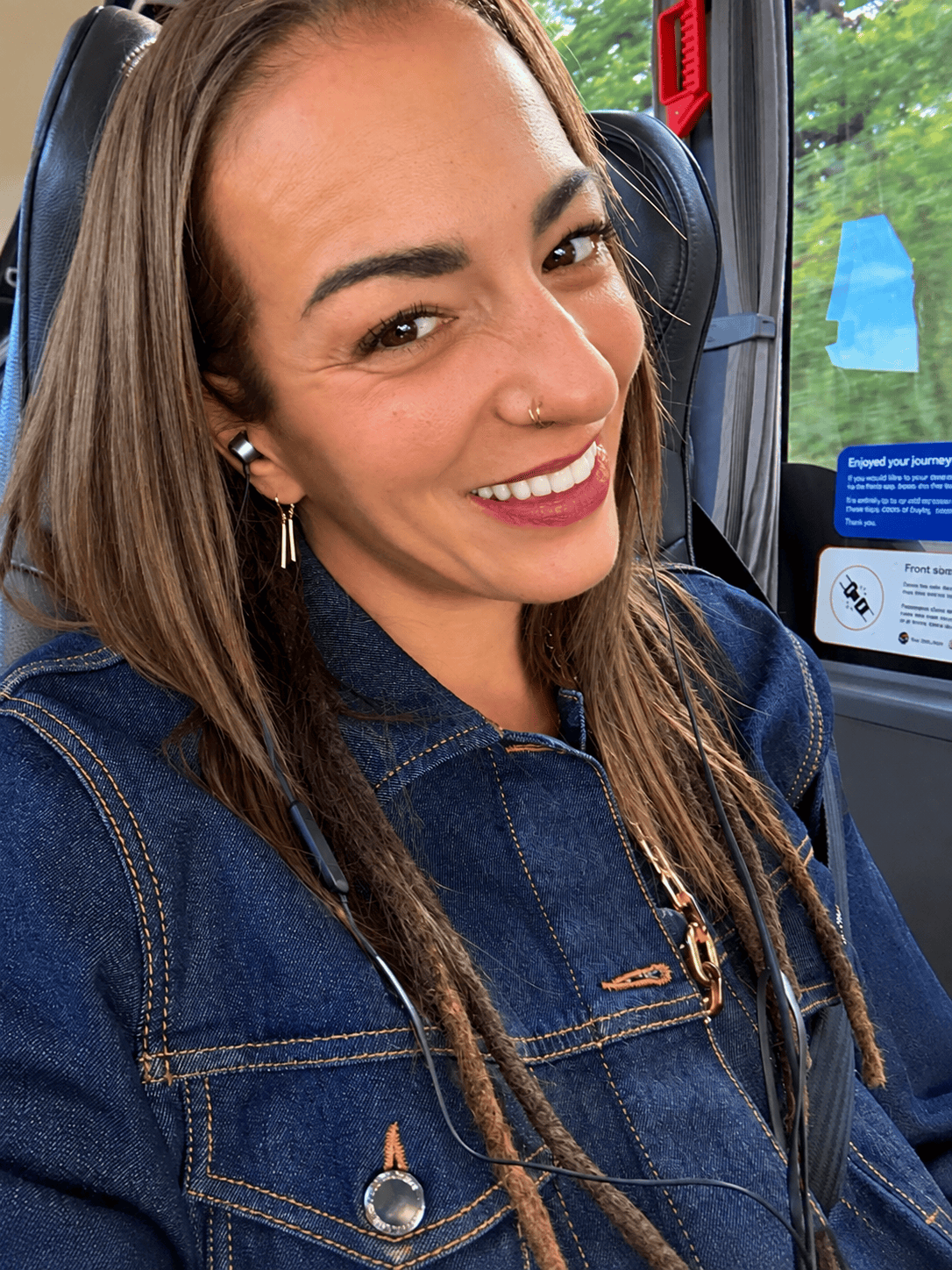
I used to love travelling to London by train. That was before every change began to involve ramps, assistance and crossed fingers. When I needed to reach the British Parking Awards without Martin driving me, I tried National Express as a wheelchair user for the first time.
London used to begin on the train
I used to love a trip to London by train. I still love London. It’s the getting there that changed when I became a wheelchair user.
Since then, those journeys have involved far too much planning. I have to organise ramps and assistance at every change, then hope each train runs on time so the next piece of the plan still works.
Then there’s what feels like a game of Gumball Rally through busy stations, dodging humans while trying to reach the next platform. On one occasion, I was left behind and told I wouldn’t be quick enough to get on. On another journey, the train broke down and the replacement bus wasn’t accessible. I was stranded and had to find a taxi from a random town over an hour away from home.
It’s hardly the relaxing end to a lovely London stay.
Whenever we can make it work, Martin drives me instead. I can’t manage that distance in one day myself, so having him behind the wheel removes many of the things that can unravel before a trip has properly begun.
This time, however, London was calling for the British Parking Awards, and Martin could not take the time off work. I needed another way to get there.

Could I travel to London by coach instead?
I decided to try National Express.
I’d never travelled on one of its coaches before, so this was entirely new. I didn’t know how the booking would work, where my wheelchair would go or what boarding a coach from a wheelchair would actually look like.
Still, one direct journey sounded rather appealing. No train changes, or racing between platforms. No carefully arranged chain of assistance that could be undone by one late arrival.
I’d already mentioned in Letters from Luiz: The Stories We Don’t See that I was going to try the coach and pay attention to the whole journey. Now I had to find out whether it would actually work.
Booking National Express as a wheelchair user
The accessibility information on the website was genuinely helpful. I could check which coach stations were accessible and look for services with an available wheelchair space.
There was a choice of travelling from Barnsley or Sheffield Meadowhall. I chose Meadowhall, which worked better for getting a lift to the station.
Then came the price. My return journey from Sheffield to London Victoria was under £25. I checked twice!
This would have easily cost me over £100 on the train. The car park at The Royal Lancaster would have cost me £55 per night, plus EV charging.
There were several departure times to choose from too. The low fare didn’t come with the feeling that I had to shape the whole trip around one accessible service. If I fancied an early start time, I could have got this trip for around £17. Needless to say, early was not in the plan.
National Express says its network coaches are accessible, but not every stop is suitable for deploying the wheelchair lift. It recommends arranging assistance at least 36 hours before travel so the team can check the stops, lift and wheelchair requirements for the journey. Its current accessibility information and Assisted Travel contact details are worth reading before booking.
Arranging assistance and wheelchair storage
After booking, I contacted the Assisted Travel team. I was asked for the type, weight and dimensions of my wheelchair, and also needed to say whether I wanted to remain in my own chair or transfer to the designated accessible seat.
I chose to transfer. Four hours is a long time to sit in my wheelchair, and I wanted to be in a coach seat for the journey.
The team confirmed that my chair would travel in the luggage hold. Mine is a lightweight manual wheelchair, but it doesn’t fold. Its wheels can be removed if needed, so they wanted to be certain everyone understood what would be travelling before I reached the coach.
This was the one part of the process that left me uneasy. The confirmation came with a warning that National Express would not accept responsibility for damage to the chair.
It gave me that familiar airport feeling: hand over the equipment that gives you your independence, then hope it comes back in the same condition.
My chair isn’t simply luggage. It’s how I leave the coach at the other end.
National Express does explain in its conditions of carriage that advance contact allows the team to check whether a chair can be stored safely. I was pleased that those checks happened. However, the wording around responsibility didn’t create the same confidence as the rest of the booking process.
Boarding at Sheffield Meadowhall
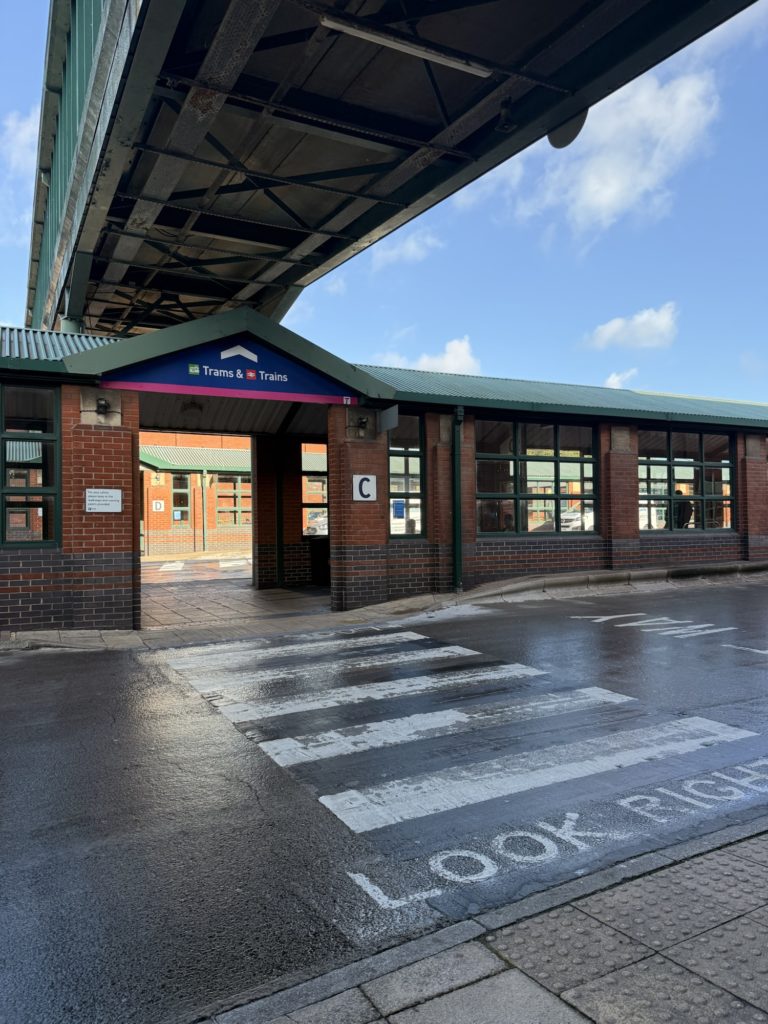
Travel day arrived, and I got a lift to Sheffield Meadowhall Interchange.
I rolled inside and asked the friendly receptionist which platform I needed. It happened to be right beside where I was standing, which was an excellent start.
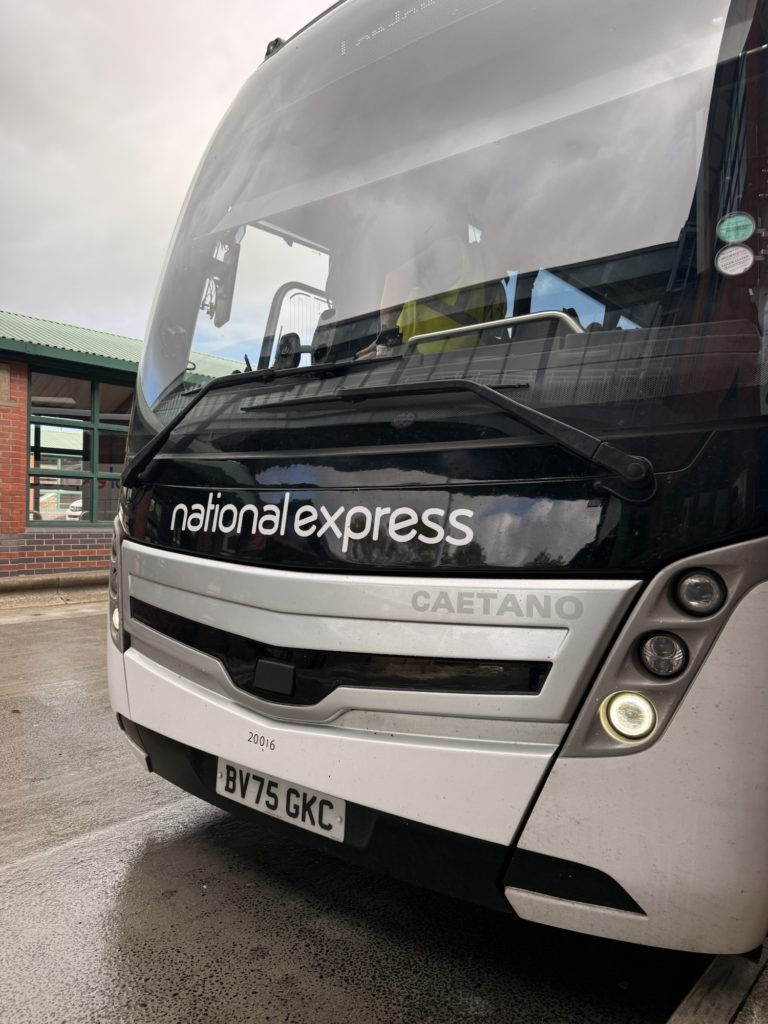
The coach arrived on time with two very smiley drivers ready to board everyone. I had read that there would be a wheelchair lift, but at first glance I could not see one.
Then I heard the warning beeps.
Just like that, a lift began to unfold from between the steps at the front of the coach.
It extended outwards and lowered smoothly to the ground. I rolled onto it in my own chair, although I was also told there was a folding wheelchair available if somebody needed it.
Once inside, the lift platform opened out so I could roll right up to the accessible seat and transfer directly across. It was far smoother than I had imagined.
You can watch the wheelchair lift unfold and see how I boarded in the reel I shared from Meadowhall.
The drivers were friendly, calm and completely relaxed about the process. That mattered. Within minutes, something entirely new to me felt very ordinary.
Four hours to London
It was a four-hour journey, so I arrived prepared with podcasts and writing to do for TIE.
I settled into my seat and waited for the traffic.
There was none.
We travelled all the way towards the capital without a single hold-up. Naturally, once we reached London, it took around 45 minutes to cover the final six miles. If you’re not expecting that, you’ll be in for a shock.
After one quick stop at Golders Green to drop off passengers, we continued to Victoria.
Leaving the coach was just as straightforward as boarding. My chair was returned from the hold, the lift lowered me to pavement level and I rolled into London.
From Victoria to the Royal Lancaster
A black cab literally seemed to be waiting for me as I left the station. The timing was perfect.
There was no faffing about booking an accessible Uber or wondering whether the vehicle that arrived would work. The ramp came out, I rolled straight in and we were on our way, complete with a good old chinwag with the cabbie. I think that part is obligatory, and I’m always more than happy to have a natter.
That was me on my way to the Royal Lancaster London for the British Parking Awards.
There was something slightly ironic about attending a parking awards event on the first trip I’d made to London without needing to park my car in ten years. I couldn’t even tell you how the hotel car park performed in practice!
Parking was already very much on my mind. I’d recently been looking at why a disabled bay is only the beginning of an accessible arrival, so the awards felt like a natural place to continue that wider conversation.
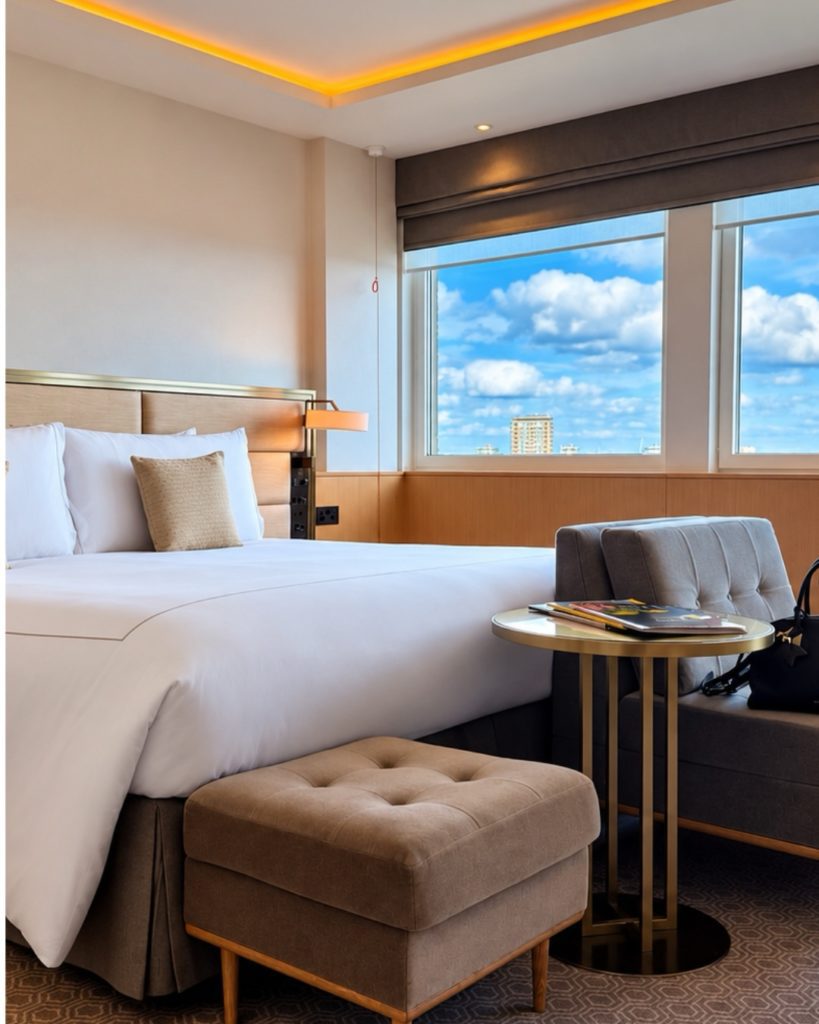
The British Parking Awards were being held at the Royal Lancaster, where I was also staying for the night. Its booking process had already impressed me because I could book an accessible room online. The hotel stay deserves its own review. For this journey, what mattered was that the coach and taxi had delivered me directly to the event without the usual complicated handovers.
Back to Victoria Coach Station
Another helpful black-cab driver made sure I was as close to the entrance of Victoria Coach Station as possible. We were talking a matter of yards, which was very welcome with luggage and a wheelchair.
Victoria was much bigger and far busier than Sheffield Meadowhall. Even so, everything appeared to be in order and running like clockwork.
Before heading to the departure gate, I stopped to use the accessible toilet at the coach station.
I won’t go into the details, but it needed cleaning. Like, yesterday.
I eventually managed to squeeze myself and my chair into one of the ladies’ cubicles instead. Phew.
The facilities at Victoria Coach Station are managed separately from my National Express journey, but they are still part of the door-to-door experience. Transport for London lists the facilities available at Victoria Coach Station. On the day I travelled, the accessible toilet I found was not in a condition I could use.
That matters. A four-hour coach journey is long enough without reaching a major station and finding that the accessible facility is effectively unavailable.
When the coach was delayed
The smooth running continued until an announcement told us our coach had been delayed because of a staffing issue.
It later became clear that the driver had called in sick at around the time our service was due to leave. We were told to expect a delay of approximately an hour.
Fair play to the team at Victoria. They were open about what had happened, calm in the way they communicated it and clear that another driver was being arranged.
Everyone else seemed pretty relaxed too. Nobody particularly wants an extra hour at a busy coach station, but knowing why we were waiting and seeing that somebody was dealing with it made a difference. It also helped that I made friends with a lovely lady from the same town. We had a brew and a chinwag, and suddenly the extra hour didn’t feel quite so long.
When the replacement driver arrived, he was just as friendly as the team on my outward journey. He boarded the passengers and luggage, whipped the lift into action and, just as before, I was settled into my seat and on my way.
We made a couple of stops along the route, including one for a driver change and another to drop off passengers. There was also a little traffic on the M1, but the whole journey still took around four and a half hours.
I arrived back at Sheffield Meadowhall exactly where I’d started. I was still smiling and, honestly, I wasn’t exhausted or feeling as though I’d really travelled.
What this journey did, and did not, test
This was my experience on one return journey between Sheffield Meadowhall and London Victoria. I travelled with a lightweight manual wheelchair and transferred into the accessible coach seat.
I didn’t remain seated in my wheelchair during the journey. Nor did I use the coach’s folding wheelchair or test the onboard toilet, so I cannot tell you how those parts of the service would work for somebody else.
Wheelchair sizes, weights and support needs vary enormously. So do coach stops. My smooth boarding experience doesn’t mean every route or chair will work in exactly the same way.
That is why the advance conversation with Assisted Travel is important. It should give both the passenger and the operator the chance to confirm the practical details before travel day.
Would I travel with National Express again?
Yes, I would.
The price was remarkable, but the best part of the journey was its simplicity. I boarded one coach in Sheffield and left it in central London. There were no changes, no platform race and no chain of assistance waiting to be broken by a delay.
The lift worked beautifully. The drivers made the process feel easy. The choice of departure times meant I didn’t feel that accessibility had reduced my options.
I arrived feeling calm, not as though I had already completed an endurance event before the event I was actually travelling to attend.
For a return journey costing less than £25, National Express gave me something that far more expensive travel does not always manage: confidence that I could get there.
It also gives me another way to say yes. There have been opportunities I’ve had to turn down because I couldn’t drive that distance myself and Martin was unable to take me. Knowing I can make this journey independently changes that.
One wheelchair space, for now
There is one small limitation I hadn’t considered until a wheelchair-using friend commented on my coach-lift reel. National Express coaches have one designated space for a wheelchair user. If we both needed that space, we could not make the same journey together just yet.
Perhaps the world isn’t quite ready for the two of us to go galavanting just yet! 😂
Nothing about the return journey was perfect. It didn’t need to be. The delay was explained, the lift worked and the driver treated my boarding as an ordinary part of the journey, not a problem to solve.
That’s the difference good service makes.
I’m so glad I tried it. The experience was affordable, straightforward and far less tiring than I expected. Even when the return coach was delayed, the staff handled it honestly and calmly.
So yes, next time London calls and Martin cannot drive me, I will be checking the coach times.



Leave a Reply