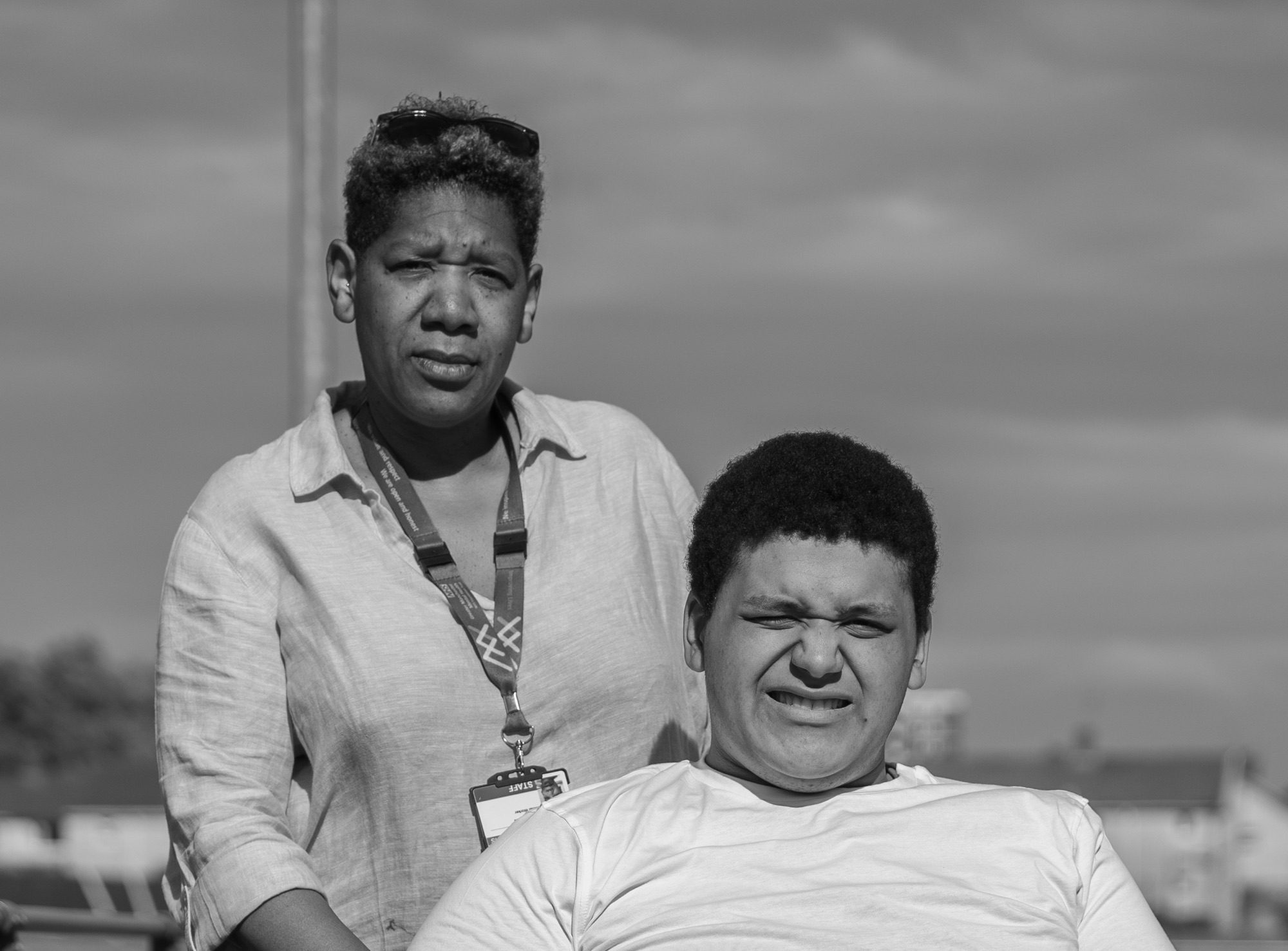
B.adaptive began with a practical problem in Emile McLuckie’s wardrobe. But the story Caron McLuckie tells reaches much further, through family, disability, design, dignity and a question the fashion industry still hasn’t fully answered: who is it actually thinking about when it designs our clothes?
When Caron McLuckie was ten years old, her father lost an arm in an industrial accident.
It was 1976. Keith had come from Jamaica to Stockport, a town still shaped by its mills, and was working around the enormous machinery that fed fabric through the looms.
In the life that followed, there were obvious things to relearn. Buttons. Shoelaces. Pulling up a pair of trousers. Cooking. Going to the toilet. The small movements most of us never think about until the body doing them changes.
There was another detail too.
Keith was a Black man and needed a prosthetic arm that actually looked as though it belonged to him.
As Caron puts it, with the kind of directness that runs through much of our conversation:
“He’s a brown man, so the limb has to be brown.”
It sounds painfully obvious when she says it.
Yet somebody still had to think about it.
That distinction, between what should be obvious and what only becomes visible once somebody is actually living it, would surface again many years later.
This time, through her son.
Before B.adaptive, there was Emile
Before we talk about clothing, Caron wants me to understand Emile.
Not simply the spinal cord stroke he experienced at 13. Not the wheelchair he would later use. Not the clothing brand his life helped shape.
Emile.
“He was the most utterly beautiful boy,” she says.
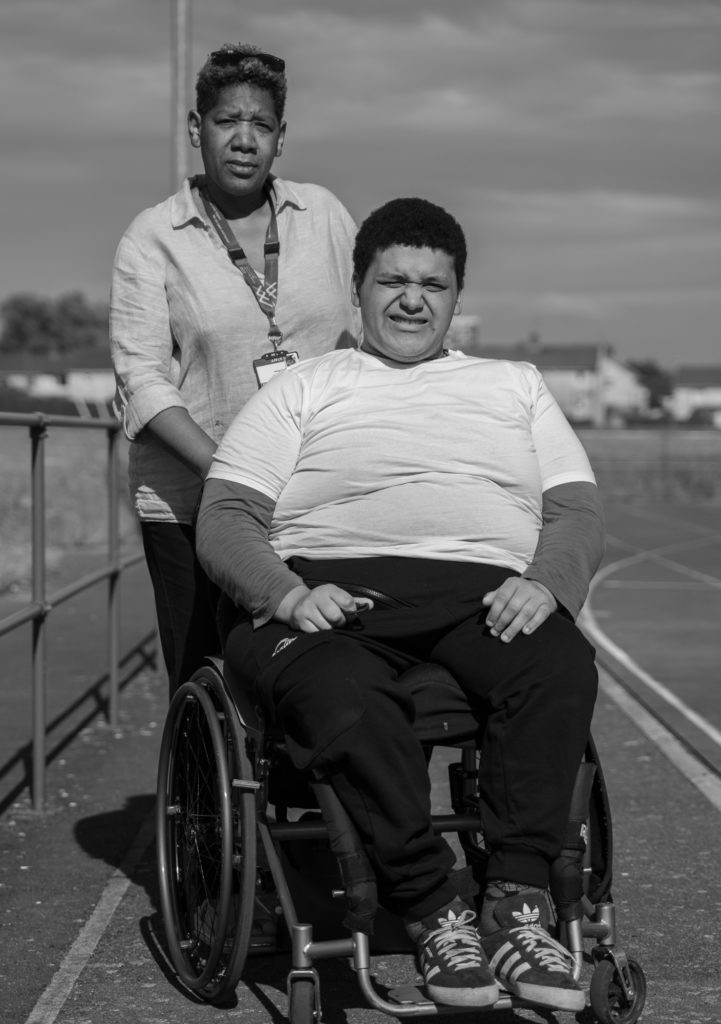
He was autistic, bright and curious. He loved music, football and Manchester City. He taught himself to read and write to a useful level through the laptop, searching for the things that interested him.
JD Sports. JJB. Music.
He liked what young people his age liked.
Caron remembers that even before physical disability entered their lives, there was already a certain amount of adaptation happening quietly at home.
As a child, Emile liked his pyjamas and the sensory familiarity they gave him. If taking them off before school became a barrier, Caron found another answer.
She put his school uniform over them.
The uniform went on. Emile went to school.
Problem solved.
It is such a small family memory, but listening to Caron tell it, I’m struck by how much of her later design thinking already exists within it.
Not changing the person to fit the system.
Changing the approach so the person can get on with their life.
The Saturday everything changed
Emile was 13 when he experienced a spinal cord stroke.
Caron remembers the ordinariness of the day as clearly as the enormity of what followed.
They had been at home watching a film about Mount Everest, eating popcorn and talking about why anybody would voluntarily climb somewhere so cold and dangerous.
Later, Caron needed to collect an alteration before going out that evening.
Emile came with her.
They had barely made it up the road when something changed.
Within minutes, a boy who had walked to the car was unable to get himself back out of it.
Caron drove him to A&E.
What followed was frightening, sudden and, at first, uncertain. There were scans, different possible diagnoses and questions nobody around them seemed immediately able to answer.
There was also a moment Caron has never forgotten.
As Emile lay unable to walk, she recalls somebody questioning whether he might be pretending.
Her response was immediate.
“He’s autistic. He’s not stupid.”
For Caron, it sits within a much wider pattern she had already noticed around the assumptions people could make about Emile because he was autistic. People speaking around him rather than to him. Assuming a lack of understanding where there wasn’t one.
Eventually, the family had their answer.
A spinal cord stroke.
Life changed almost instantly.
“You’re just forever adapting”
The practical realities arrived quickly.
Bladder and bowel care. Transfers. Equipment. Hospital stays. Rehabilitation. A wheelchair. Personal assistance.
Then came home.
The same family. The same house. An entirely different way of moving through it.
Doors had to change. An en suite became a wet room. Space downstairs was opened up. For a period, Emile slept in a hospital bed in the front room while adaptations were completed.
Then there were all the places outside home that hadn’t changed at all.
Visiting family suddenly required ramps and a different wheelchair.
Friends’ houses had steps or doors too narrow to get through.
Going somewhere for a few hours now included questions about toilets, access and whether the physical environment would actually work once they arrived.
School, interestingly, was one of the few places that largely carried on as before. Emile was already attending a specialist school, where the environment and support were in place.
There were PAs. Transport. Activities. Hydrotherapy. Football. Concerts.
The family kept going places.
“We still did everything”
Disability changed how they did things. It didn’t turn living into something they were supposed to stop doing.
And then there were the clothes.
When getting dressed stops being simple
Men’s clothing is generally cut for a standing body.
Sit down and the relationship between body and fabric changes.
For Emile, conventional trousers dropped at the back, exposing his lower back and bottom. His body could become cold even where sensation was reduced.
Then there was catheterisation.
The joggers he had always worn because they were comfortable and easy suddenly became difficult to manage.
Caron remembers occasions where the process seemed to require three hands: somebody holding clothing out of the way while somebody else managed the catheter.
At school, staff were considering transferring him onto a bed simply to complete personal care.
There had to be a better way.
A school nurse suggested adding zips to the sides of his joggers.
Caron bought a £10 pair from Primark and paid around £15 for each zip to be added.
A cheap pair of joggers had suddenly become a £40 workaround.
And it still wasn’t particularly good.
So she started looking.
The clothes existed. Just not for Emile.
Caron didn’t initially search for “adaptive fashion”.
She didn’t know that was a category.
She searched in the language of the problem she was trying to solve.
Wheelchair trousers.
Joggers with zips.
Joggers with a fly opening.
What came back felt completely disconnected from the teenage boy she was shopping for.
Trousers in grey, beige or navy. Clothes that looked clinical. Products sitting alongside commodes and mobility equipment.
Functional, perhaps.
Fashion, not really.
Emile was a teenager interested in sportswear. He wanted the kinds of things other young men were wearing.
The idea that his clothing should suddenly look medical simply because his body had changed made very little sense.
That gap became the beginning of something.
Caron bought a pair of wheelchair trousers from eBay and took them apart to understand how they had been constructed.
Her mum had worked as a machinist. Together, they made an early prototype in jersey.
The original zip position still didn’t create enough access.
Then a friend who was a physiotherapist suggested changing the angle.
What if the zip ran diagonally?
Suddenly, instead of a narrow opening designed around somebody standing at a urinal, much more of the front of the trousers could open. There was room for both hands. Room to manage personal care properly.
Other changes followed.
A wider seated area.
A higher back.
A waistband that sat flatter against the stomach rather than gathering uncomfortably when somebody remained seated for long periods.
The details sound small until you imagine living in them for an entire day.
As Caron says, if you can stand up, pull at your clothes and sit back down again, you might never notice the problem.
If you can’t, you notice very quickly.
It was, she says, “trial and error”.
Which is perhaps another way of saying the clothes were being designed around a real person rather than an imagined customer.
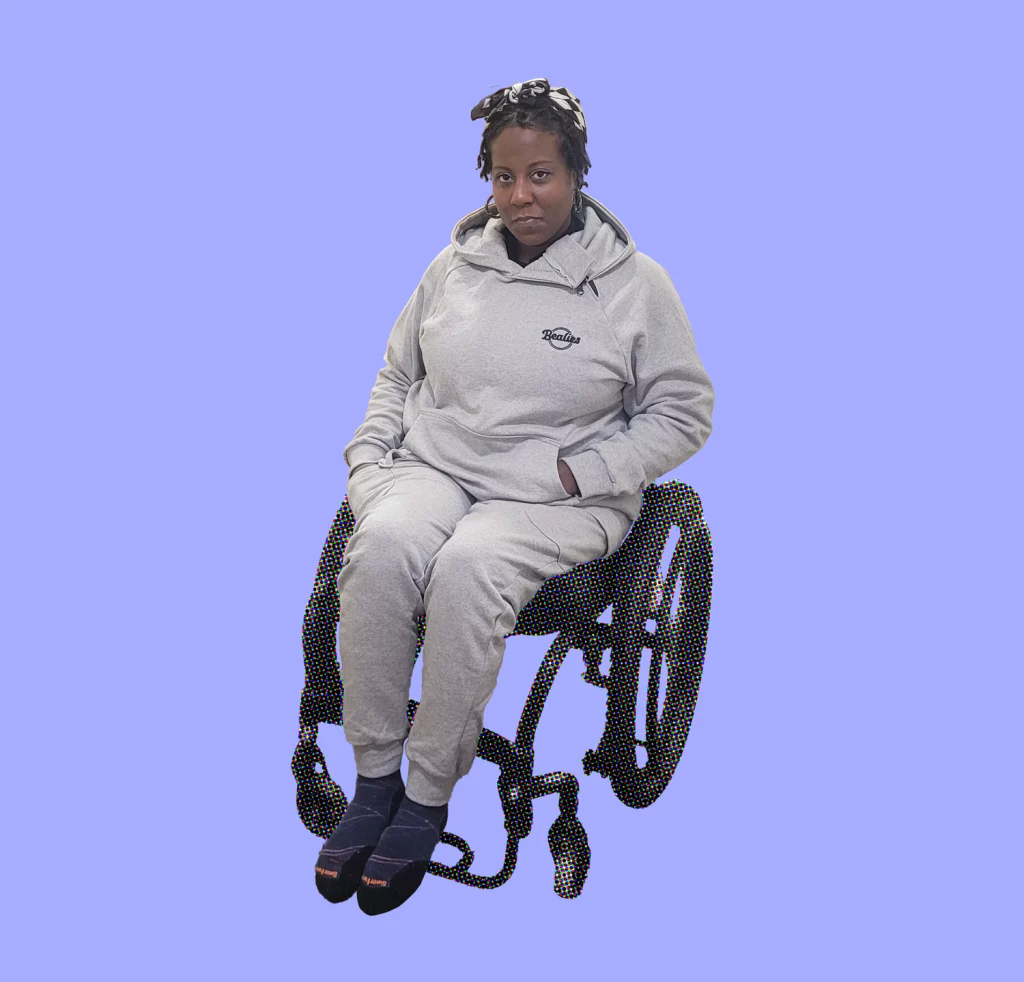
From one pair of joggers to Bealie’s
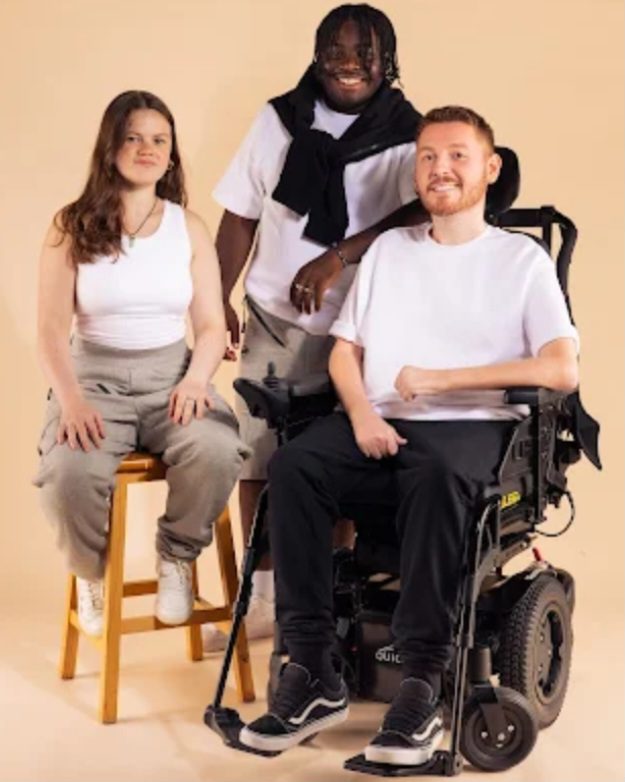
Around the same time, Caron connected with the Fashion Institute at Manchester Metropolitan University. The collaboration helped develop the idea further, with students later creating a collection of more fashionable adaptive garments inspired by the needs Caron had identified.
Then came media attention.
A university video was picked up. Caron remembers heading into work and being told somebody had just seen her on the BBC lunchtime news.
Emile became part of the public face of what they were creating.
The original name, Bealie’s Adaptive Wear, came from home too.
Emile’s sister Esther called him “Mealy Bealie”.
Caron laughs when she explains that Emile took his sister’s nicknames in his stride. Esther could call him all sorts and, rather than offering a detailed opinion on whether he liked it, he would simply tell her to stop teasing him.
There was nothing corporate about where the name came from.
It belonged to their family.
As Emile became an adult, however, Caron felt the brand needed to mature with him.
Bealie’s Adaptive Wear became B.adaptive, with a more grown-up name and identity for its next chapter.
The story behind it remained.
“I don’t think they think about them”
There is a point in our conversation where I ask Caron what fashion brands, buyers and retailers still misunderstand about disabled customers.
She pauses.
Then gives me what I think is the most important line in our entire conversation.
“I don’t know if they misunderstand. I just don’t think they think about them.”
That is a different problem.
A misunderstanding suggests somebody considered the customer and got the answer wrong.
Not thinking about them means that customer never entered the room in the first place.
Caron sees it in the product.
Standard fastenings where a different zip position could make all the difference.
Waistbands cut for standing bodies.
Clothing that assumes everybody can reach, pull, twist and readjust fabric in the same way.
And when adaptive clothing does appear, it is still too often separated from fashion itself.
Caron remembers searching for Emile and finding what she describes as clothing for “older, grey men”.
Her point isn’t that older men don’t deserve good clothes.
It is that a 14-year-old shouldn’t have to dress like an entirely different person simply because he uses a wheelchai
“They just wanna buy the clothes like everybody else.”
That sentence could apply to far more than trousers.
It’s the same gap I found in my conversation with Amelia Peckham about Cool Crutches: function may have been considered, while the whole person using the product has not.
Accessibility isn’t always what the label says it is
Our conversation moves from clothing into retail itself.
Even if the right trousers are made, can somebody actually try them on?
A shop might advertise an accessible changing room because the cubicle is larger.
For Emile, that wouldn’t necessarily have been enough.
To try on trousers, he might need to lie flat.
A bigger room without an appropriate changing bench still doesn’t solve that problem.
Caron has seen the same thing in other environments.
A facility is called accessible because it has more space, a grab rail or a seat attached to the wall.
But accessible for whom?
Someone who can stand with support may need something very different from someone with no lower-body mobility.
That nuance sits right at the heart of B.adaptive.
There is no single disabled body.
There is no one adaptation that suddenly works for everybody.
The challenge for design is not to pretend otherwise.
It is to start thinking more intelligently about difference.
Why good adaptive design shouldn’t have to look adaptive
There is another tension Caron returns to.
When an accessibility feature becomes useful to everybody, it often loses its association with disability very quickly.
Hands-free technology.
Voice control.
Products that are easier to open, fasten or operate.
Features created because someone needed another way of doing something can become desirable simply because everybody else finds them convenient.
Fashion has an opportunity to do the same.
A diagonal zip can be functional and look like a design feature.
A higher back can create better seated coverage without announcing why it is there.
A magnetic fastening can simply be an easier fastening.
Adaptive design does not have to arrive wearing a medical label.
That is particularly important for younger customers.
Caron believes the opportunity changes dramatically if clothing like hers is available where those customers already shop.
Not hidden on a specialist website they have to know exists.
On the high street.
In sports shops.
Among everything else.
“If a big brand takes our pattern and produces it in a mass way,” she says, imagining a teenager being able simply to pick the trousers up in a familiar sports store, then the whole relationship with the product changes.
It becomes clothing first.
As it should.
Building the thing is only part of the job
There is, however, a reality behind B.adaptive that is familiar to many independent founders.
Caron describes herself as essentially a one-woman operation.
She has continued working as a social worker while building the brand, bootstrapping development rather than working with the financial infrastructure of an established fashion house.
Making a good garment is only one part of the problem.
Producing it at the right volume is another.
Then stock.
Marketing.
Distribution.
Customer acquisition.
Getting it in front of the people who need it before the money runs out.
“The easiest part is making them.”
The harder part is creating everything around the clothes that allows the business to scale.
That is why Caron is increasingly interested in a different kind of future.
Not necessarily trying to outspend or out-manufacture established athleisure companies.
Working with them.
Licensing.
Consultancy.
Patterns and design knowledge developed through years of practical experience.
She has ideas for a wider B.adaptive capsule wardrobe, but she is equally clear that a large brand already has something she doesn’t: production capacity, marketing infrastructure and access to mainstream retail.
Caron has something they may not have.
The knowledge.
A brand shaped by a life, not defined by a loss
Emile passed away after a short illness in 2025.
There is no attempt from Caron to turn that sentence into a neat lesson.
Nor should there be.
When we talk about what it means to continue B.adaptive without him, she is candid that she is still working some of that out.
How much should the brand speak about legacy?
How does his name remain part of what comes next without freezing the business in what came before?
There isn’t a polished founder answer.
There is a mum figuring it out.
Perhaps that is why I keep returning to the parts of our conversation where Emile is simply Emile.
The boy obsessed with music.
The Manchester City fan.
The teenager interested in JD Sports.
The brother being teased by Esther.
The young man Caron took to concerts, onto planes, on trains and to Christmas markets in Poland.
The family returned to Tenerife again and again because it was somewhere they could simply get on with being away together.
Those things matter.
Because B.adaptive may have grown from problems Emile encountered after becoming a wheelchair user, but his life was never simply a collection of problems to solve.
The clothes were supposed to support the life.
Not become the story of it.
What happens if fashion starts thinking earlier?
Caron’s ambition for B.adaptive now is clear.
She would like to see its design knowledge travel further.
A partnership with a major athleisure company.
Licensing arrangements.
Consultancy.
More of the ideas developed through real life finding their way into mainstream fashion.
She talks about longer and shorter lengths. Better seated cuts. Wider size ranges. Clothing that works for different bodies without automatically being pushed into a separate category.
None of this feels particularly radical when you hear her explain it.
That may be the point.
Fashion has always adapted clothing around aesthetics, trends and imagined customers.
It changes pocket placement.
Adds decorative zips.
Moves seams.
Changes silhouettes.
Creates endless variations of essentially the same garment.
The technical ability is not the problem.
The question is who gets remembered when those decisions are made.
Caron’s answer still sits with me.
“I don’t know if they misunderstand. I just don’t think they think about them.”
Perhaps the next standard for adaptive fashion isn’t another specialist range hidden somewhere else.
Perhaps it is reaching the point where a young wheelchair user can walk, wheel or roll into the same shop as their friends, choose something because they actually like it, and discover that somebody thought about their body before they arrived.
No fuss.
No gratitude required.
Just good clothes.
Designed properly.
B.adaptive creates adaptive clothing designed around comfort, seated fit, personal-care access and everyday style.
Life Without Limits is The Inclusive Edit’s editorial series sharing the people, founders and ideas changing how the world works in practice for those who experience it differently.

Leave a Reply