
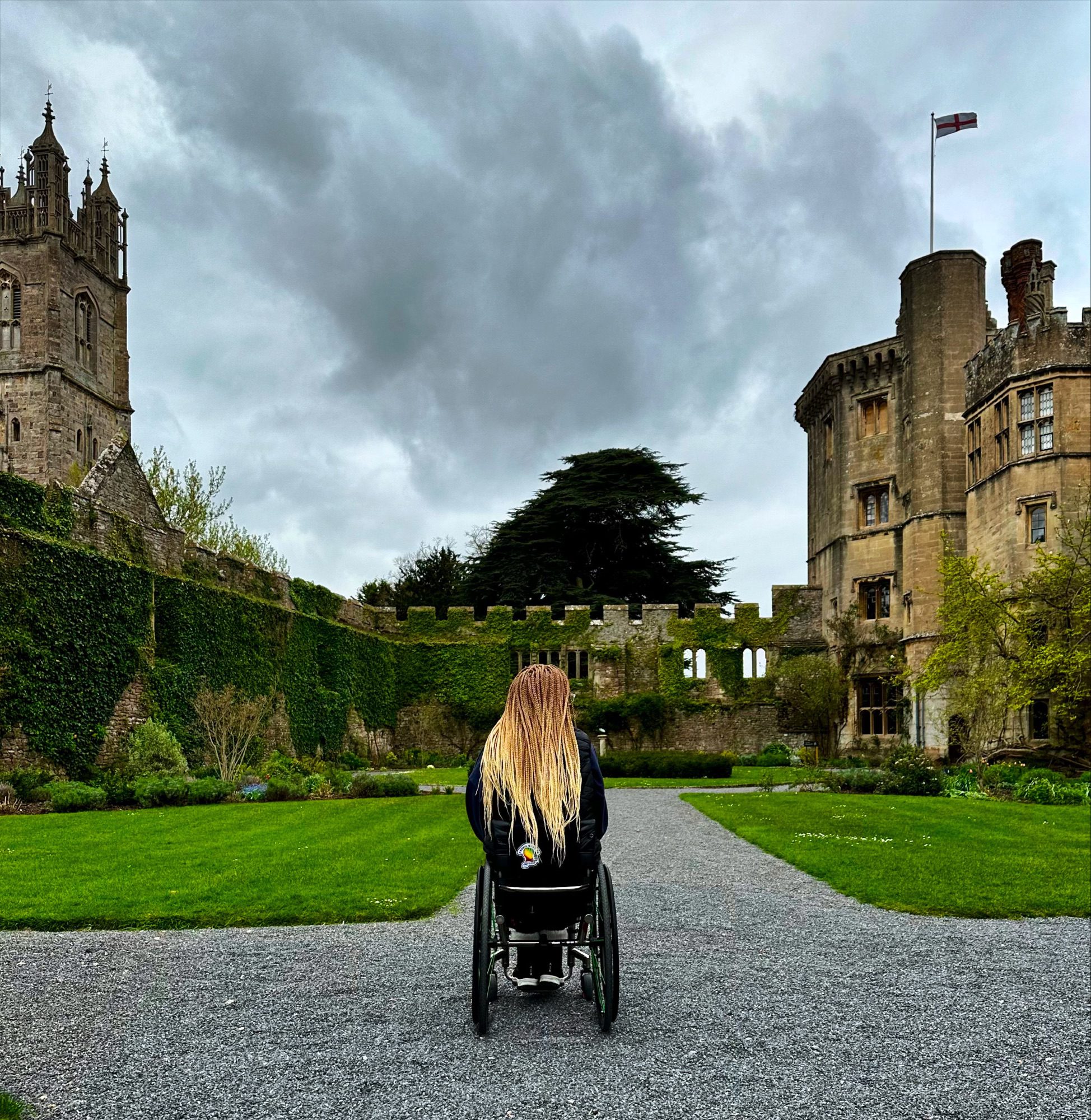
Celebrity Traitors has put castles firmly back in the spotlight. Yet booking one shouldn’t require detective work. That matters even more when you need to understand the bedroom, bathroom and wider guest journey from a wheelchair. These five luxury castle hotels show where history, atmosphere and thoughtful access can share the same story.
The television castle is built around intrigue. A luxury hotel should offer clarity.
The castle that set my standard
I stayed at Thornbury Castle a couple of years ago. I still return to that experience whenever a hotel tells me that its age makes access difficult.
Historic buildings bring real constraints. Thick stone walls, protected features, narrow corridors and staircases can limit what a hotel can change. I understand that.
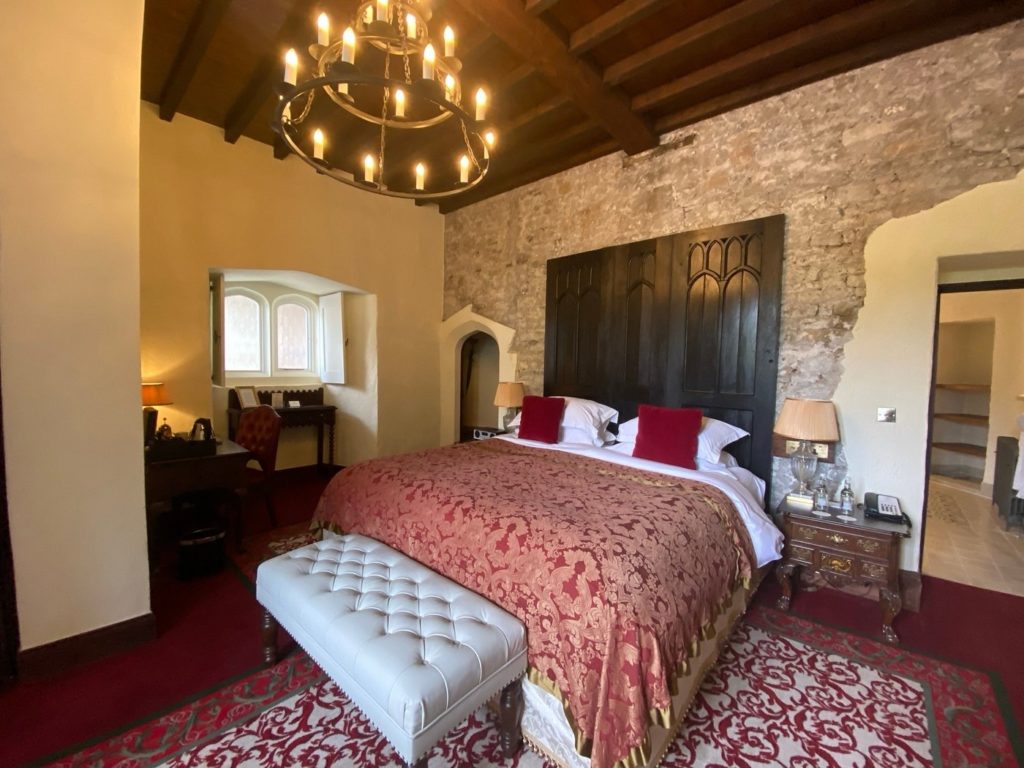
But Thornbury is a Tudor castle dating back around 500 years. During my stay, I moved through its public areas in my wheelchair and stayed in the beautiful Prince Arthur room. It felt like a proper castle suite. Nothing about it felt like a practical compromise.
That stayed with me.
If a Tudor castle can create that experience, age alone can’t settle the conversation. This feels especially relevant to newer properties, where design choices should offer far more flexibility.
Luxury guests pay for attention to detail, thoughtful service and the sense that somebody has anticipated their needs. Access belongs within that promise.
I’ve already looked at how difficult it can be to identify and book an accessible luxury hotel room online. Castle hotels add another question. Can a property preserve its history without giving a wheelchair user a reduced version of the experience?
How I selected these castle hotels
Thornbury is the only hotel in this article that I’ve personally stayed in. My observations come from my own experience as a wheelchair user.
I chose the other four through editorial research. For each property, I looked at the accessible bedroom and bathroom, the public guest journey and the wider hotel experience. I also considered the quality of its pre-booking information and the significance of the building.
One person’s needs will differ from the next. What matters is whether a guest can understand the experience, make an informed choice and arrive with reasonable confidence.
Thornbury Castle, Gloucestershire: where this began
Thornbury Castle is the personal anchor for this article. The Grade I listed Tudor castle offers historic bedchambers, atmospheric dining rooms and beautiful gardens. It feels gloriously removed from an ordinary hotel stay.
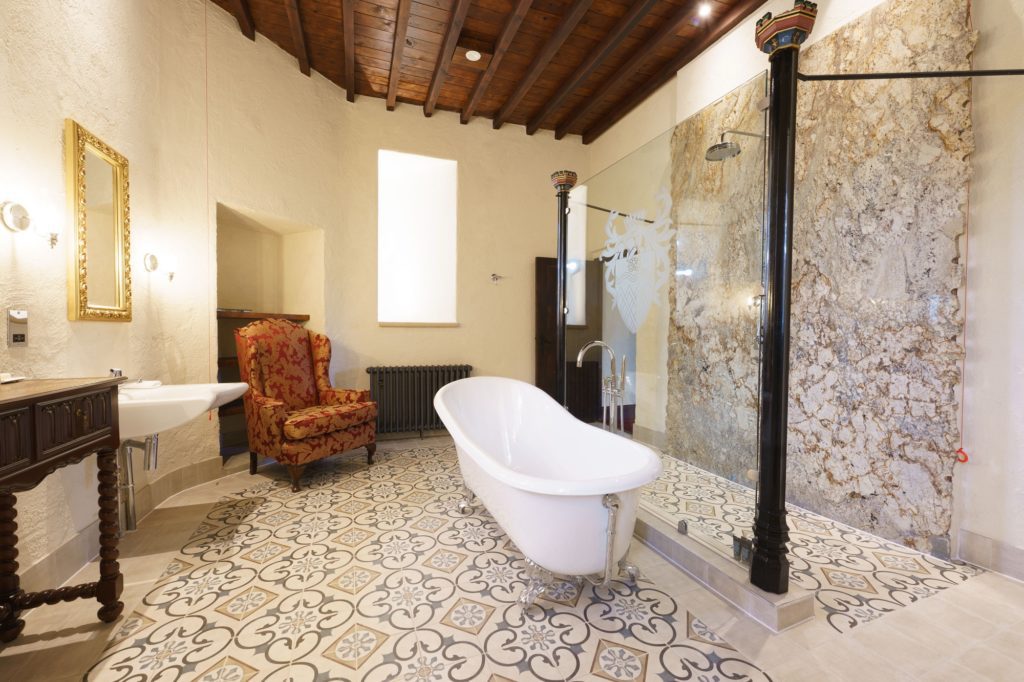
The Prince Arthur room gave me both the atmosphere I wanted and the space I needed. It was beautiful, generous and entirely in keeping with the castle around it. I could also use the public areas in my wheelchair, so the whole stay felt connected.
That distinction matters. Luxury access isn’t simply about having somewhere to sleep. It’s about being part of the place.
The hotel supplied current bedroom and bathroom images of Prince Arthur for this feature. Its website doesn’t currently explain the room’s practical details, so a new guest would still need to speak to the team. Before returning, I’d confirm that Prince Arthur remains the appropriate room and that the hotel can guarantee it. I’d also check that the routes I used remain unchanged.
What worked so well for me deserves to be easier to discover. Clearer information would support the romance of staying in a Tudor castle, not interrupt it.
Ashford Castle, County Mayo: access across the wider stay
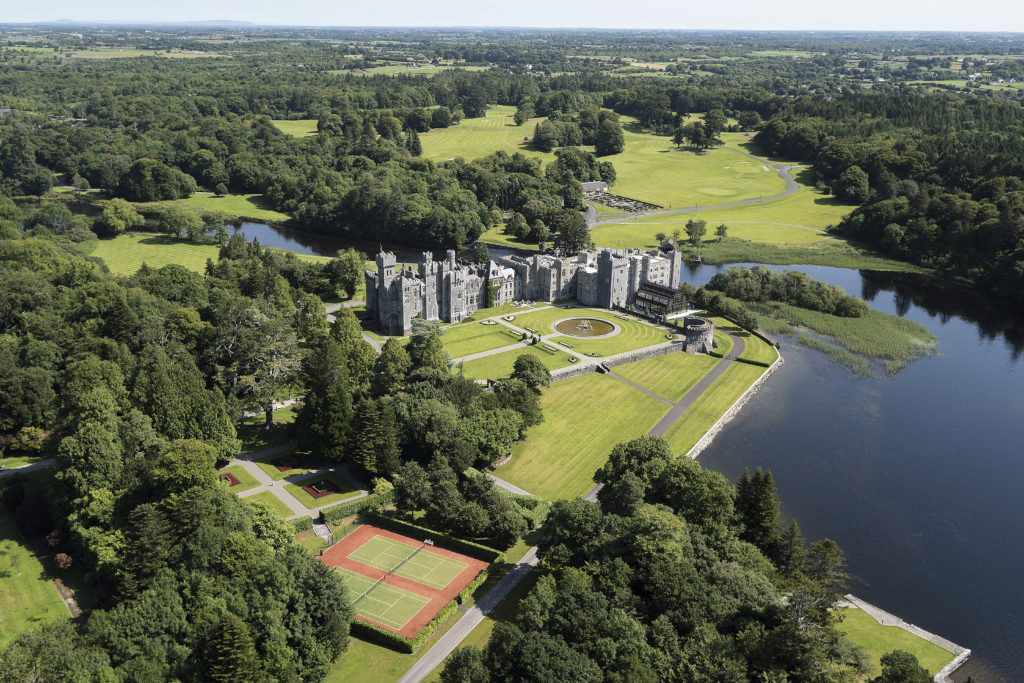
Ashford Castle gives a promising picture of access beyond the bedroom. The hotel describes one guestroom as fully accessible. It also lists accessible routes to its restaurants, event spaces, exercise facilities, spa and swimming pool.
That wider journey matters. Dinner, drinks and time in the spa often form part of the reason someone chooses a hotel at this level.
One part of the booking picture remains missing. When I asked Ashford Castle for a current image of the accessible room, the hotel kindly explained that it didn’t have one available. It shared its broader media library, which contains beautiful bedrooms, bathrooms and public spaces. However, none of those images identifies the accessible room.
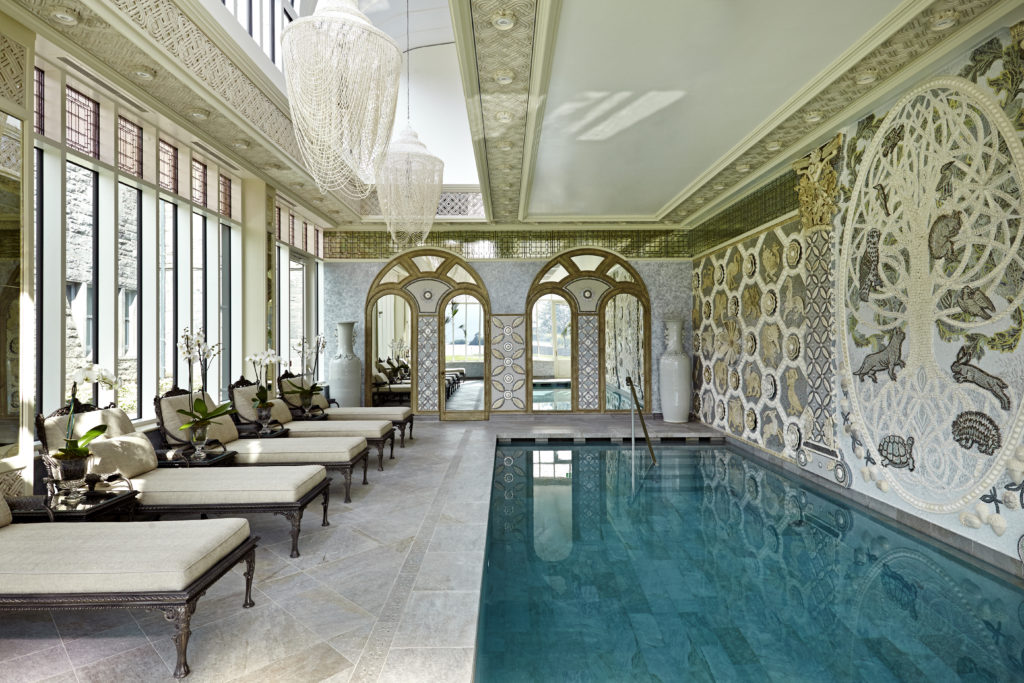
A photograph can’t answer every question, but it can offer useful reassurance. It helps a wheelchair user consider the bed position, transfer space, bathroom layout and shower arrangement before making an enquiry.
Ashford has one accessible room, so booking early seems sensible. Written confirmation that the hotel can guarantee the room would give further confidence.
Ashford feels like a compelling possibility. Its published routes suggest that the hotel has thought beyond the bedroom. Making the room more visible would help guests picture how that wider experience could work for them.
Swinton Park, North Yorkshire: considering the whole estate
Swinton Park publishes some of the most detailed accessibility information I found.
Inside the castle, guests can reach the reception rooms, dining room, bar and 15 of the 32 bedrooms without steps. A lift serves rooms on the upper floors.
The fully adapted Ilton room sits in the neighbouring Coach House. It offers step-free access, an 88cm bedroom doorway and an 84cm bathroom doorway. The wet room includes a shower seat and support rails. Alarms sit beside the bed, shower and toilet.
The wider estate adds another layer. Swinton Country Club provides an accessible entrance and changing room, plus a pool hoist. Guests also have step-free access to the gym, indoor pool, outdoor natural pool, hot tub and thermal suite. A lift connects with the first-floor treatment and relaxation rooms.
This takes the information beyond a simple accessible-bedroom listing. It begins to show how somebody might actually spend their stay.
There are still useful distinctions to understand. A step-free bedroom isn’t necessarily an adapted one. But that could also be the perfect room design for an ambulant guest. Swinton also explains that parts of the parkland include loose gravel, bumps and steep inclines.
Guests who want to sleep inside the castle should ask which rooms could meet their individual needs. The Ilton room appears to offer the strongest adaptations, but its Coach House location may shape the decision. Neither choice is automatically better. The detail allows each guest to choose the right version of the experience.
Castle Leslie Estate, County Monaghan: access that adapts to the guest
Castle Leslie Estate takes a particularly thoughtful approach to its accessible Lodge bedrooms.
The bathrooms use a modular rail system instead of fixing every fitting in one position. Staff can arrange the sink, shower seat, towel rail, soap holder and toilet support rail around the guest. They can also raise or lower the sink.
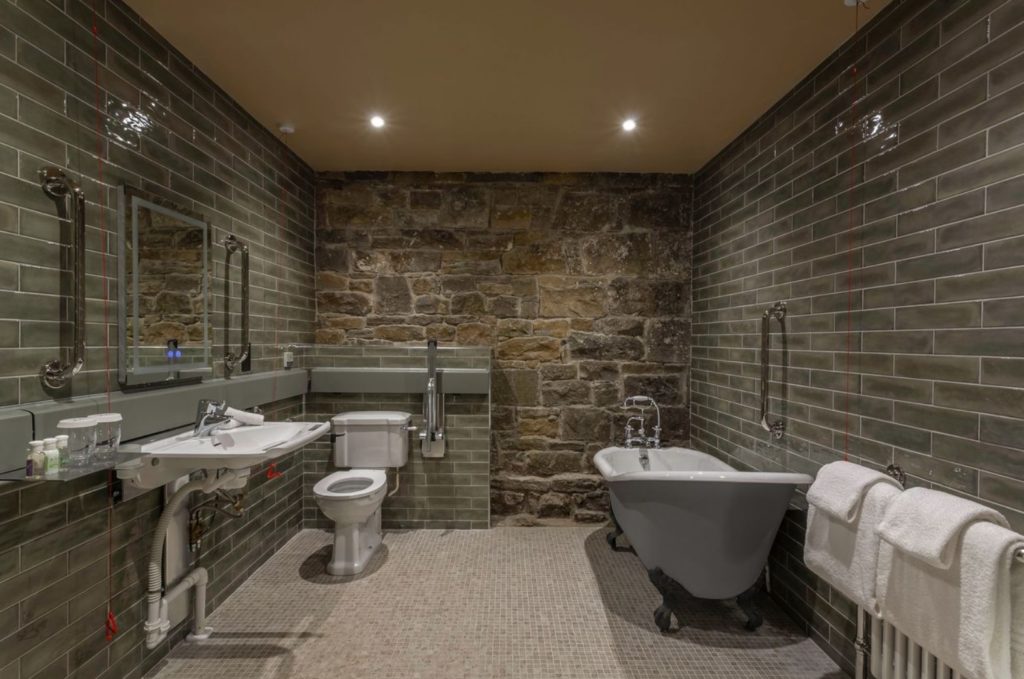
One of the accessible bathrooms within one of the accessible bedrooms available to book at The Lodge, Castle Leslie Estate.
That recognises something hotel design can easily miss. Disabled people don’t all use a room in the same way.
The estate lists three accessible rooms. Two are in The Lodge, while Desmond’s Room sits at basement level within the castle. Features include roll-in showers, emergency pull cords and pull-down wardrobe rails. You know I love a pull-down rail!
Within the castle, a platform lift connects the conservatory with the main building. Another lift serves the bedroom floors, and guests can use an accessible toilet. Both the castle and The Lodge offer accessible parking.
The Victorian Treatment Rooms also include a ground-floor treatment room. Guests can reach the relaxation rooms on the same level.
Before booking, I’d also want to understand how easily each room connects with the main castle spaces.
The modular design feels genuinely thoughtful. It allows the room to respond to the guest, rather than asking the guest to adapt to a fixed layout.
Lough Eske Castle, County Donegal: seeing the accessible room
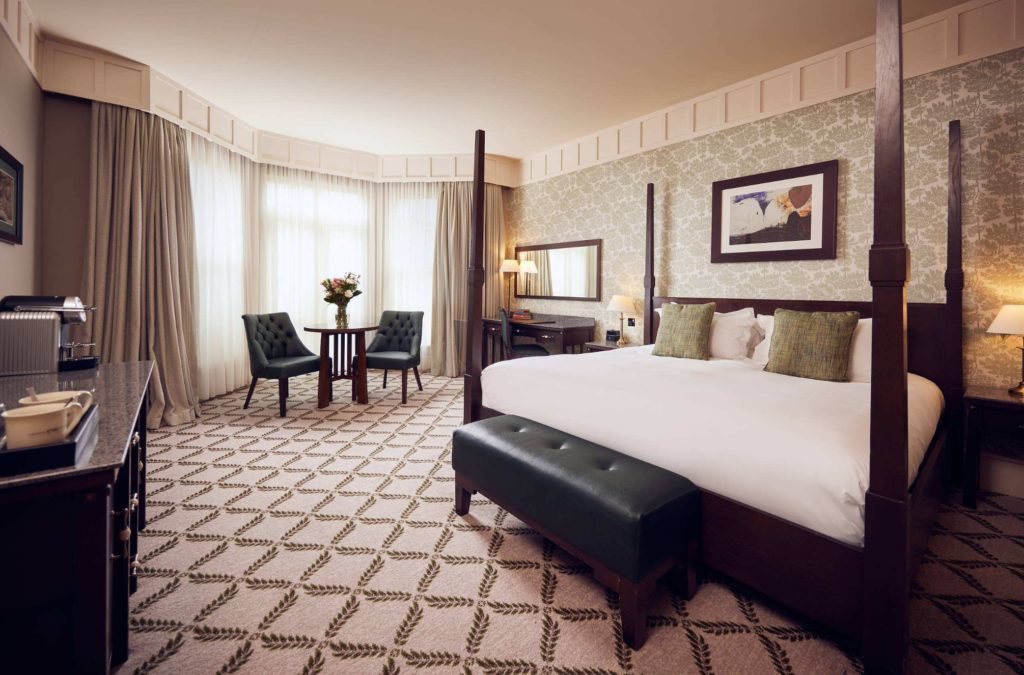
Lough Eske Castle describes reception, the Gallery Bar, Cedars Restaurant and its meeting rooms as wheelchair accessible. The hotel also lists spacious lifts, wide corridors and accessible guestrooms. Bathroom options include grab rails, wheel-in showers or lower baths with emergency call alarms.
This gives a potential guest a useful outline of the shared hotel experience. It says far more than a single sentence confirming that an accessible room exists.
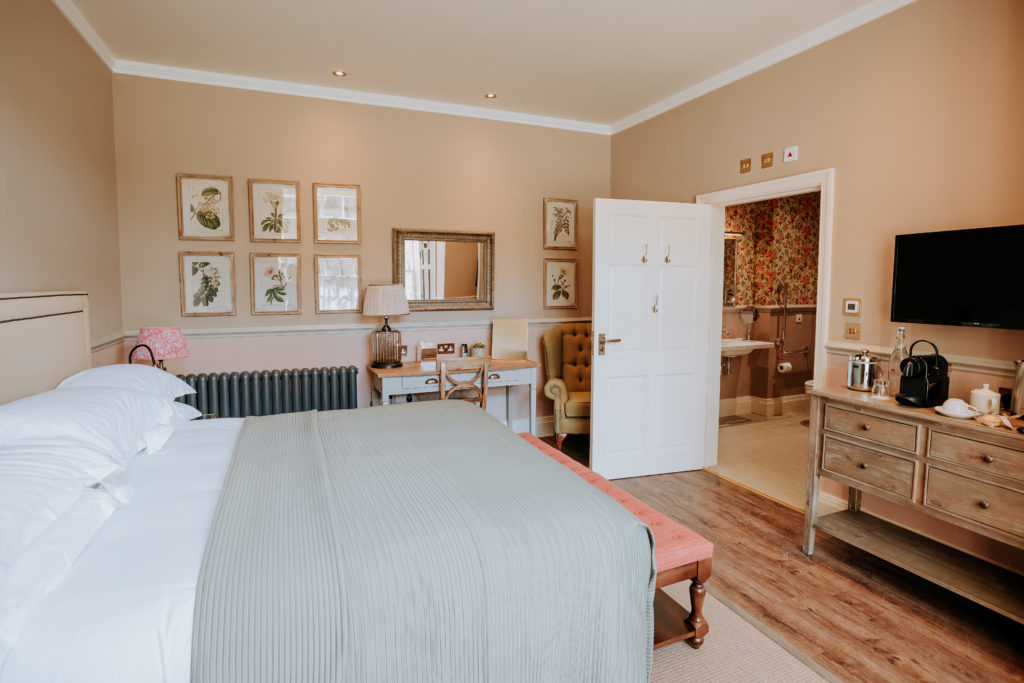
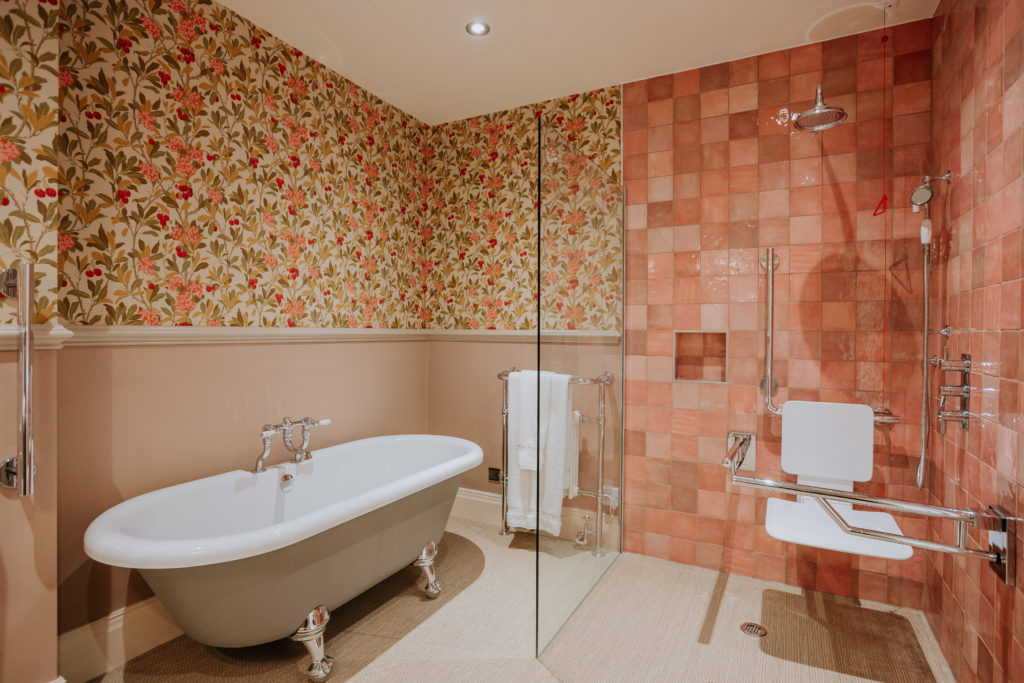
The hotel also supplied current photographs of an example accessible bedroom and its bathroom. Being able to see the wheel-in shower, folding shower seat, support rails and generous open floor space makes the information feel more tangible.
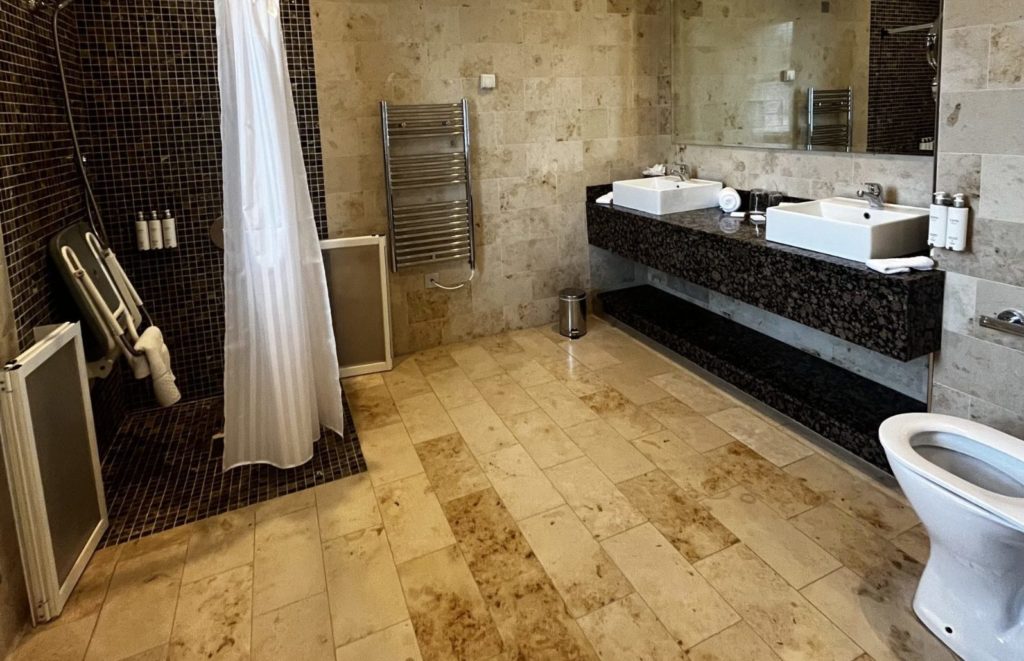
I would still want to clarify the exact room category before booking. The hotel offers everything from Courtyard and Garden rooms to castle rooms and suites. Its accessibility page doesn’t yet show which categories contain the adapted rooms.
I’d ask for the room name, doorway widths, bed height and transfer space. I would also confirm that the photographed bathroom belongs to the room I had reserved. Finally, I’d want to understand whether that room sits within the historic castle or a later part of the hotel.
The spa and pool journey deserves its own conversation too. I’d ask about the changing area, treatment access and the available way to enter the pool.
By sharing practical information alongside current photography, Lough Eske makes its accessible room easier to picture as part of the wider stay. Naming the adapted room categories would make that already useful booking journey even clearer.
The wheelchair-accessible room is only the beginning
These five hotels take different approaches. Some place an adapted room inside the historic building. Others use a Coach House, Lodge or later part of the hotel to create more space.
That choice doesn’t decide the quality of the stay. What matters is whether the experience still feels whole.
Can the guest arrive without an improvised route? Do they have a genuine choice at dinner? What happens at the spa and across the grounds? Does the accessible bedroom carry the same thought, beauty and sense of place as the rest of the hotel?
Most importantly, can somebody understand all of that before handing over their money?
One of my recurring luxury travel icks is a beautiful hotel website that describes every thread count and tasting menu. Meanwhile, a wheelchair user still has to search for the most basic practical detail.
Information is part of hospitality. It helps someone picture the stay, decide whether it will work and book with the same anticipation as any other guest.
What to ask before booking a wheelchair-accessible castle hotel
Even the most detailed access page can’t tell every wheelchair user whether a room will work for them. Before booking, I’d confirm:
- the exact accessible room name and whether the hotel can guarantee it
- the route from parking and reception to the bedroom, dining rooms and other facilities
- bedroom and bathroom doorway widths, bed height and transfer space
- the shower arrangement, seat, support rails and any available equipment
- access to the spa, pool, gardens and experiences you intend to use
- how the team will discuss and record your emergency evacuation requirements
Ask for current photographs if you can’t find them online. If one feature determines whether the stay is possible, request written confirmation.
This isn’t about expecting a hotel to alter every historic corner. It is about understanding which parts of the experience will work for you. A thoughtful alternative should still respect the character and standard of the hotel.
History can explain a constraint, but it shouldn’t close the conversation
Castle hotels are built around stories. Their age, architecture and atmosphere are precisely why guests choose them.
Thoughtful access doesn’t flatten that character. It allows more people to experience it.
Thornbury set a benchmark for me because I never felt as though I had entered a compromised version of the hotel. I stayed in a beautiful castle room, moved through its public spaces and enjoyed being there as a guest.
That feels very different from being grateful simply to get through the door.
These hotels won’t suit every wheelchair user. One accessible room doesn’t make an entire estate accessible either. What they do show is that heritage, atmosphere and access don’t have to exist in opposition.
What encourages me is that each hotel contributes something different. Thornbury shows how a historic stay can feel whole; Ashford publishes accessible routes across the wider hotel; Swinton offers unusually detailed information; Castle Leslie adapts the bathroom around the guest; and Lough Eske has made its accessible room easier to picture through current photography.
If centuries-old buildings can find thoughtful ways forward, newer luxury hotels should feel confident enough to do the same.
Luxury travel should be reviewed against the standard it sets itself. For a wheelchair user, that standard includes the confidence to arrive, belong and enjoy the experience.

Leave a Reply