
Some luxury travel icks are funny because they are familiar.
Others are funny until you realise what they reveal.
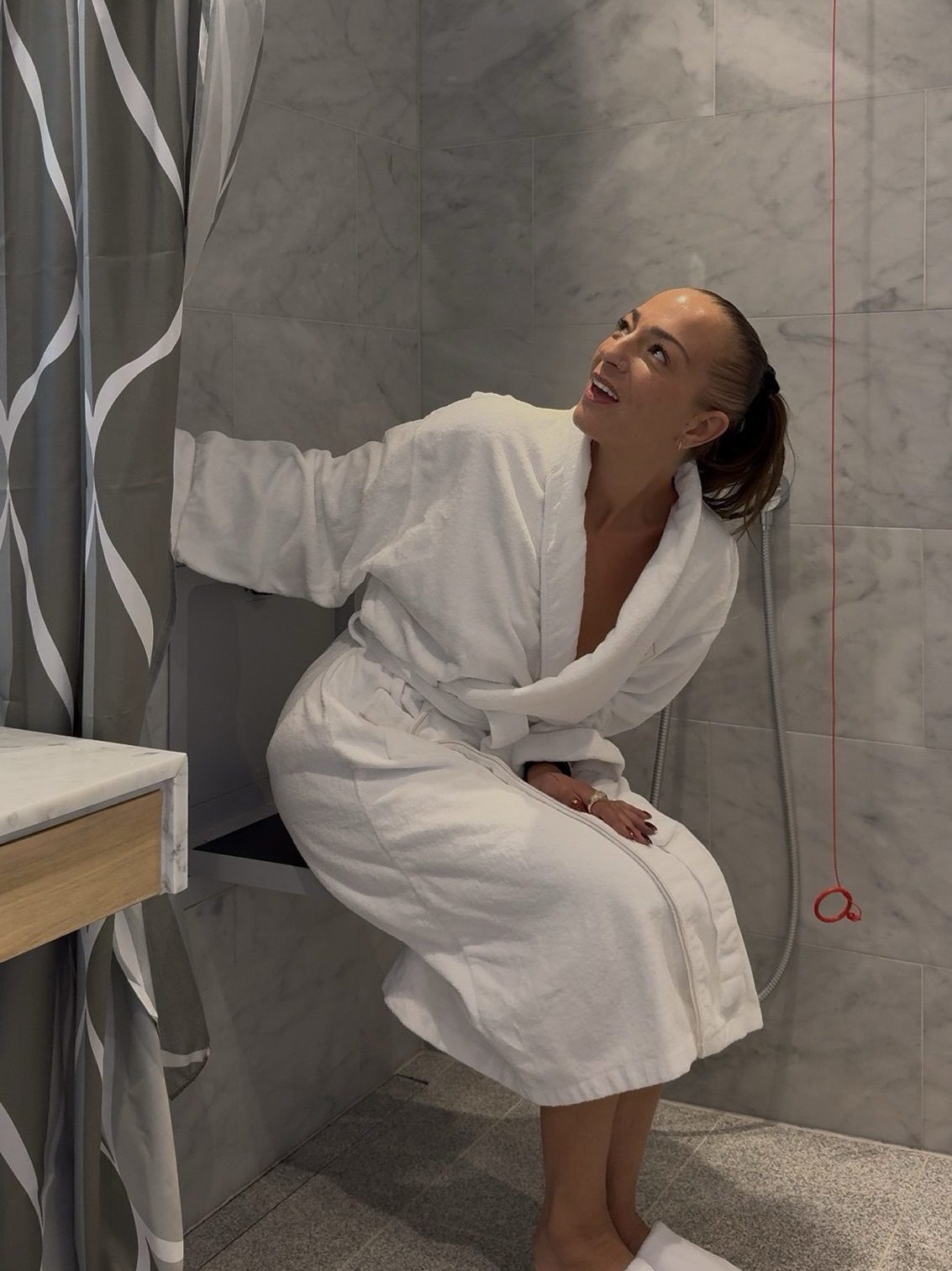
A shower curtain reserved almost exclusively for the accessible room. A disabled parking bay laid over cobbles. A beautiful reception desk that leaves me balancing a clipboard on my knee while looking up the receptionist’s nose.
Individually, these things can sound small. Together, they say something much bigger about the accessible guest experience and what happens when accessibility is considered separately from design, service and the rest of a hotel stay.
This isn’t about expecting every historic building to become perfectly step-free overnight. Nor is it about naming and shaming hotels for every detail that doesn’t work for me.
It is about the patterns I see repeatedly.
Luxury hospitality understands atmosphere, anticipation and personalisation beautifully. Yet when disability enters the conversation, that same level of thought can suddenly narrow to a room category, a grab rail or a reassurance that somebody else managed it.
These are five of my luxury travel icks.
They make me laugh. They occasionally make me twitch. More importantly, each one shows where a better guest experience could begin.
1. The accessible shower curtain
I should begin with a confession.
Shower curtains genuinely freak me out.
I understand that a fixed glass screen won’t work in every accessible bathroom. Flexible space matters. Transfer space matters. Different guests use bathrooms in different ways, something I explored in An Accessible Bathroom for Whom?.
What I don’t understand is why the word accessible so often becomes the point where the hotel’s usual design standards quietly disappear.
The other bathrooms may have beautiful glass screens, carefully chosen tiles and fittings that belong in the room. The accessible version gets a rail and a piece of damp fabric.
Practicality and beauty are not natural enemies.
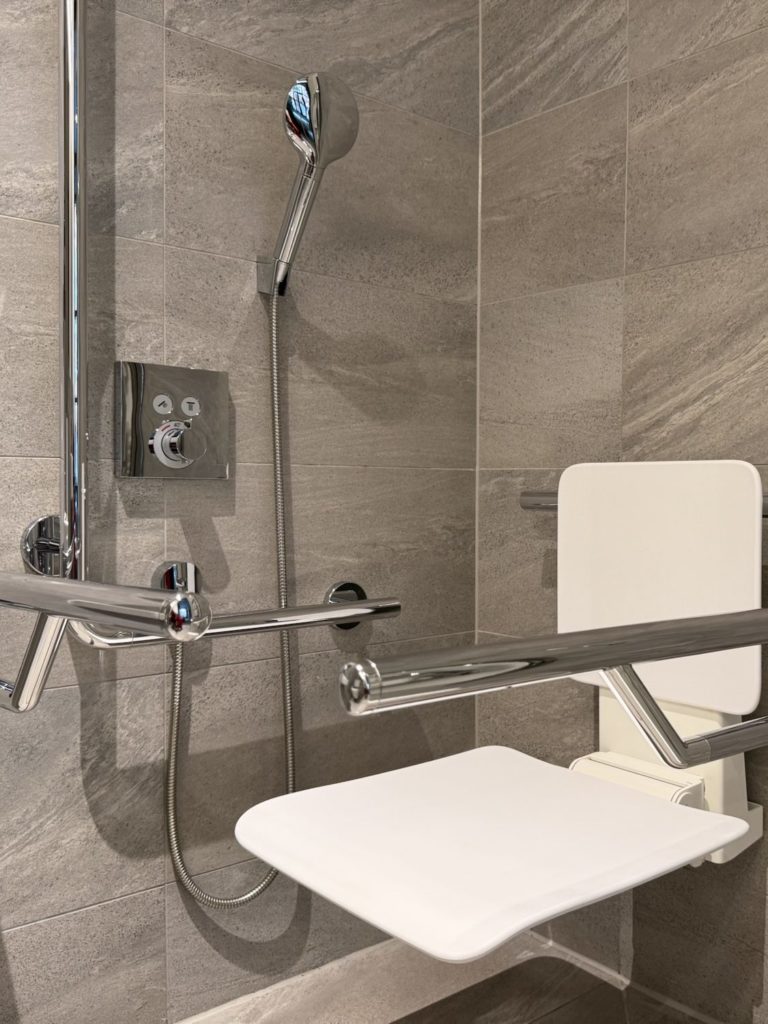
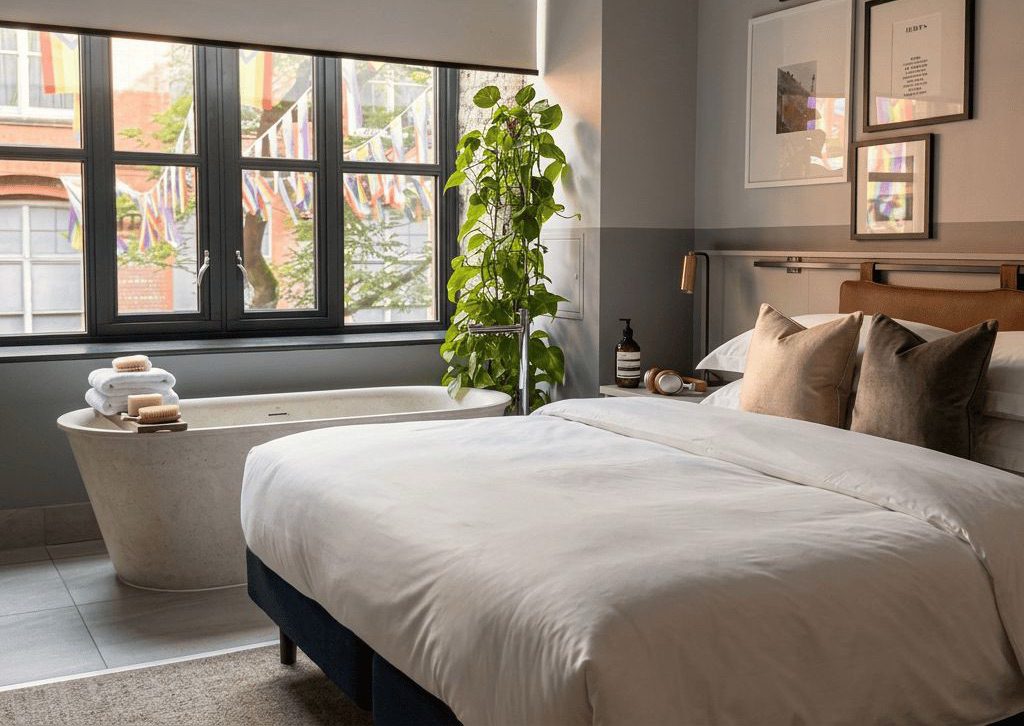
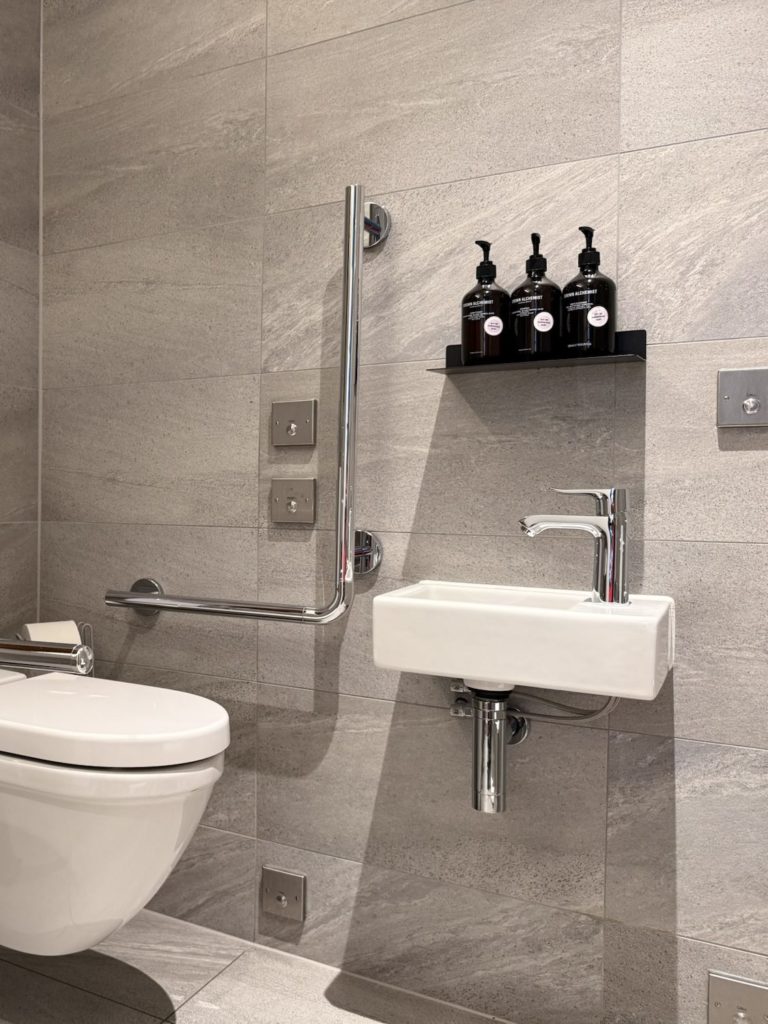
My favourite hotel bathroom is at LEVEN Manchester. It had the generous wet room, level-access shower, correctly positioned rails and manoeuvring space I needed. It also had chrome finishes, contemporary fittings and call buttons incorporated far more elegantly than the dangling red cords I am used to seeing.
Then, in the bedroom, there was a proper freestanding bath with enough room for me to transfer directly from my wheelchair.
The accessible features were there because I needed them. The style was there because I was staying at LEVEN.
That distinction matters.
At The Reserve by Savoy Signature in Madeira, a personalised bath service offered the dreamy opposite of the apologetic accessible bathroom. Bathing was treated as part of the pleasure of the stay, something to anticipate and enjoy rather than merely a practical function to complete.
That is the standard I want hotels to think about. Not a bath in every accessible room, because that would not work for everyone. Not glass screens at the expense of flexibility. Simply the same creative ambition applied to disabled guests.
Apparently accessibility comes with complimentary damp fabric.
2. Disabled parking bays on cobbles
A disabled parking sign is useful.
Blue paint is useful.
Neither has magical powers over the surface underneath it.
There is something wonderfully contradictory about arriving at a hotel to find that the designated accessible parking has been positioned on cobbles. The provision exists. The route may still be difficult, painful or completely unusable.
My own relationship with cobbles is well documented.
At Titanic Hotel Liverpool, the car park and route towards the entrance were cobbled. When the disabled bays and drop-off space were full, I parked farther away, loaded myself and my luggage into my wheelchair and set off.
I ended up head first in a puddle.
It was not one of my more elegant arrivals.
The point is not that cobbles can never form part of a historic property. It is that the guest journey cannot be assessed by counting bays alone.
Where is the bay? What is the surface like? Is there enough room to transfer beside the vehicle? What happens between closing the car door and reaching reception?
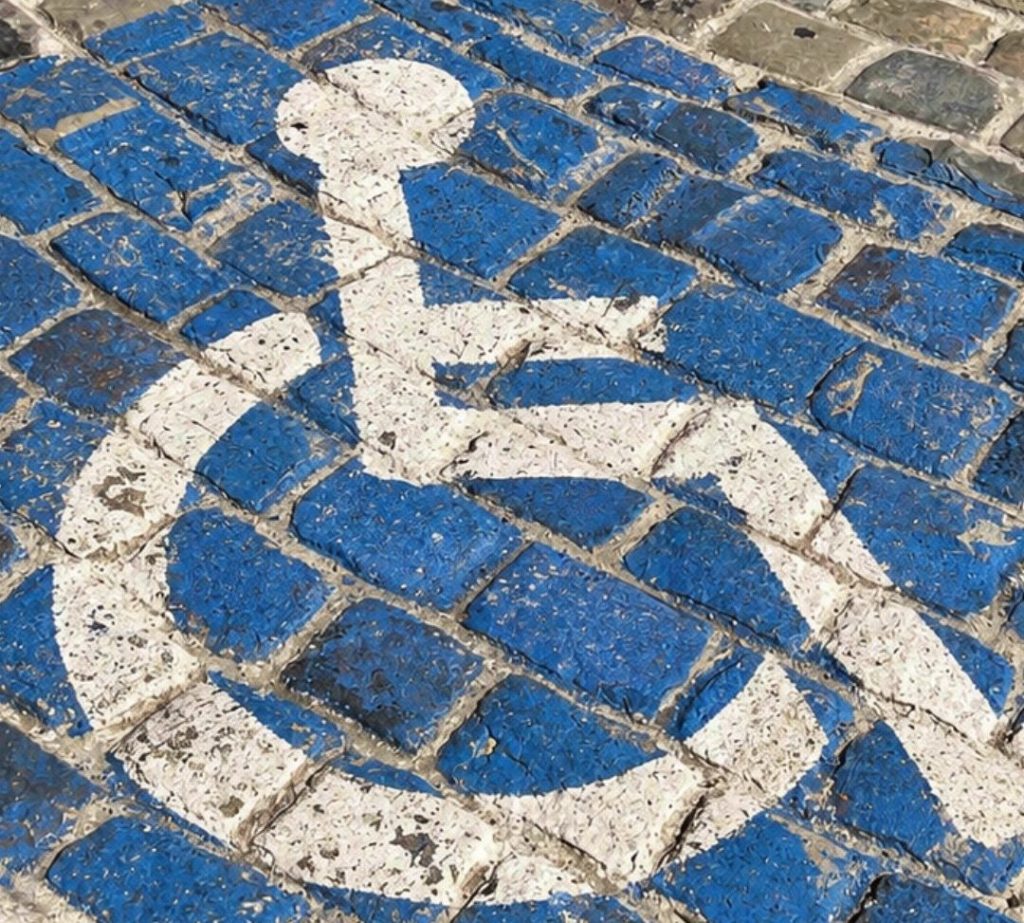
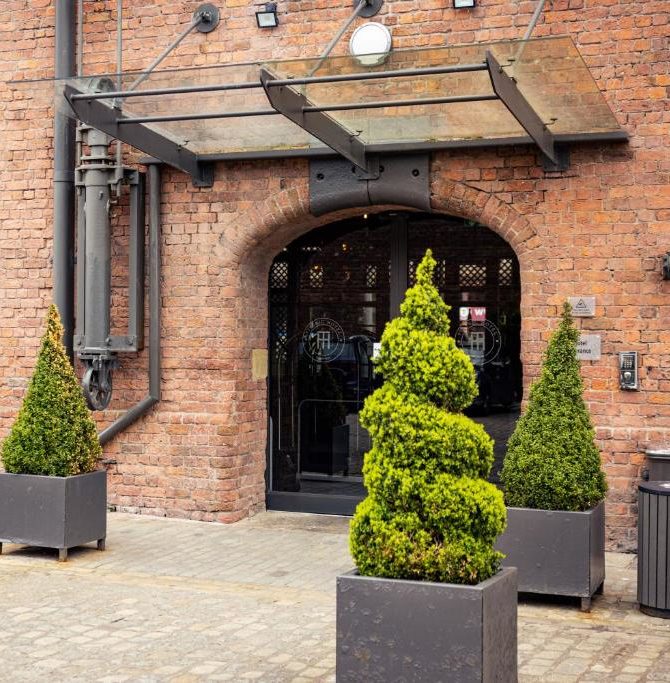
As I wrote in A Disabled Bay Is Only the Beginning, parking only works when the route around it works too.
Luxury hotels spend a great deal of time choreographing arrival. The first glimpse of the building. The doorman approaching. The luggage disappearing from the boot. The move from outside world to hotel calm.
For a disabled guest, the surface under the wheels is part of that choreography.
Apparently the disabled bay comes with a complimentary off-road experience.
3. The accessible room after the inaccessible check-in
The booking has been made. The accessible room has been allocated. The team is expecting me.
Then I arrive at a reception desk high enough to make the whole conversation feel as though it is happening above my head.
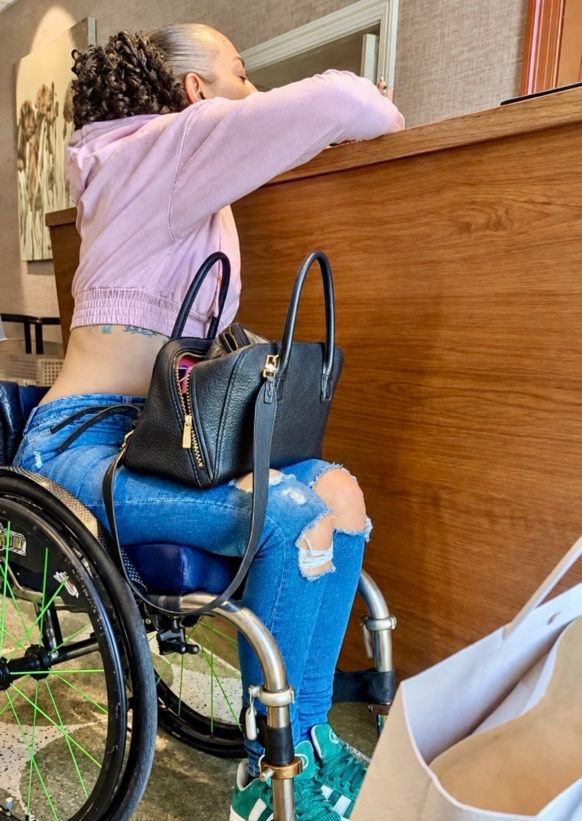
Sometimes I channel my inner Stretch Armstrong and reach for the paperwork. Sometimes a clipboard and pen are handed down so I can balance everything on my knee.
Neither feels much like a luxury arrival.
It is especially frustrating when beautiful seating is arranged around the same lobby. Sofas, armchairs and low tables have been chosen to make the space feel welcoming, yet nobody thinks to use them for check-in.
This is one of those moments where good service can change the experience immediately, without waiting for a refurbishment.
The Lowry Hotel in Manchester is one of my favourite examples.
During one stay, a manager mentioned that she didn’t like how high the check-in desk felt. I had noticed it too, although the team already softened the problem by stepping out and bringing everything to me.
We talked about a beautiful desk and chairs positioned in the atrium. It was quieter, more comfortable and already there.
The next time I arrived, that space was being used for check-in.
There was no announcement and no grand accessibility initiative. They listened, saw the possibility and changed the experience.
That is what thoughtful hospitality looks like in practice. The physical feature may not change immediately, but the service around it can.
The accessible guest journey does not begin when I open the bedroom door. It begins when I search, book, arrive and meet the hotel for the first time.
Apparently the accessible guest journey starts after check-in.
4. The vanishing dining chair
I approach a restaurant table in my wheelchair.
Before I have reached it, a member of staff removes the dining chair.
It is usually done with good intentions. They are making space. They believe they are anticipating what I need.
Except nobody has asked whether I would like to transfer.
Some wheelchair users remain in their chairs throughout a meal. Others may choose to transfer depending on comfort, the table height, the length of the meal and how their body feels that day.
The point is not which choice we make.
It is being offered one.
My wheelchair gets me to the table. It does not automatically tell you how I would like to sit once I am there.
The question is wonderfully simple: Would you like me to remove the chair?
That small pause preserves choice without turning the moment into a performance.
At Santo Wines in Santorini, the experience worked because access, atmosphere and service sat naturally together. There was level access through the main space, generous seating and accessible facilities. The wine, small plates and caldera setting remained the story.
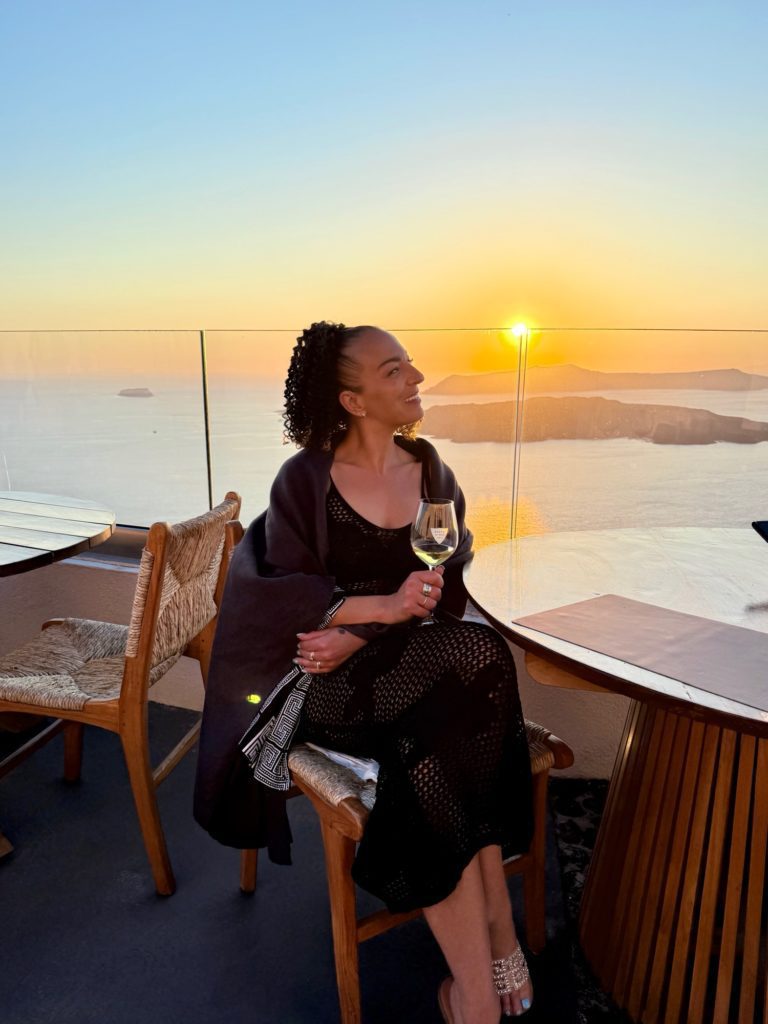
What stayed with me most was Margaret, my sommelier, noticing the cobbles outside without needing me to make a thing of them. She showed me a smoother alternative route and went down herself to make sure my driver knew where to collect me.
No fuss. No grand announcement. Just somebody paying attention and quietly making the experience better.
That visit forms part of my Santorini Sky review and wider Santorini journey. It is also a useful reminder that intuitive service does not have to mean making decisions on behalf of the guest.
The best staff notice, ask and respond.
Apparently my seating preference comes pre-selected.
5. Being compared with somebody’s 90-year-old granny
I recently asked about a 15cm doorstep.
The response was intended to reassure me. Several guests with access requirements had managed it comfortably, including the hotelier’s 90-year-old granny.
I am genuinely pleased that Granny managed the step.
But Granny and I are not the same person.
Can Granny push a half marathon in her wheelchair?
No? Didn’t think so.
And yet I still cannot safely negotiate a 15cm doorstep in mine.
That is the point.
Ability is not a straight line. Somebody’s age does not tell me what they can manage, just as knowing that I use a wheelchair does not tell a hotel everything about me.
We have different bodies, chairs, strength, balance, mobility and support. What I can manage today may not be what I can manage tomorrow. Every day is different.
The offer to source a portable ramp was useful information. The comparison was not.
This matters commercially as well as personally. In The Luxury Traveller Hidden in Plain Sight, I explored why age, wealth and disability belong in the same luxury travel conversation, but should never be flattened into the same guest.
Personalisation is one of luxury hospitality’s greatest strengths. It remembers preferred rooms, pillows, wine and dining times. Access should be approached with the same curiosity about the individual.
Just give me the facts. I know my body, my chair and what I can manage.
Granny sounds fabulous. She just is not my access assessment.
I will take the ramp, thanks.
What these luxury travel icks have in common
None of these moments is really about a shower curtain, a clipboard or a missing dining chair.
They are about what happens when assumptions replace information and when the presence of an accessible feature is mistaken for a complete accessible guest experience.
The bathroom technically works, so nobody asks whether it still feels like part of the hotel.
The disabled bay exists, so nobody follows the route to the door.
The accessible room has been booked, so nobody thinks about the height of the check-in desk.
The wheelchair arrives at the restaurant, so the chair disappears.
Another disabled or older guest managed the entrance, so the hotel assumes I will too.
These are not always failures of care. Often, they are failures of perspective.
That is why the details matter.
As I wrote in Why Accessibility Is the Missing Piece in Luxury Guest Experience, access does not sit beside atmosphere, service and quality. It affects whether the guest can experience them at all.
The standard is not complicated
Publish the practical information guests need.
Preserve their ability to choose.
Personalise the service through conversation rather than assumption.
No hotel will work perfectly for every person. I do not expect one bathroom, entrance or restaurant table to meet every possible requirement.
What I do expect from luxury hospitality is thoughtfulness, honesty and the willingness to listen.
LEVEN showed that an accessible bathroom can be practical, beautiful and indulgent. The Lowry showed that a hotel can hear an observation and quietly improve the next arrival. Santo Wines showed that a member of staff can notice a potential barrier without taking control away from the guest.
Those moments are not separate from luxury.
They are the standard.
Luxury travel reviewed against the standard it sets itself.

Leave a Reply