
The world’s finest hotels have made an art of understanding their guests. But when it comes to accessibility, there’s still a difference between what a hotel can provide and what a guest can confidently understand before arriving.
I’ve had some wonderful experiences in luxury hotels over the years.
Beautiful rooms. Extraordinary surroundings. Staff who’ve remembered the smallest details about me and somehow managed to make a stay feel both incredibly special and completely effortless.
Those are the moments that stay with you.
But I’ve also come to appreciate something that doesn’t necessarily make it into the photographs or the descriptions of a five-star experience.
Knowing what to expect.
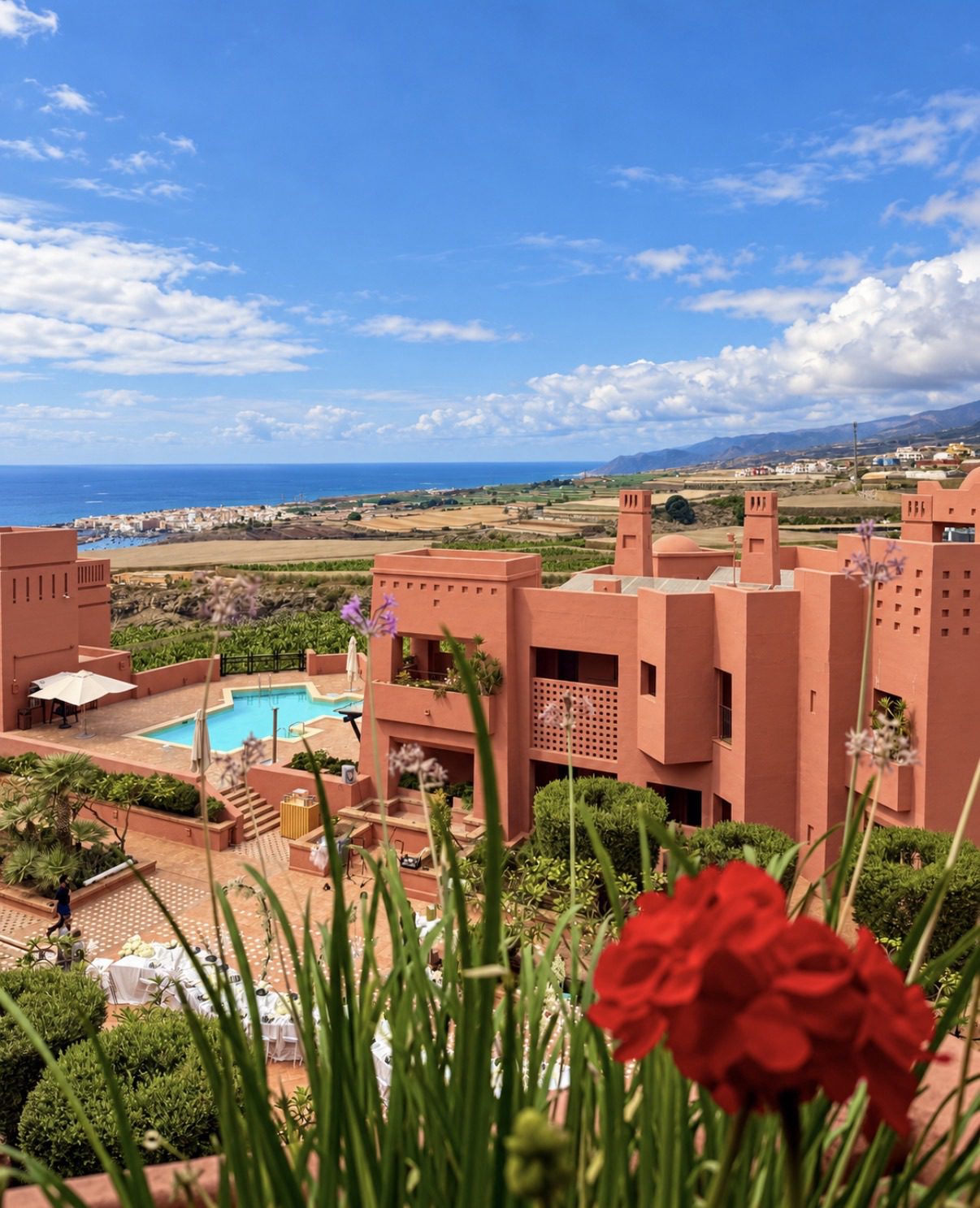
When I stayed at The Ritz-Carlton Abama in Tenerife, I already knew there were steps into the hydro pool. The hotel had explained that before I arrived.
It was a relatively small detail in the context of a beautiful resort, but it mattered to me.
Once there, I found the handrails were well positioned, and the height of the pool made transferring manageable. It worked for me, although I appreciate it wouldn’t work for everyone.
What I remember most is that I’d been given the information to make that decision myself.
I didn’t arrive expecting something the hotel couldn’t provide. Equally, I hadn’t missed out on an experience simply because somebody assumed it wouldn’t be suitable.
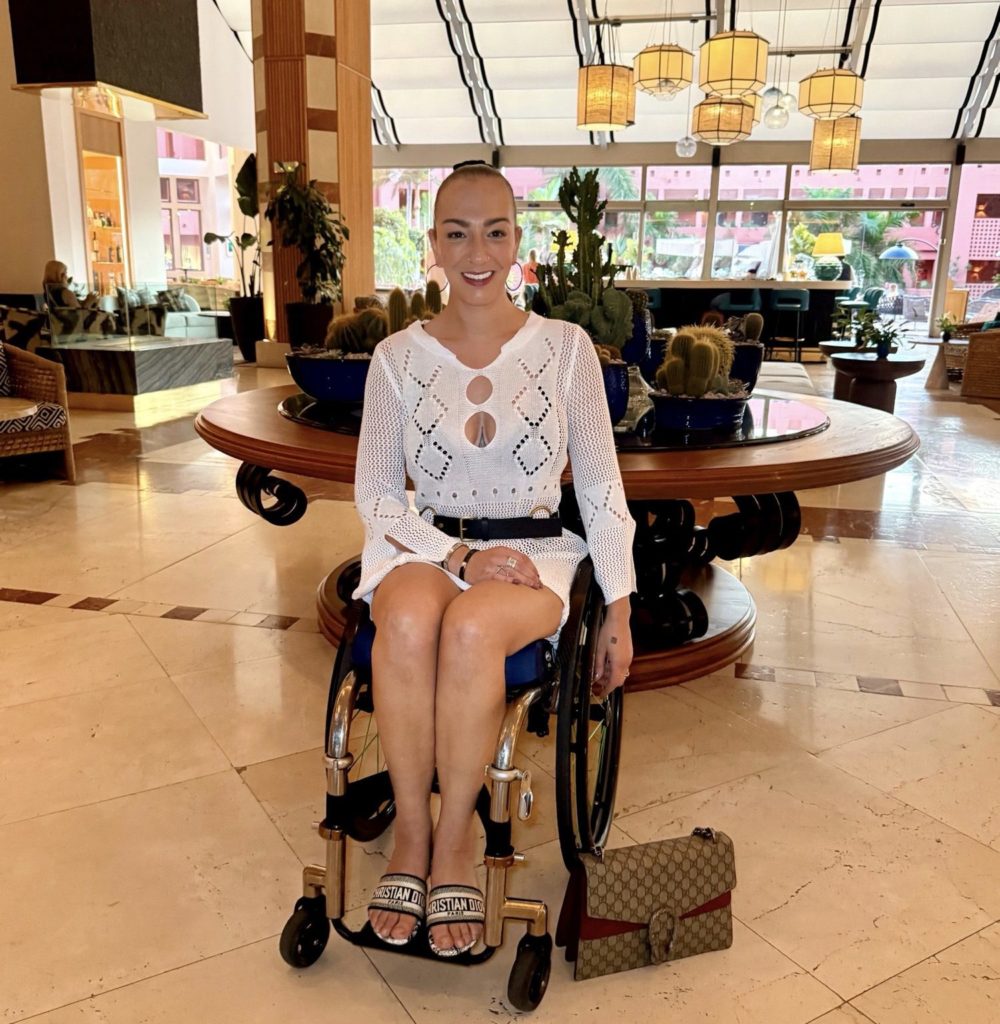
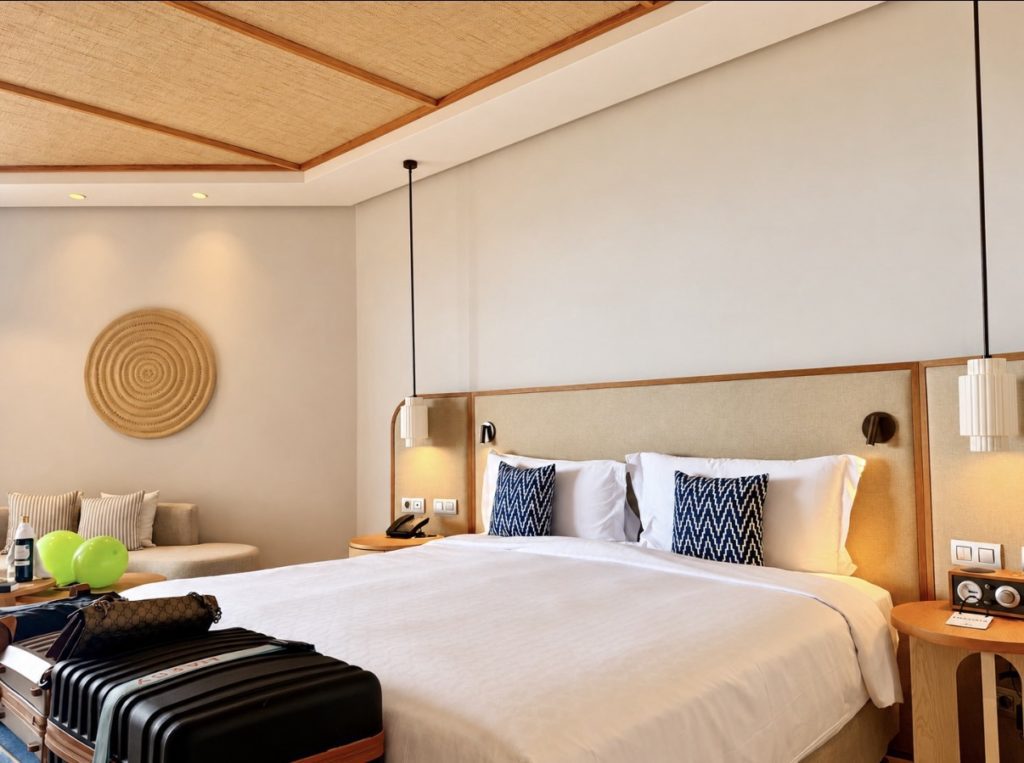
The wider stay was lovely. The accessible room felt part of the hotel’s beautiful design rather than something separate. Moving around such a large resort was surprisingly straightforward, and the staff were attentive without making my wheelchair the centre of the experience.
Looking back, it’s that honesty before I arrived that has stayed with me.
And it got me thinking.
Luxury hotels have become remarkably good at personalisation.
They’ll remember your favourite drink, arrange your preferred pillow, organise private dining experiences and create entire itineraries around what you enjoy.
They’ll anticipate things you might never have thought to ask for.
It’s one of the reasons we love staying in them.
So how does that same attention to detail translate when a guest needs to understand something about accessibility before making a booking?
And how much should we already be able to find out for ourselves?
Looking Beyond the Accessible Bedroom
Over the past couple of months, I’ve been exploring how seven of the world’s leading luxury hotel brands approach accessibility.
Four Seasons. Aman. The Ritz-Carlton. Six Senses. Mandarin Oriental. Rosewood. One&Only.
Each has its own character and philosophy, but they share something important.
They promise an exceptional level of service built around the individual.
I wanted to understand how that promise extends to guests who might experience their hotels a little differently.
This wasn’t about finding the most accessible hotel group.
I’m not convinced that would be particularly useful.
A historic hotel in Venice and a contemporary resort in the Maldives are working with entirely different buildings, landscapes and circumstances. What works beautifully for one guest may be completely unsuitable for another.
And accessibility means different things to different people.
Some guests need detailed information about wheelchair access. Others might be concerned about hearing assistance, visual information, sensory environments, fatigue or how easily they can navigate an unfamiliar space.
Even among wheelchair users, our requirements can be remarkably different.
I use a wheelchair, but I don’t always want a roll-in shower. Sometimes a bath is far more valuable to me because it helps with pain management.
Another wheelchair user might need a completely different bathroom arrangement.
Neither of us is wrong.
It’s something I’ve explored previously in An Accessible Bathroom for Whom?, because the assumption that one accessible room can meet everybody’s needs is still surprisingly common.
The label tells us something.
It rarely tells us enough.
What I wanted to explore was how much useful, reliable information these brands make available before a guest has to start asking questions.
And what happens behind the scenes to support that information.
There’s Some Genuinely Thoughtful Work Happening
One of the loveliest things about this research has been discovering how much useful information is already available.
It’s far from consistent, but there are some excellent examples.
At Four Seasons One Dalton Street in Boston, the hotel’s accessibility information goes well beyond the bedroom. It covers accessible routes, room features, lowered controls and systems designed to support guests with hearing requirements.
Four Seasons Hualalai offers similarly detailed information, including a point I particularly appreciated: not every accessible room necessarily has the same features.
That might sound obvious, but it’s surprisingly helpful to see it acknowledged.
It tells the guest there’s variation and that understanding the particular room matters.
Beyond the Bedroom
Across The Ritz-Carlton’s portfolio, Marriott’s property information system also provides a useful level of detail.
At properties such as The Ritz-Carlton, Tokyo, guests can read about accessible routes, restaurants, spa facilities, swimming pools and features within individual rooms.
It’s the kind of information I find myself looking for before I travel.
I’m interested in understanding the experience I’m considering, including which parts of it might need a little more planning.
Rosewood Sand Hill in California takes things further, explaining accessible routes between different parts of the property and providing information about facilities beyond accommodation, including its fitness centre, pool and restaurants.
And Mandarin Oriental stood out during my research for the amount of accessibility information published across several international properties.
Mandarin Oriental Singapore, for example, provides dedicated information about entrances, lifts and facilities throughout the hotel, including where assisted access may be needed.
I was also pleased to discover that Mandarin Oriental had approached accessibility from a different perspective, publishing a guide to step-free London written by powerchair user and journalist Lucy Webster.
That interested me because it moves the conversation beyond the hotel building itself.
It recognises that the experience doesn’t begin and end at the bedroom door.
These are all examples worth celebrating.
They show that detailed, thoughtful accessibility information can sit very comfortably alongside the most beautiful hotels in the world.
And they left me wondering what makes that information so much easier to find at some properties than others.
A Conversation with Aman
Of the seven brands I approached for this research, Aman provided the most detailed insight into how accessibility works behind the scenes.
And I found its response particularly interesting.
Aman has some extraordinary properties, each with a very individual identity. Some sit within historic buildings, others in remote landscapes where the surroundings are as much a part of the experience as the hotel itself.
Its team explained that this variety is one of the reasons Aman approaches accessibility individually, rather than applying a single physical standard across every property.
Christabel Lear, Aman’s Global PR Manager, told me that accessibility is handled “property by property rather than through one central standard.”
She explained that the portfolio includes hotels within heritage buildings and protected locations, where conservation restrictions, planning requirements and the character of individual destinations can influence what’s possible.
I can understand that.
A beautiful historic property might have limitations that a purpose-built city hotel simply doesn’t face.
And there’s value in acknowledging those differences rather than pretending every hotel can offer exactly the same thing.
Aman New York publishes particularly detailed accessibility information. Guests can find information about mobility-accessible and hearing-accessible suites, bathrooms, routes, communication features and facilities including the spa.
Christabel also directed me towards Amangiri in Utah, where the resort publishes information about accessible suites, door widths, routes, the pool lift and other facilities.
Two very different destinations, both giving guests useful details about what to expect.
How Aman Prepares for a Guest
But what interested me most was how Aman described the relationship between its reservations team and individual properties.
When a guest makes an enquiry, the team can discuss their particular requirements, including mobility, equipment, preferred levels of assistance and how they expect to move around the resort.
They’ll then work with the property to understand how the experience might work.
That can involve looking at airport transfers, vehicle suitability, routes between facilities and the most appropriate room location.
It’s an approach that considers the journey rather than simply the bedroom.
And I really like that.
It’s thoughtful. It’s personal. And it sounds very much like the kind of considered service we’d expect from Aman.
The team also explained that conversations can take place by phone, email or another method preferred by the guest, although they often find telephone conversations particularly effective when discussing detailed requirements.
That flexibility matters, too.
People communicate differently, and the way we begin a conversation can shape how comfortable somebody feels having it.
But Aman’s explanation left me thinking about something else.
How much of that knowledge could be available before the guest makes the enquiry?
Because there’s a difference between contacting a hotel to discuss how you’d like your stay personalised and contacting them because you haven’t yet been able to establish whether the holiday is possible.
Both conversations matter.
They just serve different purposes.
When the Conversation Becomes Part of the Experience
I wouldn’t want to lose the personal conversations that make luxury hospitality so special.
Some of the best experiences I’ve had have come from exactly that.
I’ve stayed in hotels where staff have made adjustments I’d never have thought to request. I’ve had people offer solutions to problems I’d assumed would simply be part of travelling.
Sometimes all it takes is somebody understanding what you’re trying to achieve.
And there’s something lovely about that.
But I wonder whether we sometimes ask the conversation to do too much.
A guest shouldn’t necessarily need to explain their disability simply to discover whether a hotel has a lift, whether the spa is reachable or whether a particular bedroom has a bath.
Those are details about the property.
The personal conversation can then become something much more interesting.
How would you like to use the space?
What would make the experience more comfortable?
Is there something we can arrange that would make your stay particularly special?
That’s the hospitality I love.
And I suspect it’s the hospitality these brands love delivering, too.
The Booking That Never Happens
There’s also a practical distinction here that matters to the business.
When somebody can’t establish whether a hotel will work for them, they might send an enquiry.
Or they might simply choose somewhere else.
The hotel may never know there was an interested guest in the first place.
I’ve explored a similar problem in my research into booking accessible luxury hotel rooms directly in London. Even where accessible accommodation exists, the journey from understanding the room to confidently booking it can become unnecessarily complicated.
It’s a useful reminder that good service and clear information aren’t competing approaches.
They’re parts of the same experience.
Six Senses and Understanding the Individual
Six Senses presented another interesting perspective.
I’ve always found the brand’s approach to wellbeing fascinating.
Its philosophy goes well beyond offering a beautiful spa. Sleep, movement, nutrition, recovery and emotional wellbeing all sit within an understanding that every guest is different.
There’s something rather lovely about a hotel recognising that our bodies and minds aren’t all arriving in the same condition.
Some of us are recovering from a long journey. Some are dealing with stress. Others want to feel stronger, sleep better or simply switch off for a few days.
That level of individual understanding is part of what makes Six Senses so distinctive.
Which is why I was interested to find that the publicly available accessibility information doesn’t always go into the same depth.
At Six Senses Kyoto, the Superior King room description invites guests to enquire about accessibility requirements when booking.
At Six Senses Ibiza, the Deluxe room information identifies that some rooms have wheelchair access, but offers relatively little detail about what that involves.
Both statements may lead to an excellent conversation with the hotel.
I just find the contrast interesting.
A brand can describe the most intricate details of personalised wellness, yet offer comparatively little information about how a guest with different mobility or sensory requirements might experience the surroundings.
There’s such an opportunity here.
Particularly for a brand already so skilled at understanding the individual body and the importance of feeling comfortable within an environment.
Sometimes Knowing What Isn’t Possible Is Just as Valuable
One&Only Mandarina offered something else I appreciated.
Within its published booking information, the resort is open about the fact that it isn’t fully accessible.
It identifies an accessible villa and explains that assistance is available in certain areas, including the restaurant and spa, while encouraging guests to discuss their requirements directly.
I find that kind of honesty refreshing.
Of course, I’d love every beautiful hotel to offer as much accessibility as possible.
But the reality is that some environments are complicated.
Some have steep terrain. Others are spread across enormous grounds. Some experiences involve boats, beaches or facilities that can’t easily be adapted.
I’d much rather know about those limitations before travelling.
It doesn’t necessarily mean I won’t visit.
It means I can decide whether the experience is right for me.
And that distinction matters enormously.
I’ve never expected every hotel to work for me.
I do expect to be given enough information to make my own decisions.
It’s something that came through particularly strongly during my stay at The Ritz-Carlton Abama.
The steps into the hydro pool didn’t spoil the experience.
Knowing about them helped me enjoy it.
Who Actually Holds All This Knowledge?
As the research developed, I kept coming back to another question.
Who makes sure the information a hotel gives its guests is accurate?
Somebody needs to understand which rooms have particular features, where lifts are positioned, which routes involve steps and whether assistance is needed to reach certain facilities.
But how does that knowledge reach the guest?
And how does it stay current?
A hotel might refurbish a bedroom, move furniture or change a restaurant’s layout. A spa might introduce a new treatment or piece of equipment.
All perfectly ordinary things within a working hotel.
But each can change how somebody experiences the space.
It’s also worth remembering that access isn’t only about movement.
For a Deaf guest, understanding how emergency information is communicated or whether communication support is available may be far more important than the layout of the bathroom.
For somebody with a visual impairment, the way information is provided and how easily they can navigate an unfamiliar environment may shape the entire stay.
For someone living with chronic pain or fatigue, the distance between facilities might matter just as much as whether there’s a lift.
And for people with sensory requirements, knowing what an environment feels like can be every bit as valuable as knowing what it looks like.
The information a hotel holds needs to reflect the different ways people actually use it.
Ideally, it needs to be accurate enough that the guest can trust it.
The Systems Behind the Service
There were some interesting examples of how brands have approached this.
Accessibility consultancy ISES has documented physical accessibility assessments undertaken for Mandarin Oriental’s US properties, examining areas including guestrooms, public spaces, restaurants, spas and routes through the hotels.
Its published case study describes work beginning in 2012. I haven’t been able to establish whether the same consultancy arrangements or assessment methods remain in place today.
But it offers an example of what a structured approach to understanding the physical hotel can involve.
Rosewood provides another interesting comparison.
The group publicly discusses its work on digital accessibility, including its relationship with specialist provider UsableNet.
There’s a clear recognition that the website itself needs to work for people who access information differently.
I think that’s important.
But it also made me wonder whether the same level of ongoing attention could be applied to the information describing the physical experience.
After all, the website is where somebody begins imagining the stay.
It’s where they decide whether the room is right, whether they’ll be able to enjoy dinner, and whether the spa experience they’ve been looking forward to is actually available to them.
Getting that information right feels every bit as important as making sure the website is easy to navigate.
The Standard Doesn’t Have to Look the Same Everywhere
One thing I’ve been conscious of throughout this research is how different these hotels are.
And I think that’s part of what makes luxury travel so wonderful.
We don’t choose a historic palace in Venice because we want it to feel like a contemporary resort in the Maldives.
We choose it precisely because it’s different.
The character. The architecture. The setting. The experience of being somewhere we couldn’t be anywhere else.
Accessibility has to work within those individual circumstances.
Different countries have different regulations. Historic buildings present particular challenges. Natural landscapes can place limitations on what can reasonably be changed.
I understand that.
But I also think there’s a distinction between the physical provision a hotel can offer and the quality of information it gives about that provision.
The first will inevitably vary.
The second doesn’t have to vary quite so much.
Every hotel can work towards understanding its own facilities.
Every hotel can be clear about what’s available, where assistance is needed and where limitations exist.
And every hotel can make an informed decision about how that information is shared with guests.
That feels particularly relevant at the very top of hospitality.
These brands have spent decades refining the details that define their service.
They’ve created remarkably consistent expectations around attentiveness, discretion, comfort and personalisation, even when their properties look and feel completely different.
I don’t see why the same thinking couldn’t extend to accessibility information.
Different buildings.
Different facilities.
The same care in helping people understand what they’re booking.
The Difference Between Being Welcomed and Being Understood
One of the unexpected pleasures of this research has been the conversations it has opened up.
Through Aman, I was introduced to Nathan Rollinson, whose writing about Deaf accessibility in travel explores the relationship between being welcomed somewhere and being genuinely understood within the experience.
It’s a distinction I’ve thought about a great deal.
Because I think most luxury hotels genuinely want their guests to have a wonderful experience.
I’ve seen that willingness repeatedly.
People are often incredibly generous with their time and remarkably creative when they understand what’s needed.
But there’s a difference between wanting to help and already having the knowledge that allows you to help well.
And that knowledge matters long before somebody arrives at reception.
It matters when they’re sitting at home, looking at photographs, comparing rooms and trying to decide whether to spend their money on a particular experience.
It matters when they’re travelling with a partner, friends or family and don’t want everyone else’s plans to revolve around whether they can reach the restaurant.
It matters when somebody would love to visit but doesn’t quite have the energy to begin another round of emails explaining what they need.
And it matters for people whose disabilities aren’t immediately visible, whose requirements may change from day to day, or who simply experience the same space differently.
I know from my own travels that the uncertainty can sometimes be more exhausting than the journey itself.
Once I understand what I’m dealing with, I can usually make a plan.
It’s the not knowing that makes things difficult.
I’ve written before about invisible friction within luxury hospitality, and I think this is one of the clearest examples of it.
The work that should have been removed from the guest’s experience is sometimes still waiting for them before they’ve even booked.
What Would Better Look Like?
I don’t think the answer is particularly complicated.
Although I appreciate that putting it into practice across international hotel collections may take rather more work.
I’d love to see the same care that goes into describing a suite, a restaurant or a spa experience extended to how those spaces work for different guests.
Useful photographs.
Clear descriptions.
Accurate information about rooms and the wider property.
An honest explanation of any limitations.
And a reservations team that has access to the same information as the people who know the property best.
There’s also something to be said for making that information part of the booking process itself.
It’s one thing to understand that a hotel has an accessible room. It’s another to know which room has the particular features you need and whether you can actually reserve it.
That distinction matters.
Where Personalisation Begins
Then, when somebody wants to talk through their individual requirements, the conversation begins from a much better place.
Instead of spending time establishing the basics, they can talk about the experience itself.
Perhaps they would prefer a room closer to the restaurant because walking long distances is difficult.
Maybe they’re an ambulant wheelchair user who would rather have a beautiful room with a bath than a wet-room arrangement that doesn’t suit them.
Perhaps they need assistance during an experience but would prefer to move independently around the hotel.
Or maybe they simply want to know that somebody has understood their requirements without making them feel those requirements are unusual.
That’s the part luxury hospitality already knows how to do so well.
To listen.
To notice.
To understand.
And to make somebody feel that the experience has been considered with them in mind.
What Stays With Me
I’ve really enjoyed exploring this. There’s so much thoughtful work happening across these hotels, from the detail some make available online to the care their teams take in planning an individual stay.
And it’s reminded me that the difference between uncertainty and confidence can sometimes be surprisingly small.
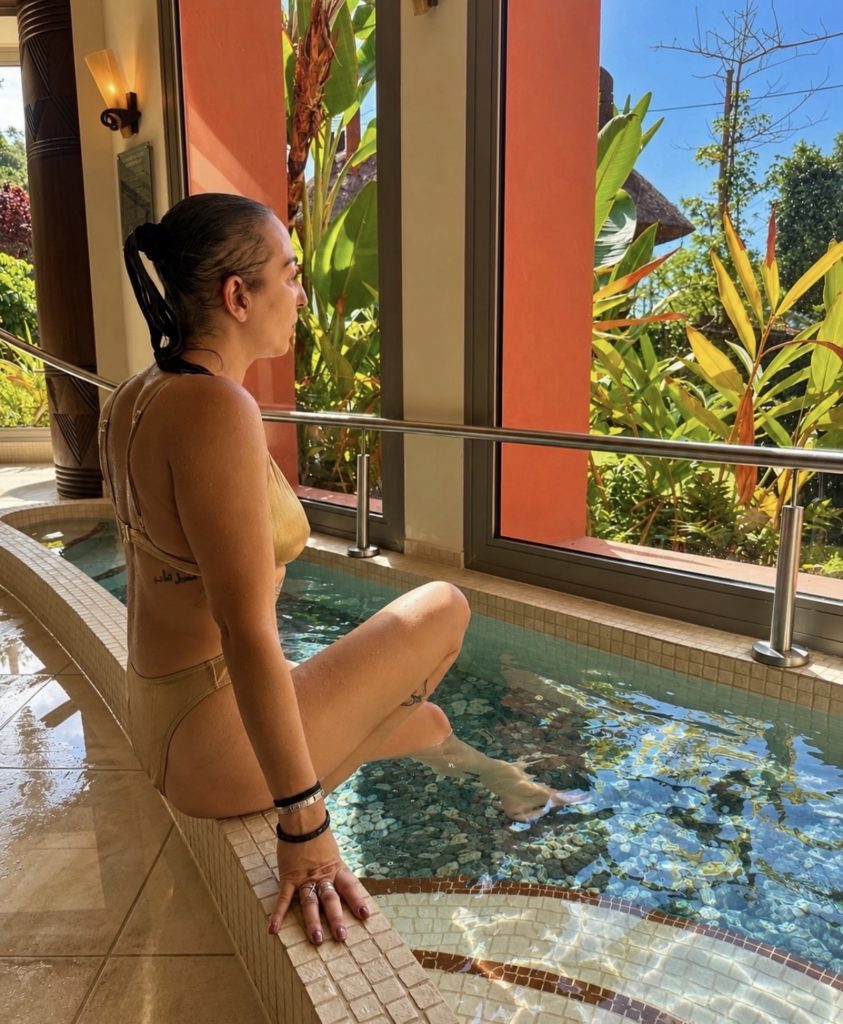
At The Ritz-Carlton Abama, it was simply knowing about the steps into the hydro pool before I arrived. The hotel hadn’t changed the pool. It had given me the information to decide how I wanted to use it.
That meant I could spend my time enjoying a beautiful place rather than wondering what I’d find when I got there.
I think about how many more people might feel comfortable making that booking if the right information were already waiting for them.
Because there’s already so much that luxury hospitality does beautifully. The attention to detail, the personal touches, the genuine pleasure people take in creating an experience that feels just right for someone.
I’d love to see that same care extend a little further into the moments before we travel.
The world’s finest hotels have made an art of understanding their guests.
I’d love to see more of that understanding begin before the guest ever needs to explain themselves.
About This Research
This article draws on research into publicly available accessibility and guest-experience information across Four Seasons, Aman, The Ritz-Carlton, Six Senses, Mandarin Oriental, Rosewood and One&Only, reviewed between August and October 2026.
All seven brands were invited to contribute. Aman provided detailed information about its approach to accessibility, including its reservations process and individual property considerations. Mandarin Oriental’s UK media representatives acknowledged the enquiry and offered to explore a property case study, although further information hadn’t been received at the time of writing.
Where a brand hasn’t provided further information, observations are based on publicly available material rather than assumptions about its internal operations.
My stay at The Ritz-Carlton Abama was independently arranged and wasn’t hosted.
This research examines the accessibility information available to guests and how brands approach the wider experience. It isn’t an assessment or certification of the physical accessibility of individual hotels.

Leave a Reply